
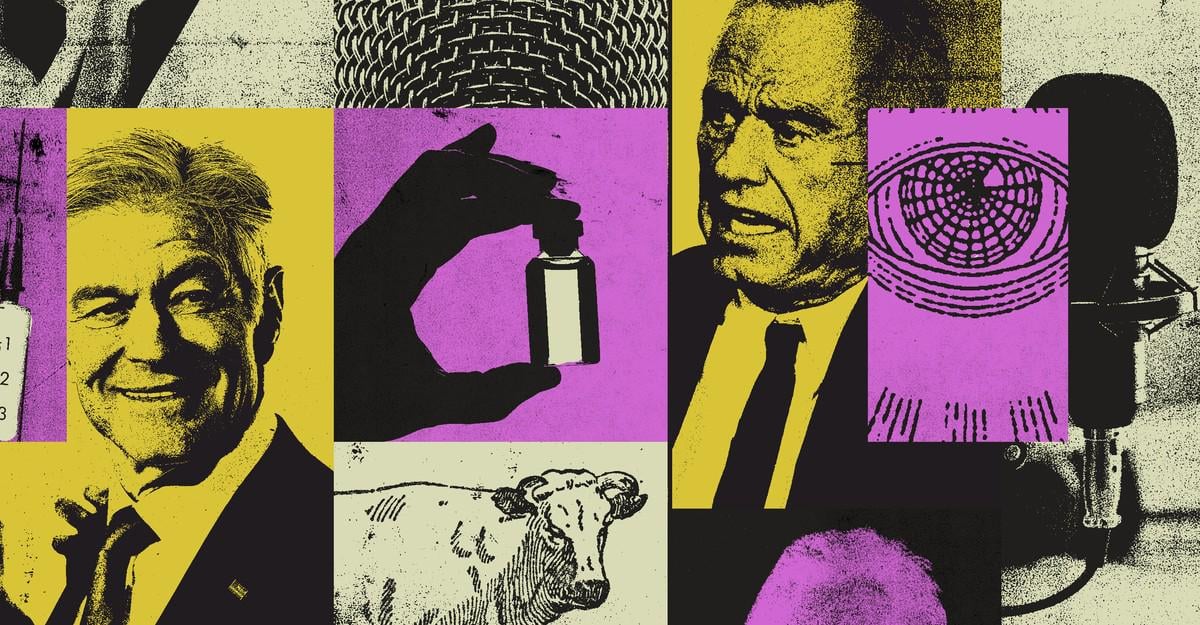
Adam Serwer from The Atlantic discusses a phenomenon that is foundational to so much of the illiberal movement in America today:
"Many Americans believe that vaccines are unsafe, but will jab themselves full of performance enhancers. They think seed oils cause chronic disease, but beef tallow is healthy. They’ll say you can’t trust federally insured banks, but you can trust the millionaires who want you to invest in their volatile vaporware crypto tokens. They think food additives are toxic but support an administration removing all restrictions on pumping pollutants into the air and water. They’ll insist that you can’t trust scientists, because they’re part of the conspiracy. The podcaster selling you his special creatine gummies, though? He seems trustworthy.
The coronavirus wasn’t the only epidemic to hit the United States in the past decade. Americans are also facing a bizarre epidemic of gullibility and cynicism—gullicism, if you need a portmanteau—that is drawing people into a world of conspiracism and falsehoods, one where facts are drowned out by a cacophony of extremely loud and wrong voices. Reliable information is both more available and harder to find than ever—and those who spread misinformation have been rewarded with positions of power, platforms they can exploit to further pollute the information environment."
Posted by loremipsumot
4 Comments
This hits something that I’ve believed for a long time. Contrarianism often leads to you getting scammed. In a modern society, you have to place your trust in other people. It’s not optional. So when people blindly distrust authority, they end up in the hands of conmen instead.
What happens when ‘aUthEnTiCItY’ means any nobody with a smartphone, with no education and no credentials but streams themselves playing that video game you like but can’t afford, or gives themselves CTE doing MMA, is more trustworthy than experts who dedicated years of their lives to study and practice.
Social media delenda est.
What makes me angry about this, though there is so much to be mad about, is that it is deeply chilling the extent of this cognitive dissonance. No to vaccines, yes to enhancers. Yes to gerrymandering while saying one is defending democracy. Yes to boat strikes while neatly avoiding the implications that our civilian boats are fair targets…
Leftists will argue with me (as they have in my day to day experiences) that the failings of liberal institutions is what precipitated all of this. Even if that is true — there were flaws, true — since when does that mean the solution was to burn it all down??? This is more my anger at the broader electorate. Do they have any idea how much goes into sustaining our lifestyle? Have they any idea what will happen when it goes away?
Something that only “clicked” for me recently, was understanding the difference between cynicism (distrust of a _person or people_) vs skepticism (distrust of an _idea or argument_).
On the surface they both look and feel like critical thinking. And some base level of caution to new or unfamiliar ideas is warranted, so it makes sense that we as humans have a cynical or skeptical reflex.
Everyone wants to exercise that critical thinking, but if you’re missing the cognitive ability or bandwidth to actually think critically about what someone else is telling you, you fall back to a reflexive distrust of the person making the argument. This is why people who score the highest on cynicism _also_ score the highest on gullibility – their entire critical thinking apparatus is a slave to reflexive trust, or distrust, of a person, rather than being able to critically grapple with the arguments or ideas someone makes.
I don’t know how to solve this problem. We’ve built ourselves a media and social apparatus that is extremely good at reinforcing our own instincts and rewarding the “cynical reflex”, and it doesn’t feel like a critical mass of people have any interest in changing that.