
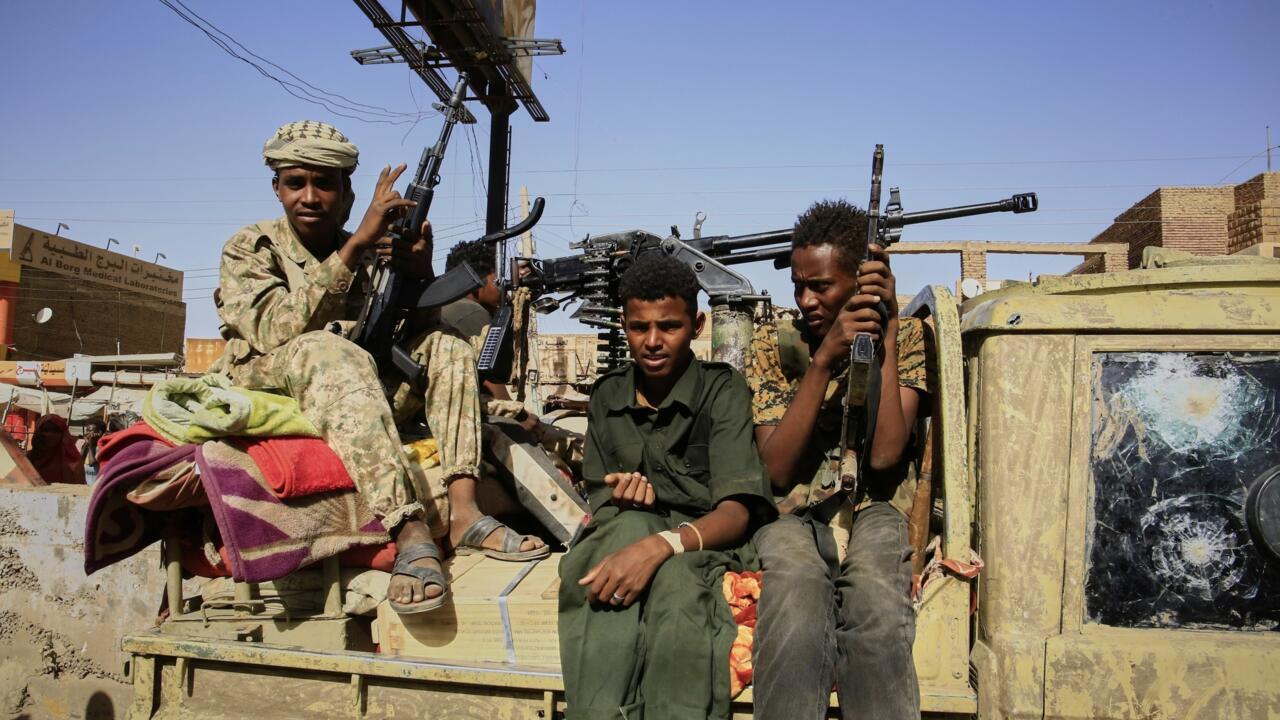
Submission statement: A more political analysis of the Sudan war as it enters its fourth year, and how the revolutionary momentum that ousted Omar al-Bashir's military regime has been replaced by a cautious support to the Sudanese Armed Forces as the transition turned into a fight for survival against the RSF.
Between 1989 and 2019, Sudan was ruled by the ruthless dictatorship of Omar al-Bashir, who led a repressive military rule infused with the Islamist movement of Sudan, affiliated to the Muslim Brotherhood, and imposed a strict interpretation of Sharia law, sheltering Osama bin Laden and providing support to international Islamist terrorist organizations.
Starting in December 2018, massive protests against al-Bashir culminated in a coup d'etat by the Sudanese Armed Forces and the start of a democratic transition, with the establishment of a joint military-civilian council headed by Gen Abdel-Fattah al-Burhan, with UN public administrator Abdallah Hamdok serving as Prime Minister. In two years, the transitional government enacted landmark democratic reforms, repealing Islamist laws like public flogging, morality police, apostasy, banned female genital mutilation and abolished the death penalty for homosexuality, while significantly improving public freedoms.
The transition was cut short when al-Burhan carried out a coup against the civilian government in 2021 and entered a power-sharing agreement with the powerful head of the RSF, Hemedti, which broke down in April 2023, igniting the civil war and a catastrophic humanitarian crisis.
Three years, many of the revolutionaries who took to the streets in Khartoum against the army's rule are now reluctantly backing them as the last rempart against the RSF, whose base of support lies in the peripherical regions of Sudan, and whose political project aims to overpower the traditional elites of the north and the Nile valley. During the bloody battle of Khartoum that lasted for two years until the army retook the capital in 2025, the RSF carried out widespread looting and sexual violence on civilians and heavily damaged the city, leading many Sudanese to turn to the army as the lesser evil in a fight for survival.
While al-Burhan has recently distanced himself from some Islamist leaders that were influential during al-Bashir's rule, he has also heavily relied on the al-Baraa Bin Malik Brigade, an IRGC-trained Islamist corps that has been accused of severe human rights abuses during the war. Al-Burhan has recently consolidated power by removing his powerful deputy leaders, crucial for the coordination during the early stages of the war, and appointing as General Chief of Staff Yasser al-Atta, a "hawk" who opposes any negotiation with the RSF and defends a fifteen-year military rule following the conclusion of the war.
As the Sudanese fight for their lives in the world's deadliest war, the dreams of democratization held high by the protesting masses in the spring of 2019 have been extinguished by a return to de facto military rule, with popular support.
Posted by RaidBrimnes
2 Comments
!ping AFRICA
The US should have gotten involved and crushed the RSF.