
There are a lot of new subdivisions pop up around Wimberley, Canyon Lake, and the outer Austin metro, not to mention data centers. The construction activity reshaping this region and how we utilize water.
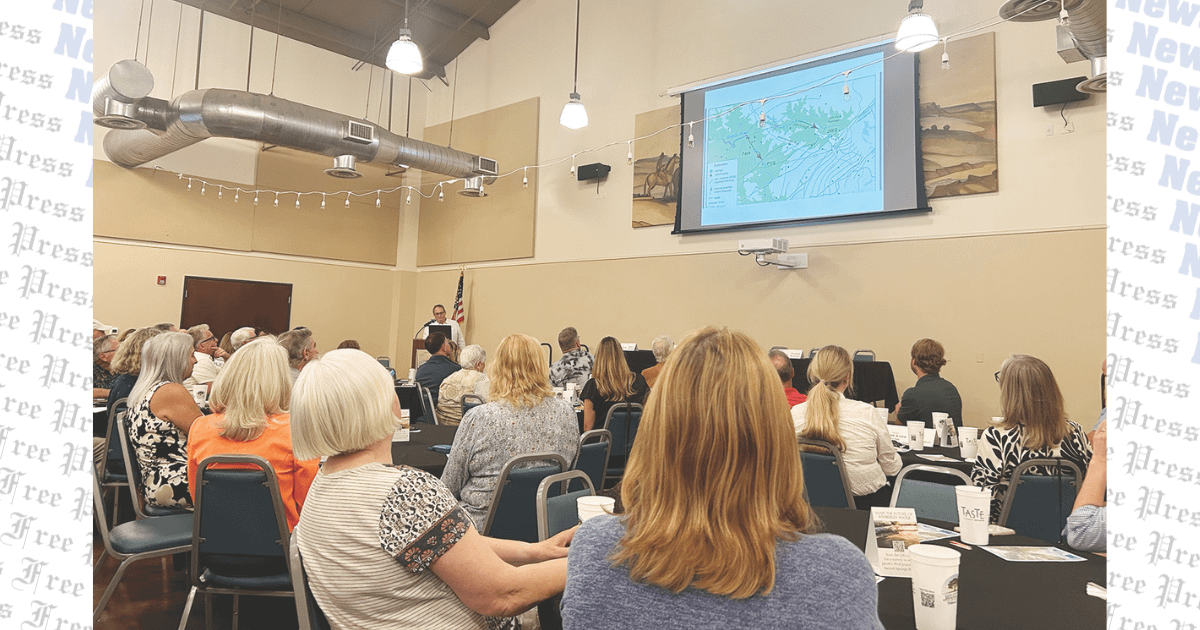
According to David Baker, founder and executive director of The Watershed Association, surface water, meaning rivers, lakes, and creeks, is becoming less reliable as temperatures rise. Jacob's Well, one of the most iconic natural springs in the region, has been dry for nearly four years.
Baker also noted that Hays County is the fastest growing county in the United States, with projections of 278% growth and a population reaching 600,000 by 2050. None of those incoming residents are bringing their water with them. The county would need to find 175,000 acre feet of water per year just to sustain its current growth trajectory, according to Dr. Robert Race of The Meadows Center for Water and the Environment.
Meanwhile, the stormwater infrastructure in Austin and surrounding areas is already struggling to keep pace. The City of Austin's Watershed Protection Department is currently managing over a dozen active flood risk reduction projects across town, from Bouldin Creek to Walnut Creek to Slaughter Creek, because Austin has over 1,100 miles of drainage systems, many of which are undersized or date back to before drainage regulations were put in place in the early 1980s. New development consistently accelerates stormwater runoff, speeds up flows into creeks, and forces the city to spend tens of millions retrofitting infrastructure neighborhoods never should have been built without in the first place.
Now add data centers to the equation.
Austin alone is home to 47 data centers, and some of the larger facilities consume up to 4.5 million gallons of water per day. The average midsized facility uses roughly 300,000 gallons daily, comparable to the daily water use of around a thousand homes. These facilities need that water primarily for cooling, and once it evaporates from their systems, it is simply gone from the local supply.
A report from the Houston Advanced Research Center estimates that by 2030, data center water consumption in Texas could rise to between 29 billion and 161 billion gallons annually. At the high end of that range, data center growth could increase total statewide water demand by as much as 10 percent compared to current planning assumptions.
Texas' existing water supplies are already projected to decline by roughly 10% between 2030 and 2080, primarily due to aquifer depletion, according to a draft of the state's 2027 Water Plan. The data center industry is being layered on top of that decline with almost no transparency. There is currently no uniform method for reporting or tracking data center water usage, which means the state cannot accurately predict their future impact on an increasingly stressed resource.
Shannon Hamilton, executive director of Central Texas Water Coalition, has urged legislators to require developers to disclose their expected water use when proposing new data center projects, warning that without clear standards for water efficiency and resource planning, already stressed water supplies will be at risk.
Back in Wimberley, community leaders are trying to piece together solutions with what they have. Wimberley, Woodcreek, and Hays County recently signed an interlocal agreement to pursue a collaborative water and wastewater planning effort, and a Warm Water Resiliency Plan is being developed to address land use, water use, economic and housing strategies, and regional collaboration. That kind of grassroots coordination is genuinely encouraging, but it is happening in the shadow of development pressures and industrial water demand that local governments were never designed to absorb.
The question worth asking is straightforward: who gets to decide how Central Texas water is used, and who gets protected when it runs short? Right now, the answer is not the people who live here.
Sources:
haysfreepress
communityimpact
dallasexpress
austintexas
texastribune
smartwatermagazine
Posted by 50million
1 Comment
SS: construction is not sending water to data centers, but it is systematically reducing the amount of water available in the ground while data centers are simultaneously drawing that same diminished supply at industrial scale. The two trends are compounding each other in the same watershed.