
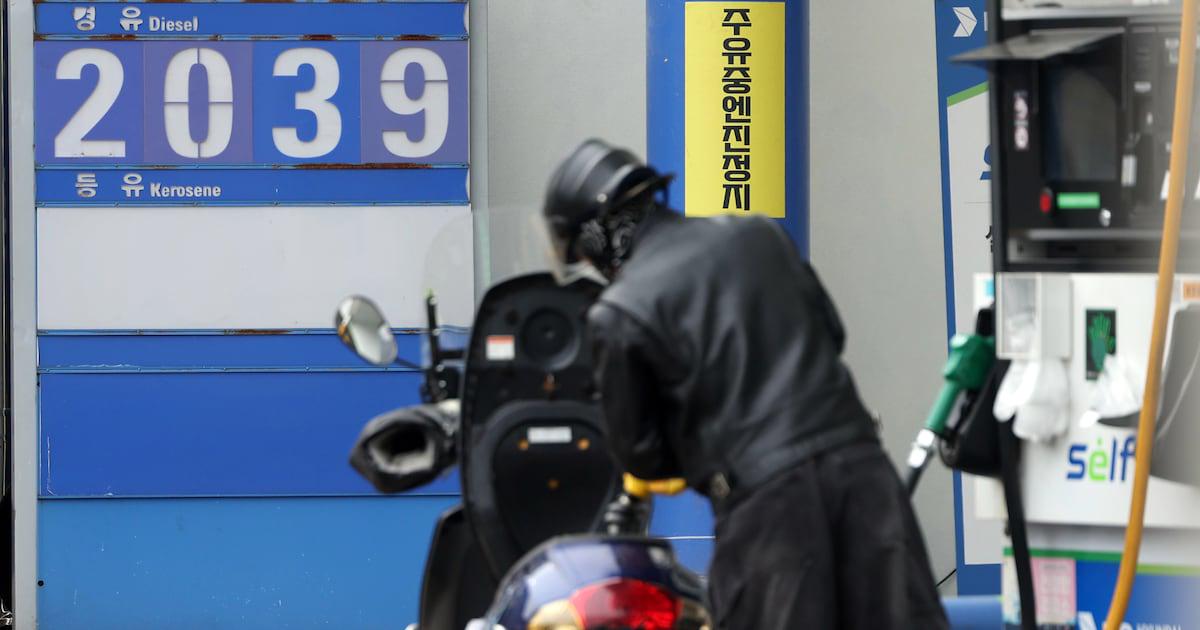
Prime Minister Kim Min-seok said on the 22nd, "We will make a decision on whether to implement the fourth round of the oil price ceiling after fully and carefully considering various opinions." It was interpreted to mean the ceiling, which has been implemented in succession in the first, second and third rounds, could be scaled back or halted going forward.
Through the price ceiling, consumers can buy gasoline, diesel and kerosene at prices lower than international crude, but there is a cost. The government compensates refiners for the gap between international oil prices and the ceiling price, and the funds must come from taxes paid by the public. That is why the ceiling cannot be maintained indefinitely.
That does not mean the ceiling can be stopped right away. If domestic fuel prices climb back to international levels, inflation is bound to surge. An official at a private economic research institute said, "If the government keeps the ceiling, there is a fiscal burden, and if it stops, there is an inflation burden," adding, "It will not be easy to find a solution."
Posted by Freewhale98
1 Comment
1. Summary
The oil price cap imposed in Korea is coming in strain in as it consume budget in rapid pace ( as it have to compensate oil refineries) and pressure for price increase become unbearable. But the government is conflicted about removing it as the cap managed to keep the oil price low for now.
2, How is this related to the sub
Iran war aftermath: Korean government is struggling to find an exit strategy on oil price cap as it burn through budget in rapid pace and concerns of “oil price spike” once it is removed.
3. My opinion
I think the government is trying to not have oil price spike just ahead of June local elections as it would damage electoral chance of the ruling bloc. It seems that emergency budget have enough capacity to make the price artificially low until June…but after that not sure.