
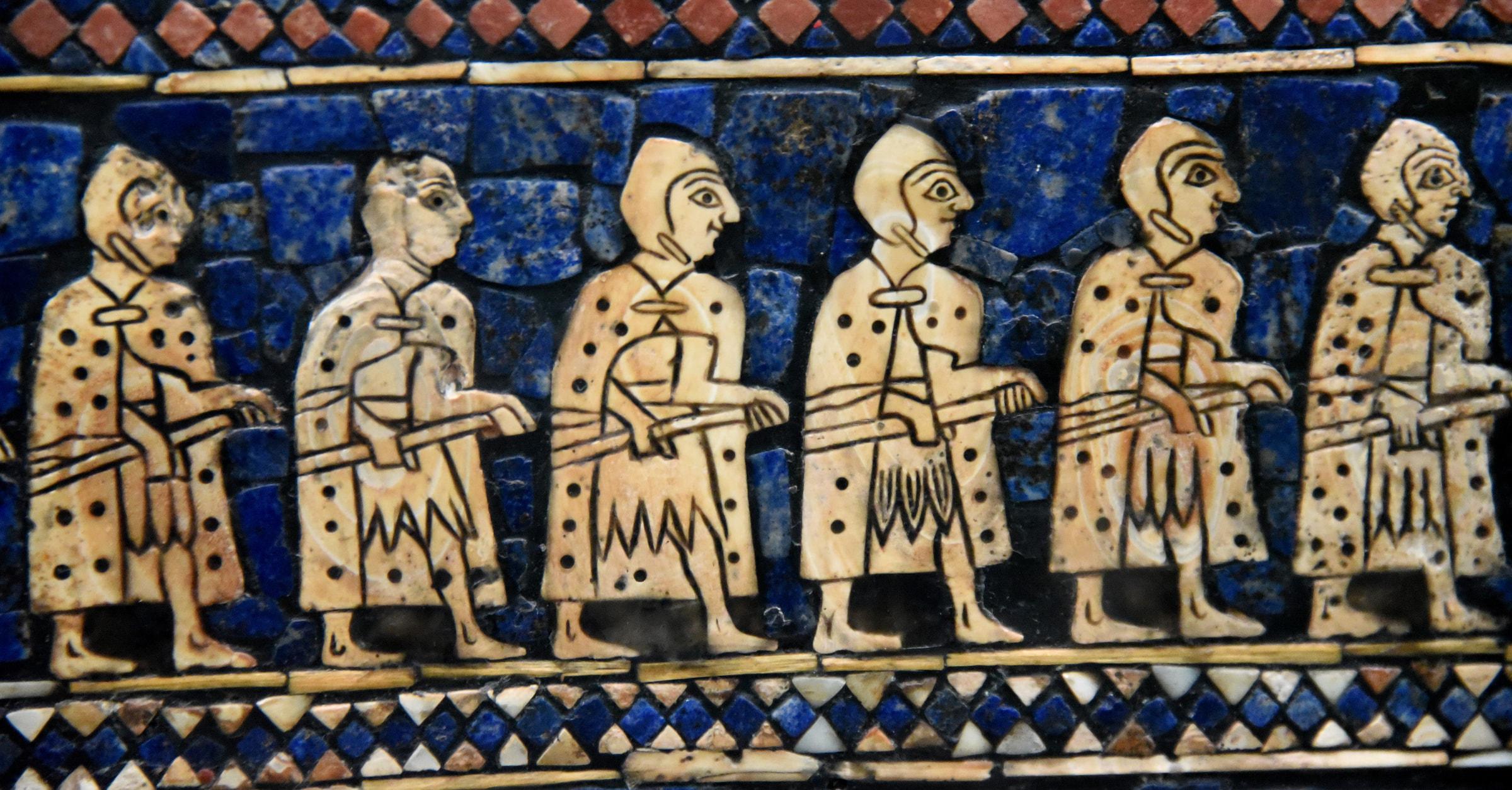
The Sumerians Knew Too Much
The Sumerians appeared out of nowhere around 4500–4000 BC in Mesopotamia with one of the most advanced civilizations in history.
- The first known writing system (Cuneiform)
- Advanced mathematics (including the sexagesimal system we still use for time and circles — 60 seconds, 360 degrees)
- Extremely accurate astronomy and star catalogs
- Complex legal codes, schools, and literature (Epic of Gilgamesh)
- Detailed records of "gods" who descended from the sky
Here’s what doesn’t make sense:
– They went from hunter-gatherers to building ziggurats, cities, and irrigation systems almost overnight.
– Their texts talk about the Anunnaki beings who came from heaven, created humans to serve them, and gave them knowledge.
– They had detailed knowledge of planets in our solar system (including outer ones) long before modern telescopes.
They literally wrote about genetic engineering, flying machines, and wars between their "gods".
Posted by Visual_Remote5987
1 Comment
Sumerian and later Akkadian, Bablyonian, and Assyrian civilization is incredible and so, so, fascinating, but I think you’re missing some of the big picture.
While they obviously invented many concepts that are so central to our perception of reality that we typically fail to even consider they were ever invented (the city, a secular political class, writing), there are lots of very reasonable explanations for how and why it happened where it did.
Also it’s worth noting that we have an incredible amount of Sumerian and Mesopotamian literature because they engraved everything on clay tablets and were judicious record-keepers. Contrast this to the Egyptians, who built monumental architecture but wrote almost everything on papyrus, which degrades in centuries if not decades. As a result, we have in many ways a far richer picture of Mesopotamian life than life in any other contemporary society. We have: hymns, homework, tax records, receipts, invoices, poems, myths, personal correspondence, and so much more than we have for any other society up until much more recently.
That’s to say that it’s easier to see them as extremely sophisticated because we have way more to work with. We know how much was paid for a bushel of wheat in Mari in 2000BCE vs 1950BCE, we have like 3 different versions of the Gilgamesh Epic because students copied it as homework for 1500 years, we have hundreds of hymns attributed to as many temple priests and priestesses, and so on.
I love Mesopotamia, but because a bunch of evidence came to light and there was a surge of interest in the late 19th century, a lot of early findings also got mixed in with spiritualist and occult literature of the time. The new age depiction of the “Annunaki” is nothing like the depiction in the source material.
If you are curious, I can suggest a few good books:
*Babylon: Mesopotamia and the Birth of Civilisation* by Paul Kriwaczek (good, general audience)
*Early Mesopotamia: Society and Economy at the Dawn of History* by J.N. Postgate (more academic, tons of discussion of the archeological evidence)
*Against the Grain* by James C. Scott (not strictly about Mesopotamia, but focused on it and tries to help answer how and why early state formation took place the way it did there)
*The Literature of Ancient Sumer* by Jeremy Black (a fantastic anthology of primary sources with lots of annotations and notes)