
Standing in the Oval Office in September, Pakistan’s Army chief gave President Trump a wooden box filled with minerals and gems — a nod to the lucrative deals U.S. companies could make in Pakistan, where mining has long been dominated by China. “A very great guy,” Mr. Trump said of the Pakistani commander, Field Marshal Syed Asim Munir.
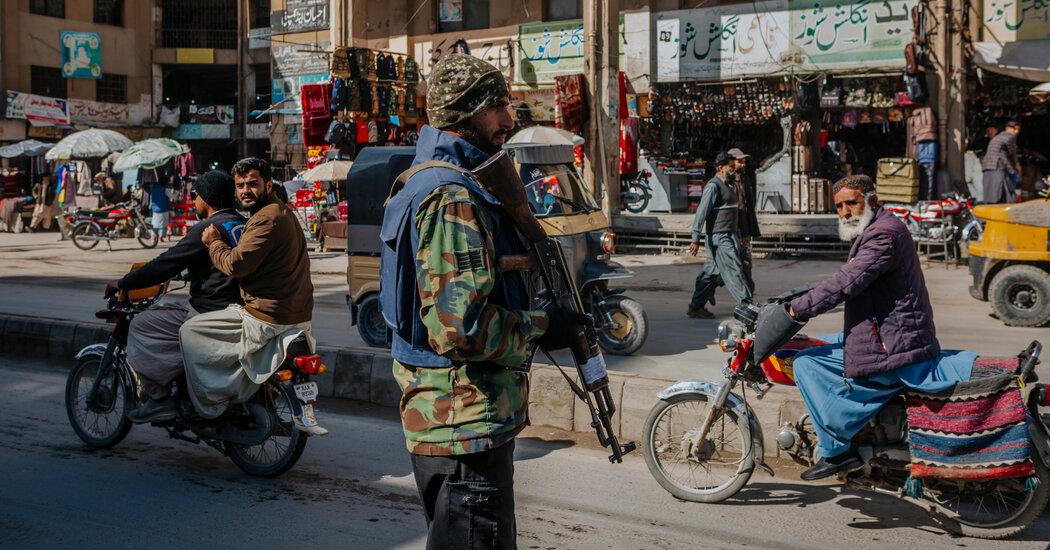
Months later, the Trump administration announced $1.3 billion in investments in the Balochistan Province of Pakistan, home to large reserves of gold and copper. After partnerships in counterterrorism and crypto, Pakistani officials have successfully wooed the Trump administration with cooperation on mining. In recent weeks, Pakistan has also inserted itself as a peacemaker between the United States and Iran. But the U.S. bet in Pakistan is on a collision course with one of South Asia’s most lethal militant groups: the Baloch Liberation Army, or B.L.A., the flag-bearer of a separatist insurgency in the region straddling western Pakistan, eastern Iran and southern Afghanistan.
The fight for an independent Balochistan is as old as Pakistan, and has motivated separatist attacks for decades. But over the past few years, the B.L.A. has carried out hundreds of increasingly sophisticated attacks, culminating on Jan. 31 in a coordinated assault by 500 militants who struck at least 18 targets in 12 separate areas and killed at least 58 people.
Pakistani officials have played down the attacks, but videos verified by The New York Times show it was the most expansive attack by the B.L.A. in years, and one that included not only military and police targets but multiple civilian targets — escalating the group’s challenge to the Pakistani state.
The attacks included several on the road to Balochistan’s largest mining site, Reko Diq, and disrupted operations at the site — one of the world’s largest untapped copper and gold reserves. It is poised to become the flagship asset of the U.S.-Pakistani mining partnership, according to Gracelin Baskaran, the lead expert on critical minerals at the Center for Strategic and International Studies.
The U.S.-Israeli war in neighboring Iran is adding another challenge: Pakistani officials fear that any power vacuum in Iran’s east could allow groups like the B.L.A. to replenish their ranks, move even more freely over the porous border and attack convoys carrying minerals, equipment and mining operators.
Two other militant groups — Tehreek-e-Taliban Pakistan, which is also known as the Pakistani Taliban, and the Islamic State’s regional offshoot — have also gained ground in Balochistan.
Barrick Mining Corporation, a Canadian company that owns 50 percent of Reko Diq, has said it would slow development of the project until mid-2027, citing security issues in Pakistan and the Middle East.
At dawn on Jan. 31, more than 500 B.L.A. militants stormed Balochistan’s capital, Quetta, and at least 12 other areas across Balochistan, killing 36 civilians and 22 security forces, according to the Pakistani military.
Militants attacked banks, police stations and prisons, according to a Times analysis and interviews with officials. The assailants used automatic rifles and grenade launchers abandoned by the United States in neighboring Afghanistan in 2021, officials said.
They set an administrative office and court building on fire and blocked a vital axis linking Quetta to Pakistan’s largest city, Karachi. A handful of male and female attackers detonated suicide vests in Quetta and near a port that is the centerpiece of China’s $70 billion investment in Pakistan.
The Pakistani military says it killed 216 militants during and after the attack and claims to have re-established control in the affected areas. But the coordinated assaults, increasingly frequent in recent years, showed the B.L.A.’s growing strength and acceptance among the local population, analysts say. In at least two locations, according to social media videos, residents mingled with fighters after the attacks.
Once led by tribal leaders, the Baloch insurgency has become a middle-class militancy, drawing support from young, educated Baloch who say they feel alienated by what they perceive as the lack of resources allocated to their province and rampant corruption.
The insurgency has become increasingly bloody, too. The B.L.A. shares little ideological affinity with Islamist terrorist groups like the Pakistani Taliban or the Islamic State, but it has embraced similar tactics, including suicide bombings.
From 2021 to last year, terrorist attacks and resulting casualties have more than tripled in Balochistan, according to the Pak Institute for Peace Studies, a research center in Islamabad.
After the Jan. 31 attacks, Pakistani officials closed the roads to Reko Diq for nearly a week, according to two employees at the mining site, who spoke on condition of anonymity because they were not allowed to discuss the security situation publicly.
The B.L.A. celebrates its attacks as part of a fight for liberation, and on Jan. 31 its affiliated social media accounts released videos glorifying suicide bombers. In one, Bashir Zaib, the group’s leader, appeared riding a motorcycle, dressed in military fatigues with his waist girded by ammunition.
“We will go to the last extent to protect our land,” Mr. Zaib said in the video, accusing the government of “going to every corner of the world and sending the resources of the Baloch nation,” in an apparent reference to mining concessions.
Those messages have helped the B.L.A. gather local support, analysts say.
“They are politically aware actors using a radical left-leaning worldview to connect local issues to global themes like colonization and resource exploitation,” said Muhammad Amir Rana, the director of the Pak Institute for Peace Studies.
The military has vowed to continue its crackdown and has rejected dialogue with militants. “What we’re doing is right,” Lt. Gen. Ahmed Sharif Chaudhry, a Pakistani military spokesman, said in an interview with The Times. He blamed India for financing militants and Afghanistan for offering them refuge.
Balochistan is the biggest of Pakistan’s four provinces, about the size of Germany, and also its poorest.
The Baloch insurgency emerged in 1948, a year after Pakistan’s independence, when the newly founded state annexed Balochistan despite calls for self-rule. The insurgency has been fueled by a sense of lost sovereignty ever since. Some Baloch have called for greater autonomy from Pakistan, while others have fought for the creation of a separate Balochistan to unite the Baloch regions of neighboring Iran and Afghanistan.
Baloch people have long accused the Pakistani elite and foreign companies of plundering the region’s wealth by offering low-paying jobs in mining sites and confiscating revenues without investing in local infrastructure, education or health.
As Baloch militants have intensified their attacks, the Pakistani state has responded in kind, going after armed Baloch groups, while also repressing political activists, according to right groups. The crackdown has added to a broader sense of grievance.
The Reko Diq mine is one of the highest value targets in Balochistan.
An arid expanse of gold and copper 350 miles by road from Quetta, near the Afghan and Iranian borders, the mine is estimated to hold 13 million tons of copper and 17 million ounces of gold and could bring $70 billion in profits over four decades of exploitation, according to Barrick’s technical assessments.
It is now coveted by the Trump administration.
The U.S. Embassy has promised a total of $2 billion in investments in Reko Diq and 7,500 local jobs, and said the site will be “a model” for other mining projects in Pakistan.
A few months before announcing its investment, the Trump administration designated the B.L.A. as a terrorist organization. Since then, insurgent groups have avoided anti-U.S. speech, said Fahad Nabeel, a security consultant.
Still, analysts warn that militant attacks threaten to derail the U.S.-Pakistani venture. The two employees working at Reko Diq said Barrick had scaled down operations in recent months because of the B.L.A.’s assaults on machinery and supply convoys from the port city of Karachi.
Without Reko Diq, the partnership between the United States and Pakistan “would lose its anchor,” said Ms. Baskaran of the Center for Strategic and International Studies.
Posted by John3262005
1 Comment
>Standing in the Oval Office in September, Pakistan’s Army chief gave President Trump a wooden box filled with minerals and gems — a nod to the lucrative deals U.S. companies could make in Pakistan, where mining has long been dominated by China. “A very great guy,” Mr. Trump said of the Pakistani commander, Field Marshal Syed Asim Munir.
It didn’t even took longer than the first sentence for things to go completely wrong
>Two other militant groups — Tehreek-e-Taliban Pakistan, which is also known as the Pakistani Taliban, and the Islamic State’s regional offshoot — have also gained ground in Balochistan.
Pakistan is really lucky to have always been under shitty leadership yet to have the only dangerous opponents being even worse than the military.
>Militants attacked banks, police stations and prisons, according to a Times analysis and interviews with officials. The assailants used automatic rifles and grenade launchers abandoned by the United States in neighboring Afghanistan in 2021, officials said.
Clearly the Taliban are sharing their toys with their little friends.
>The insurgency has become increasingly bloody, too. The B.L.A. shares little ideological affinity with Islamist terrorist groups like the Pakistani Taliban or the Islamic State, but it has embraced similar tactics, including suicide bombings.
This reminds me a lot of the LTTE in Sri Lanka