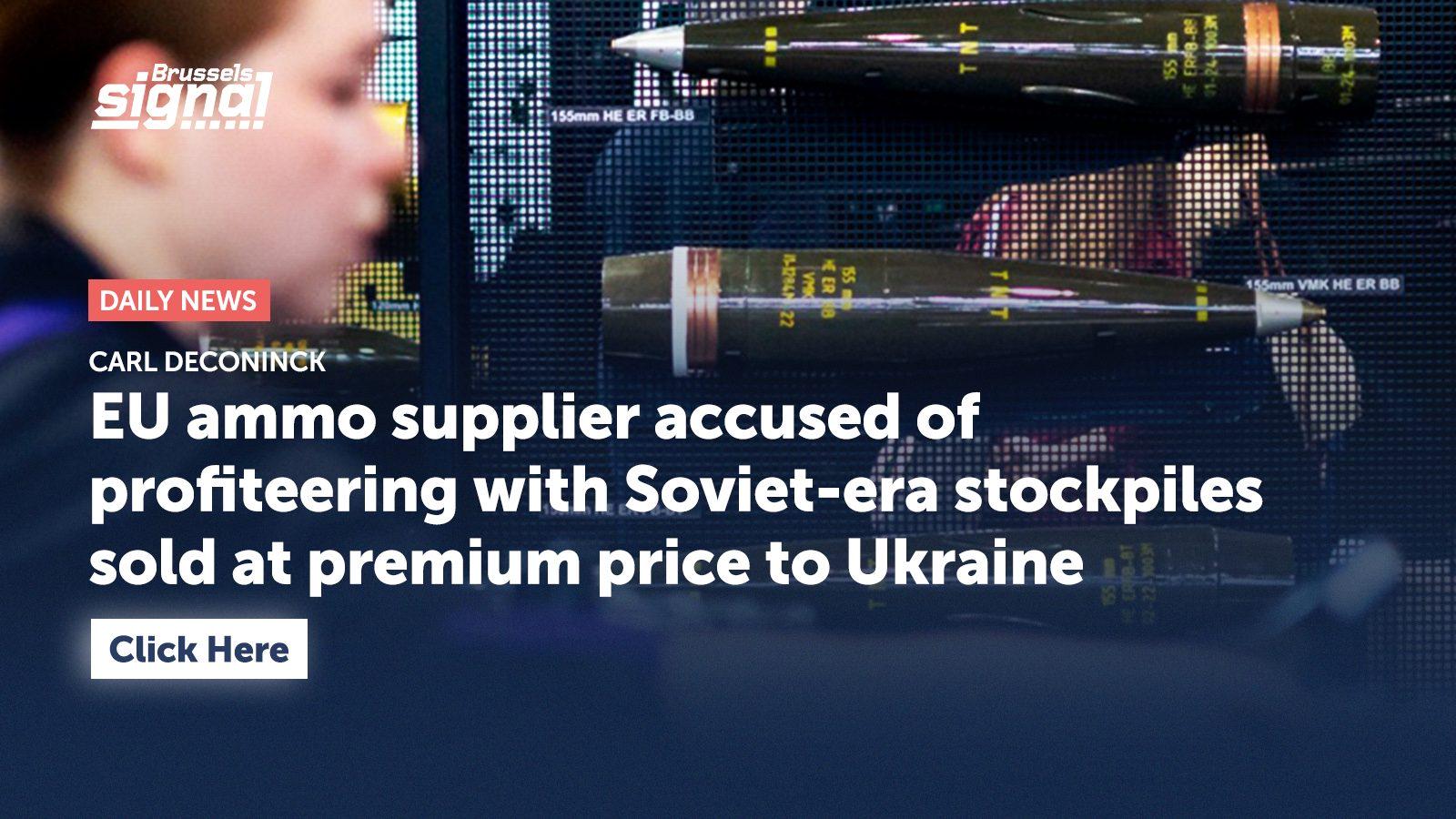
A major Central European defence contractor at the heart of the European Union’s emergency push to arm Ukraine is facing explosive allegations that it has built a lucrative business model around buying, refurbishing and reselling outdated Soviet-era ammunition rather than producing new shells at scale.
Investigative reporters from Hunterbrook Media targeted the Czechoslovak Group (CSG) Defence Systems, the Czech giant that completed Europe’s largest-ever military IPO in January, raising €3.8 billion and pitching itself as the continent’s answer to Rheinmetall.
While CSG’s prospectus touts capacity for around 630,000 large-caliber rounds annually — with 80 per cent supposedly 155 mm NATO-standard shells — the investigative outlet’s analysis of subsidiary accounts, factory footprints and satellite imagery suggests actual in-house output is far lower, perhaps 100,000 to 280,000 rounds.
The bulk of revenue, which made up two-thirds of the group’s total in 2025, appears to come from “recommissioning” third-party stockpiles acquired cheaply from global sources (often former Soviet or Warsaw Pact surplus in Africa and Asia) and marked up heavily before delivery to Ukraine and NATO allies.
Glavurdan on
There’s a special place in hell for these people
Same with people who increased prices of basic medicaments when COVID first appeared

2 Comments
A major Central European defence contractor at the heart of the European Union’s emergency push to arm Ukraine is facing explosive allegations that it has built a lucrative business model around buying, refurbishing and reselling outdated Soviet-era ammunition rather than producing new shells at scale.
Investigative reporters from Hunterbrook Media targeted the Czechoslovak Group (CSG) Defence Systems, the Czech giant that completed Europe’s largest-ever military IPO in January, raising €3.8 billion and pitching itself as the continent’s answer to Rheinmetall.
While CSG’s prospectus touts capacity for around 630,000 large-caliber rounds annually — with 80 per cent supposedly 155 mm NATO-standard shells — the investigative outlet’s analysis of subsidiary accounts, factory footprints and satellite imagery suggests actual in-house output is far lower, perhaps 100,000 to 280,000 rounds.
The bulk of revenue, which made up two-thirds of the group’s total in 2025, appears to come from “recommissioning” third-party stockpiles acquired cheaply from global sources (often former Soviet or Warsaw Pact surplus in Africa and Asia) and marked up heavily before delivery to Ukraine and NATO allies.
There’s a special place in hell for these people
Same with people who increased prices of basic medicaments when COVID first appeared