
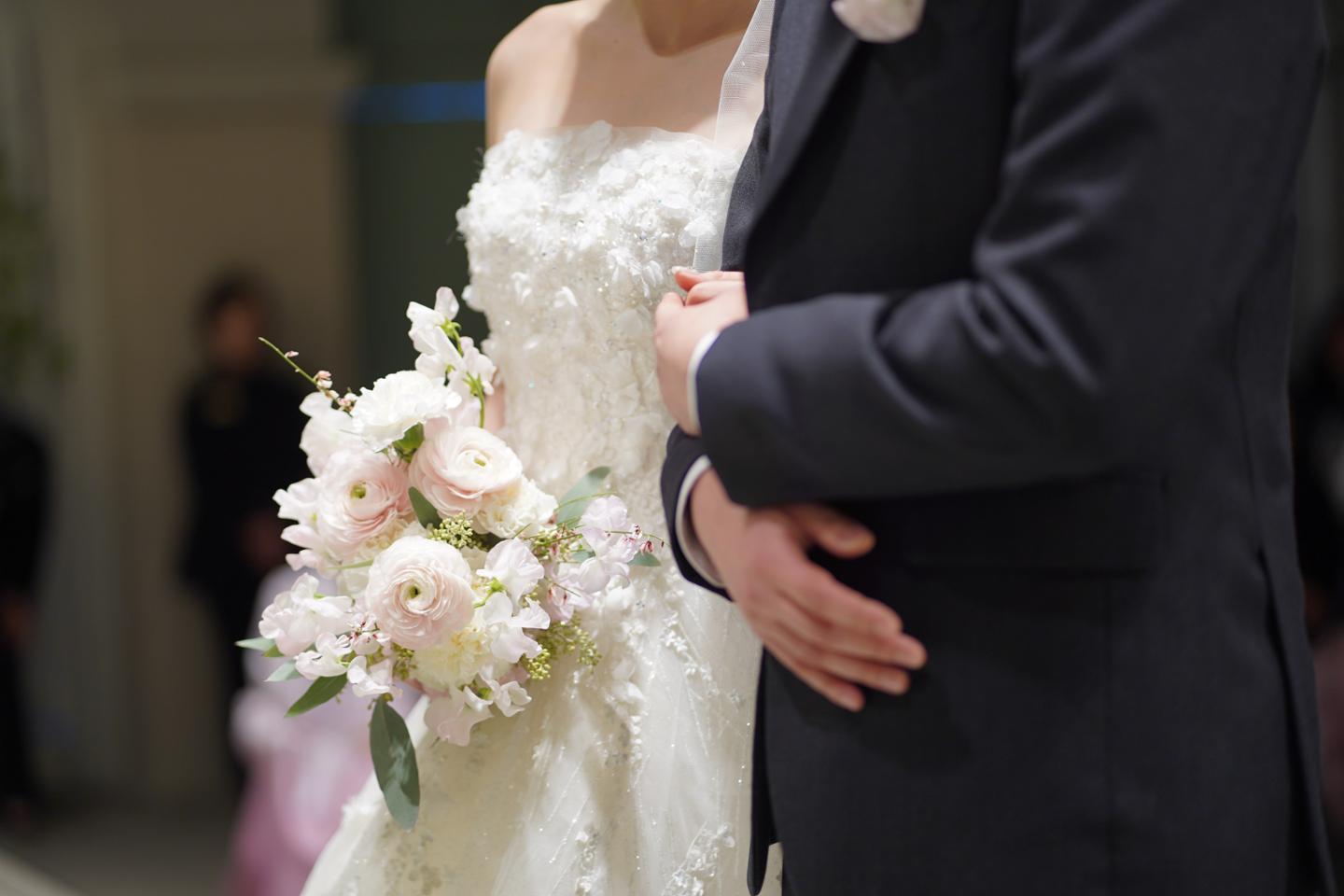
“If we’re going to marry eventually, why put it off?”
For Chu, who is set to become a May bride, each passing day is filled with anticipation. At 28, she is marrying earlier than many of her Korean peers, but she said the response has been more envy than concern.
“We decided to marry early because we wanted to have a child, and we saw so many couples struggle with infertility,” Chu said. “The thought of building a life together with my husband always gives me strength."
Her case is one of many reflecting a transformation in perception among young Koreans, who are increasingly starting to believe that marrying at a younger age may be better. For years, the struggle to find jobs has delayed financial independence for many young people, making late marriage the norm in Korean society.
However, young Koreans are now looking at marriage through a different lens. Still burdened by the need to find stable jobs and afford homes, some believe that building a family while they are still young and pooling their strength as a couple can help them establish a financial foundation more quickly.
Behind the changing perception is stronger government support for newlywed couples, particularly in housing. Oh Hyung-kyung, a 28-year-old resident of Seoul’s Songpa District, registered her marriage with her two-year-older partner in February after winning a spot in a public rental housing unit operated by the Seoul Housing & Urban Development Corp.
“You can stay there for up to 10 years after having a child, and the rent is much cheaper than market prices, so I couldn’t pass up the opportunity,” Oh said.
Last year, applications for public rental housing for newlywed couples drew 39,121 applicants for 1,686 available homes, resulting in a competition rate of 23.2 to 1. In certain areas such as Songpa and Gwanak, the rate exceeded 100 to 1.
Yoon, 27, is another case of a couple moving up their marriage schedule to match the move-in schedule for their newlywed home. Having won a spot for a house provided by Korea Land & Housing Corp. in Pyeongtaek, Gyeonggi Province last Dec., the couple filed a marriage registration a year earlier than he originally planned.
“Wedding venue costs are already no small burden, and after a year, meal prices seemed to rise by about 10,000 won per person,” Yoon said. “As overall costs became more expensive, I also felt a strong urge to just get married sooner.”
Chung Go-woon, a sociology professor at Korea University, said the trend reflects a tendency among couples to seek stability by combining their incomes amid economic inequality — a choice that is leading some toward marriage.
Young Koreans also cited psychological comfort as one of the biggest benefits of early marriage. Oh said the small, ordinary happiness of taking walks together after work made her feel that her relationship had become much more stable than when they were dating, as they now spend more time together.
Shin, who married this February, said with a smile that her husband had been a great source of support while she was looking for a job after finishing graduate school.
The rise in early marriage is also backed by statistics. According to Statistics Korea, the number of marriages among women aged 25 to 29 had steadily declined from 109,300 in 2015 to 55,700 in 2023, but rose for two consecutive years, reaching 64,300 in 2024 and 69,300 last year.
Among women aged 30 to 34, marriages also fell from 96,100 in 2015 to 61,800 in 2021, before rebounding to 64,200 in 2022 and climbing to 95,300 last year.
Men showed a similar trend. The number of marriages among men aged 25 to 29 nearly halved from 67,100 in 2015 to 34,600 in 2023, before rebounding in recent years to 39,800 in 2024 and 42,500 last year.
Among men aged 30 to 34, marriages bottomed out at 68,400 in 2022, then rose for three consecutive years to 98,700 last year.
Experts say young Koreans are beginning to take a different view of marriage. Jin Mi-jeong, a professor of child development and family studies at Seoul National University, said the trend appears to show the positive aspects of marriage and family coming back into focus, rather than the resistance many young people have long felt toward the patriarchal image of family.
Jung, 25, who is planning a wedding with her husband-to-be, said she is considering delaying her marriage registration so she can apply for public rental housing for young adults.
“I feel like getting married in your 20s is all about finding a balance between emotions and reality,” she said.
Marriage in Korea is basically a prerequisite for having children (there are very few out-of-wedlock births), which is why the birth rate is set to continue to increase along with the marriage rate.
Korea has been seeing robust economic growth and demographic recovery under the liberal Lee Jae-myung administration. The country has so far been one of the major winners of the AI age, and has bucked the trend of many developed democracies currently undergoing major economic and demographic upheaval.
Posted by Bursanich
1 Comment
Interesting, I remember not that long ago there were a bunch of incel chuds freaking out over South Korean woman supposedly refusing to date men at all.