
In a conference centre in The Hague last October, a roomful of Asia-watching European officials and experts were gathered for a symposium on relations with China when news broke that Beijing was expanding export controls on rare earths and other minerals.
Crucially, there was now an extraterritorial element: China could deny exports not only to direct buyers, but also restrict products made in third countries if they contained Chinese-origin rare earth content or controlled inputs.
In practice, that meant Beijing gained the ability to choke parts of European hi-tech and industrial supply chains even when the manufacturing was done outside China. Beijing could also hamper efforts to arm Ukraine in its war against Russia should, say, a drone contain a trace of a Chinese rare earth.
During a panel discussion that day, Dominic Porter – who manages relations with China at the EU’s External Action Service, its de facto foreign office – was asked if this was the lowest point in the bilateral relationship.
“It’s not the most fun thing for a diplomat to say that I’ve been shepherding a steadily declining relationship on a daily basis for the last four years and trying to manage decline … but it’s hard to disagree,” Porter said.
The October controls were eventually paused when Presidents Xi Jinping and Donald Trump met in Busan, South Korea, later that month, much to Europe’s relief, but they have hung like a sword of Damocles over Europe ever since.
The consolation was short-lived: the existing rare earth controls – introduced in April – kept a chokehold on European industry. As factories reported they were close to pausing production, efforts at negotiating a solution have floundered, with EU officials detecting a confidence in their Beijing counterparts that was not there before.
“They got Trump to back down. China now believes it knows how to win a trade war. There’s a swagger there,” said one official involved.
When the US and Chinese leaders meet again in Beijing this week, officials in Brussels, Berlin and beyond will be watching carefully, hoping that the fragile truce secured in the South Korean seaside city is rolled over, giving them another year to work towards mineral independence.
EU officials, in discussions with Chinese diplomats, have been told that an extension of the Busan deal is the most likely outcome from the talks.
But the summit is a reminder that despite the frequent talk of strategic autonomy, many aspects of Europe’s future are in the hands of the world’s two dominant powers – neither of which seems in the mood for making concessions to the bloc.
“We are doing outreach and getting a sense of what’s going on – we’re not entirely passive,” said an EU diplomat. “But we’re aware that we have little leverage here. None of us would be surprised if something nasty came out of it.”
While the mineral controls jolted the EU into action – at least rhetorically – China’s sheer dominance of the critical mineral sector means efforts to wean Europe off its dependence were always going to be long term.
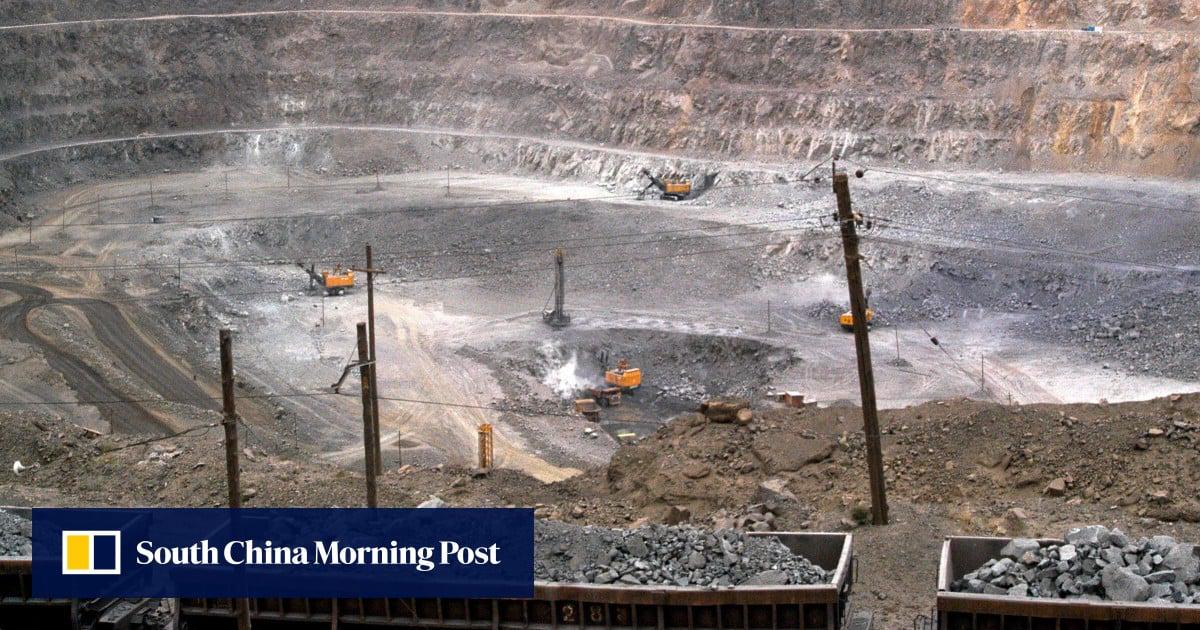
Among minerals that have been identified as “critical” by the EU, China controls at least 70 per cent or more of global mining or refining. It has cornered 94 per cent of the global permanent magnet production, more than 90 per cent of rare earth refining and 68 per cent of rare earth mining.
An analysis by the European Central Bank, meanwhile, found that more than 80 per cent of large European firms were no more than three intermediaries away from a Chinese rare earth producer.
Nonetheless, a paper published by the EU’s official think tank on Tuesday laid bare just how slow these efforts have been.
“Europe is lagging behind. It may have set ambitious local production targets under the Critical Raw Materials Act in 2023, and designated 60 strategic projects (47 inside and 13 outside of the EU) to deliver on them. However, it has not adopted the policies needed to make these financially viable in the face of China’s state-sponsored competition,” read the report from the EU Institute for Security Studies (EUISS).
“The European Court of Auditors in February 2026 concluded that the EU’s strategy for ‘import diversification’ has not produced ‘tangible results’,” it read.
Author Joris Teer, who leads the EUISS’ research on economic security and technology, described the controls as an “assassin’s mace” that “hang over” every negotiation the EU undertakes with Beijing.
“The Chinese have tried to scrap the European electric vehicle import duties by saying, well, listen, if you want your rare earths, you really need to scrap those. But the ‘crowbar’ goes farther than that,” Teer told journalists in a media briefing.
He described how Beijing used the controls to set the agenda leading up to the EU-China summit last summer, at which Brussels leaders wanted to discuss the country’s support for Russia and thorny issues on trade.
“In the lead-up to the July 2025 summit, all the talk here in town was this is an inflection point … this did not happen, because months before, China squeezed the rare earth supplies. As a result, the entire main topic of the summit was, can we please have some rare earths?”
Teer also pushed back against the idea that the EU was “collateral damage” from the controls, which were ostensibly introduced in response to Trump’s “Liberation Day” tariffs last April. Instead, he believes they contribute to China’s broader strategic goals.
“Two stand out: President Xi seeks to build a self-reliant industrial and technological fortress to shield China against geopolitical upheaval (including a potential conflict over Taiwan), while ensuring that foreign markets remain open to absorb its state-supported exports and sustain China’s economic development,” Teer wrote.
The conclusion drawn is that deployment of the rare earth weapon “raised the costs for Europe … of better protecting its industries” against Beijing’s policies.
“Beijing’s calibrated use of the critical raw material weapon in 2025 raised the costs for Europe … of better protecting its industries against China’s state-capitalist policies,” a move which the EUISS believes is unlikely to be an accident.
The controls have placed Europe in a bind: it wants to de-risk from China more than ever, but the restrictions make this an ever-riskier business.
Business groups say the Ministry of Commerce has perfected a drip-drip formula of issuing licenses, whereby companies have enough to sustain manufacturing for a few months but are unable to stockpile or ramp up their production.
In some instances, companies have pushed back on stronger EU moves against Beijing for fear of retribution: what happens if the mineral tap is turned off? This dynamic will persist as the bloc rolls out its early efforts at industrial policy, which have already resulted in abundant threats of retaliation.
As Trump and Xi meet in the Chinese capital, then, Europe will be watching from the sidelines – acutely aware that its grand industrial and military plans are caught up in a superpower tussle over which it has little control.
Posted by Otherwise_Young52201
1 Comment
The title of the article focuses on rare earths and the US-China meeting, but there’s a lot more to it than just that and expands greatly beyond the scope of the title. It also combines some themes of my previous posts on China-EU relations:
1. Short-term thinking driven by multiple international crises distracting the EU, such as the Iran war, Trump’s liberation day tariffs, etc.
2. Slow-walking of industrial improvement and de-risking of supply chains.
3. Divergence between the interests of EU companies versus the EU government with regards to Chinese supply chains.
I also agree with the idea that China-EU relations are now defined by systemic competition rather than collateral damage from China-US relations. The supply chain warfare between the EU and China has risen to more salient levels than ever before, especially with the [back and forth transparency laws passed within the two countries. ](https://www.dw.com/en/chinas-new-rules-give-the-west-a-new-headache/a-77075741)