
Oncoming “Agricultural Emergency Act” to appease farmers after Mercosur deal – Water rights, pesticides deregulation and hidden protectionism
Posted by WAGRAMWAGRAM
Oncoming “Agricultural Emergency Act” to appease farmers after Mercosur deal – Water rights, pesticides deregulation and hidden protectionism
Posted by WAGRAMWAGRAM
3 Comments
!ping FRANCE
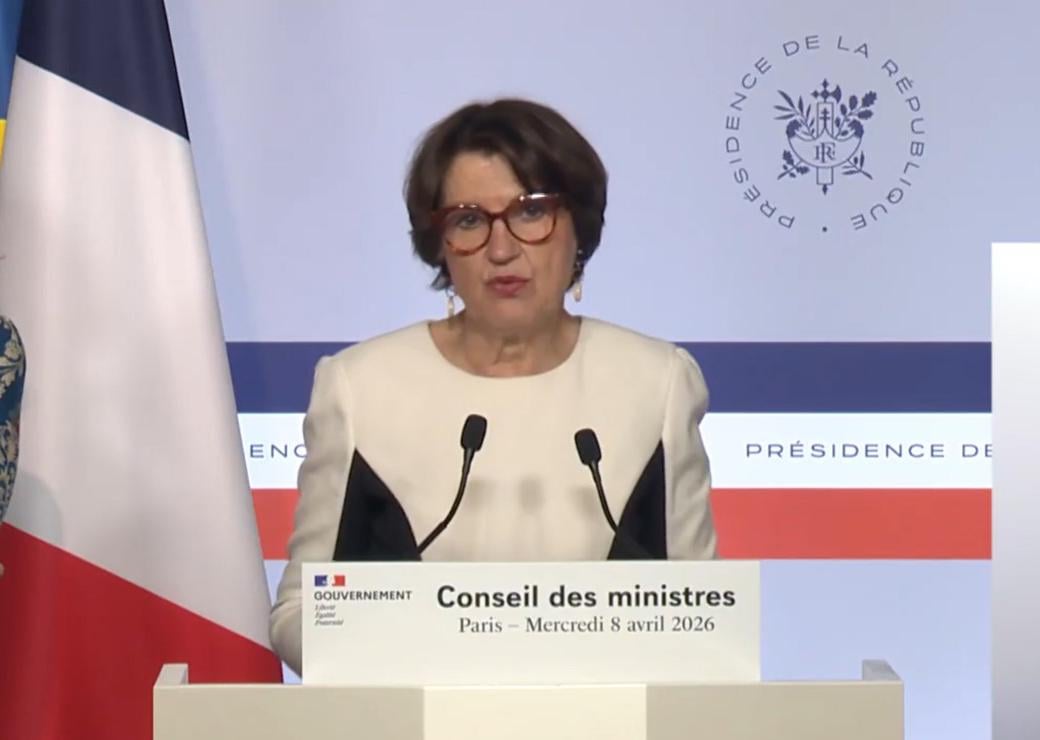
>Born out of the anger that erupted this winter, the **emergency bill on agricultural protection and sovereignty** was presented to the Cabinet on Wednesday. “The message is clear and legitimate: to be sovereign, we must **simplify farmers’ daily lives and free them up, without compromising on environmental protection**,” said the Minister for Agriculture and Food Sovereignty, Annie Genevard, following the Cabinet meeting, whilst environmental organisations are already up in arms against certain measures. The text, drafted in January and February, comprises 23 articles ranging from **water storage to the preservation of agricultural land, including the structuring of supply chains.**
>Whilst the government has virtually abandoned state support for territorial food projects (PATs), Article 1 provides for the creation of ‘**agricultural projects for the future**’ which will form part of the food sovereignty conferences, the territorial component of which was launched at the Agricultural Show in February. These certified projects will have to meet production targets and will benefit from “enhanced support” and “priority access to funding”, the Ministry states in its press pack.
>*Water storage*
>In response to demands from the FNSEA **(main Right-wing farmer union),** the draft bill also **aims to ‘simplify regulations’.** In Articles 5 to 8**, it addresses the sensitive issue of water** – a source of numerous conflicts – by granting the prefect greater powers over storage facilities. “There was an abundance of water this winter (…), we could easily have stored a small amount for the summer,” argued the minister, noting that it is now “difficult, if not impossible, to develop storage projects”.
>In practical terms, Article 5 provides for **speeding up the authorisation of agricultural water projects (reservoirs, hillside retention basins, etc.)** provided they are included in a regional water management plan (PTGE), **by simplifying public participation**. **Public meetings would be replaced by a duty office run by the investigating commissioner at the town hall**. The role of single collective management bodies (OUGCs) would be strengthened as part of an “irrigation strategy”. However, the prefect could step in to replace a failing OUGC.
>In the event of a local dispute, **water users may draw up a water management development plan (Sage) to regulate agricultural practices, particularly in sensitive areas (wetlands, catchment areas).** Under the draft bill, if a PTGE does not comply with the SAGE, the prefect could ask the coordinating prefect for the catchment area for an exceptional exemption to authorise the project (Article 6). The text also provides for better proportioning of compensation measures in wetlands and for clarifying responsibilities between local authorities and the State regarding catchment areas. The State would focus on so-called “priority” catchments – namely the most polluted ones – by, for example, banning certain pesticides. “Whilst we want to increase storage capacity, and thus quantity, we must remain very strict on quality,” the minister assured.
>**“We must put an end to the water war; the violence that took place at Sainte-Soline has no place in this debate**,” (*Police clashed with leftist activists over several days to open the construction of a water tank*) the minister also stated on Wednesday on France 2, explaining that in France “7% of land” is irrigated, compared to 50% in Spain.
I can’t wait until all farmers are replaced by Waymo combines
Submitted Statement
1. Why this matter to the sub
Numerous reforms to “usership rights” and land use are going to be debated at the Assembly, following the backlash of farmers., indeed farming is a very protected but also very regulated and costly endeavour thanks to multiple rounds of control and reduced access to what farmers in other countries can use. These issues are mostly the ones the right-wing and far-right farmer unions were complaining about. On the opposite side, these reforms are mostly due to lobbying and not really a desire for reform and thus illiberal.
2. What is to be discussed
farmers, Mercosur deal, Macron
3. My opinion
While it may appear to some that yes indeed this act help remove the threat of local activists against infrastructure building, in reality it only helps farmers and isn’t a real reform of the building code. In addition, it contains a lot of stupid protectionism that plays on the fear of chemicals and the lack of understanding that the median voters have of science
Banning a chemical as fertilizer or pesticide is not banning the consumption (or presence) of trace amounts of that chemical in food. Some substances may be considered too risky for widespread agricultural use, while tiny residual amounts can still fall below established safety thresholds for human consumption. Or just being banned due to activism (gold plating)
There’s also nothing about farm sizes (small farms = good is political dogma) or modernization / industrialization (handwork good for some reason)