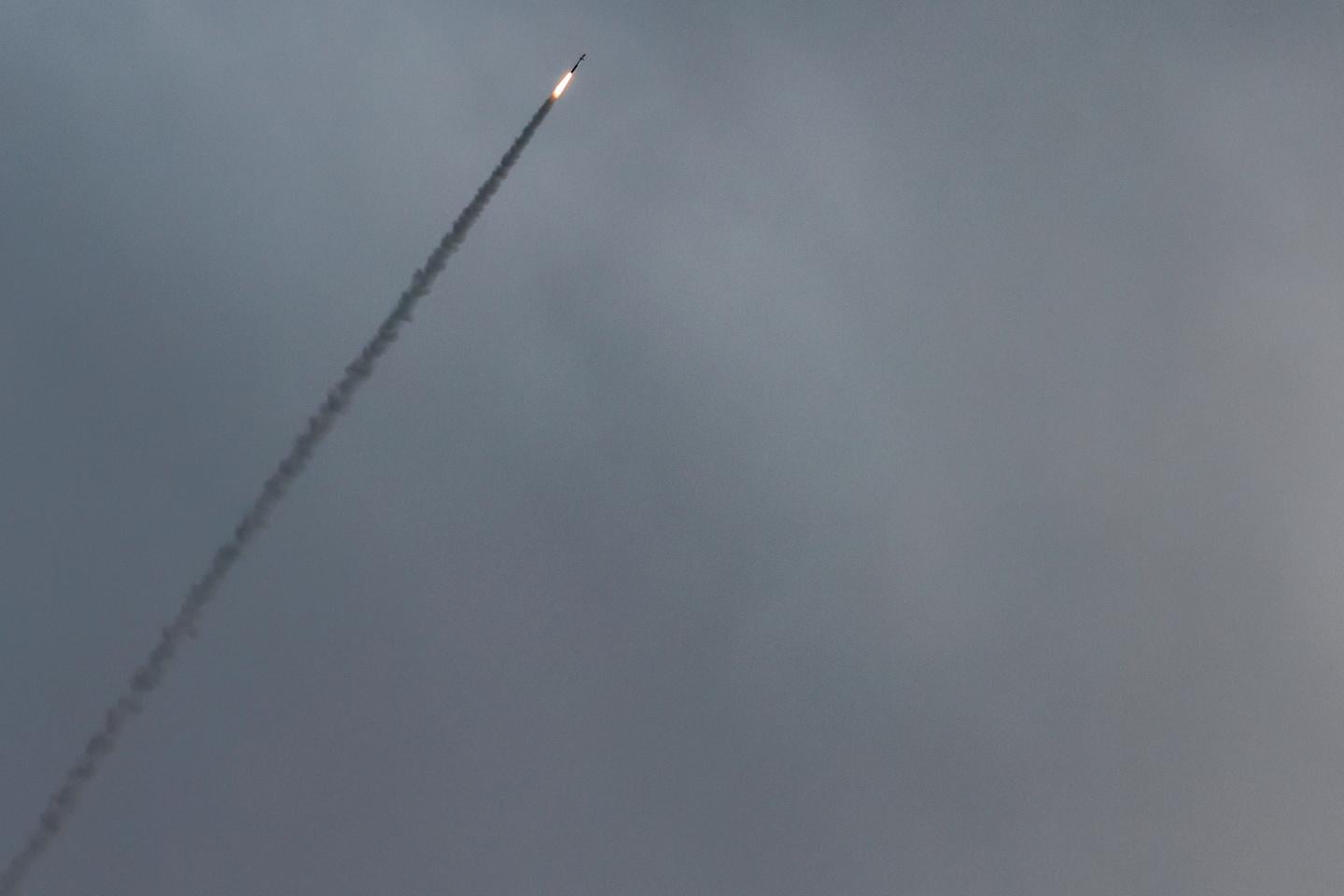
The U.S. military has depleted much of its inventory of advanced missile-defense interceptors after expending far more high-end munitions defending Israel amid hostilities with Iran than Israeli forces used themselves, according to Defense Department assessments described to The Washington Post.
The imbalance, according to three U.S. officials who spoke on the condition of anonymity to discuss sensitive security matters, underscores the extent to which Washington has shouldered the burden of countering Iranian ballistic missile strikes during Operation Epic Fury, and raises questions about U.S. military readiness and security commitments around the world.
The United States launched more than 200 Terminal High Altitude Area Defense, or THAAD, interceptors in defense of Israel — roughly half of the Pentagon’s total inventory — along with more than 100 Standard Missile-3 and Standard Missile-6 interceptors fired from naval vessels in the eastern Mediterranean, said the U.S. officials, who, like others in this article, spoke on the condition of anonymity to discuss sensitive security matters. By contrast, Israel fired fewer than 100 of its Arrow interceptors and around 90 David’s Sling interceptors, some of which were used against less sophisticated projectiles fired by Iran-backed groups in Yemen and Lebanon.
Military analysts said the data described to The Post offers a rare window into how the United States and Israel work together.
“The numbers are striking,” said Kelly Grieco, a senior fellow at the Stimson Center. “The United States absorbed most of the missile defense mission while Israel conserved its own magazines. Even if the operational logic was sound, the United States is left with roughly 200 THAAD interceptors and a production line that can’t keep pace with demand.”
The shortage of U.S. interceptors has alarmed U.S. allies in Asia, particularly Japan and South Korea, which rely on the United States as a deterrent to potential threats from North Korea and China. “That bill risks coming due in theaters that have nothing to do with Iran,” said Grieco.
U.S. and Israeli officials routinely tout their close cooperation and the strength of Israel’s multilayered air-defense system. But the Defense Department assessments suggest a more lopsided dynamic.
“In total, the U.S. shot around 120 more interceptors and engaged twice as many Iranian missiles,” said a U.S. administration official, who, like others, spoke on the condition of anonymity to discuss sensitive security matters.
If the United States and Israel resume hostilities against Iran in the coming days, as President Donald Trump has [threatened to do](https://www.washingtonpost.com/politics/2026/05/18/trump-says-hes-called-off-attack-iran/), the U.S. military is likely to expend an even greater share of interceptors because of a recent decision by the Israeli military to take some of its missile defense batteries offline for maintenance, said an administration official. “The imbalance will likely be exacerbated if fighting restarts,” the official said.
In a statement, the Pentagon defended the balance of military resources used between Israel and the United States.
“Ballistic missile interceptors are just one tool in a vast network of systems and capabilities that comprise a layered and integrated air defense network,” said Sean Parnell, the Pentagon’s chief spokesman. “Both Israel and the United States carried the defensive burden equitably during Operation Epic Fury, which saw both countries employ fighter aircraft, counter-UAS systems, and various other advanced air and missile defense capabilities with maximal effectiveness.”
The Israeli government also defended the approach. “Operations Roaring Lion and Epic Fury were coordinated at the highest and closest levels, to the benefit of both countries and their allies,” the Israeli Embassy in Washington said in a statement. “The U.S. has no other partner with the military willingness, readiness, shared interests, and capabilities of Israel.”
Since the start of the conflict on Feb. 28, the U.S. and Israel have worked together closely, killing Iran’s supreme leader and scores of senior Iranian military and political leaders while laying waste to Iran’s navy and air force.
Standard_Ad7704 on
SS: The U.S. military has depleted much of its missile-defense inventory defending Israel against Iran, according to Defense Department assessments described to The Washington Post. The U.S. launched over 200 THAAD interceptors (half of the total inventory) in defense of Israel, while Israel used fewer than 100 Arrow interceptors and around 90 David’s Sling interceptors. This imbalance raises concerns about U.S. military readiness and security commitments globally, especially in Asia.
raitaisrandom on
>The United States absorbed most of the missile defense mission while Israel conserved its own magazines.
The Buyer’s Remorse the Israeli electorate are going to suffer in a few years after Trump’s gone when a large plurality, if not absolute majority of Americans favor reconsidering the USA’s relationship with Israel is gonna be a hell of a thing.

3 Comments
The U.S. military has depleted much of its inventory of advanced missile-defense interceptors after expending far more high-end munitions defending Israel amid hostilities with Iran than Israeli forces used themselves, according to Defense Department assessments described to The Washington Post.
The imbalance, according to three U.S. officials who spoke on the condition of anonymity to discuss sensitive security matters, underscores the extent to which Washington has shouldered the burden of countering Iranian ballistic missile strikes during Operation Epic Fury, and raises questions about U.S. military readiness and security commitments around the world.
The United States launched more than 200 Terminal High Altitude Area Defense, or THAAD, interceptors in defense of Israel — roughly half of the Pentagon’s total inventory — along with more than 100 Standard Missile-3 and Standard Missile-6 interceptors fired from naval vessels in the eastern Mediterranean, said the U.S. officials, who, like others in this article, spoke on the condition of anonymity to discuss sensitive security matters. By contrast, Israel fired fewer than 100 of its Arrow interceptors and around 90 David’s Sling interceptors, some of which were used against less sophisticated projectiles fired by Iran-backed groups in Yemen and Lebanon.
Military analysts said the data described to The Post offers a rare window into how the United States and Israel work together.
“The numbers are striking,” said Kelly Grieco, a senior fellow at the Stimson Center. “The United States absorbed most of the missile defense mission while Israel conserved its own magazines. Even if the operational logic was sound, the United States is left with roughly 200 THAAD interceptors and a production line that can’t keep pace with demand.”
The shortage of U.S. interceptors has alarmed U.S. allies in Asia, particularly Japan and South Korea, which rely on the United States as a deterrent to potential threats from North Korea and China. “That bill risks coming due in theaters that have nothing to do with Iran,” said Grieco.
U.S. and Israeli officials routinely tout their close cooperation and the strength of Israel’s multilayered air-defense system. But the Defense Department assessments suggest a more lopsided dynamic.
“In total, the U.S. shot around 120 more interceptors and engaged twice as many Iranian missiles,” said a U.S. administration official, who, like others, spoke on the condition of anonymity to discuss sensitive security matters.
If the United States and Israel resume hostilities against Iran in the coming days, as President Donald Trump has [threatened to do](https://www.washingtonpost.com/politics/2026/05/18/trump-says-hes-called-off-attack-iran/), the U.S. military is likely to expend an even greater share of interceptors because of a recent decision by the Israeli military to take some of its missile defense batteries offline for maintenance, said an administration official. “The imbalance will likely be exacerbated if fighting restarts,” the official said.
In a statement, the Pentagon defended the balance of military resources used between Israel and the United States.
“Ballistic missile interceptors are just one tool in a vast network of systems and capabilities that comprise a layered and integrated air defense network,” said Sean Parnell, the Pentagon’s chief spokesman. “Both Israel and the United States carried the defensive burden equitably during Operation Epic Fury, which saw both countries employ fighter aircraft, counter-UAS systems, and various other advanced air and missile defense capabilities with maximal effectiveness.”
The Israeli government also defended the approach. “Operations Roaring Lion and Epic Fury were coordinated at the highest and closest levels, to the benefit of both countries and their allies,” the Israeli Embassy in Washington said in a statement. “The U.S. has no other partner with the military willingness, readiness, shared interests, and capabilities of Israel.”
Since the start of the conflict on Feb. 28, the U.S. and Israel have worked together closely, killing Iran’s supreme leader and scores of senior Iranian military and political leaders while laying waste to Iran’s navy and air force.
SS: The U.S. military has depleted much of its missile-defense inventory defending Israel against Iran, according to Defense Department assessments described to The Washington Post. The U.S. launched over 200 THAAD interceptors (half of the total inventory) in defense of Israel, while Israel used fewer than 100 Arrow interceptors and around 90 David’s Sling interceptors. This imbalance raises concerns about U.S. military readiness and security commitments globally, especially in Asia.
>The United States absorbed most of the missile defense mission while Israel conserved its own magazines.
The Buyer’s Remorse the Israeli electorate are going to suffer in a few years after Trump’s gone when a large plurality, if not absolute majority of Americans favor reconsidering the USA’s relationship with Israel is gonna be a hell of a thing.