
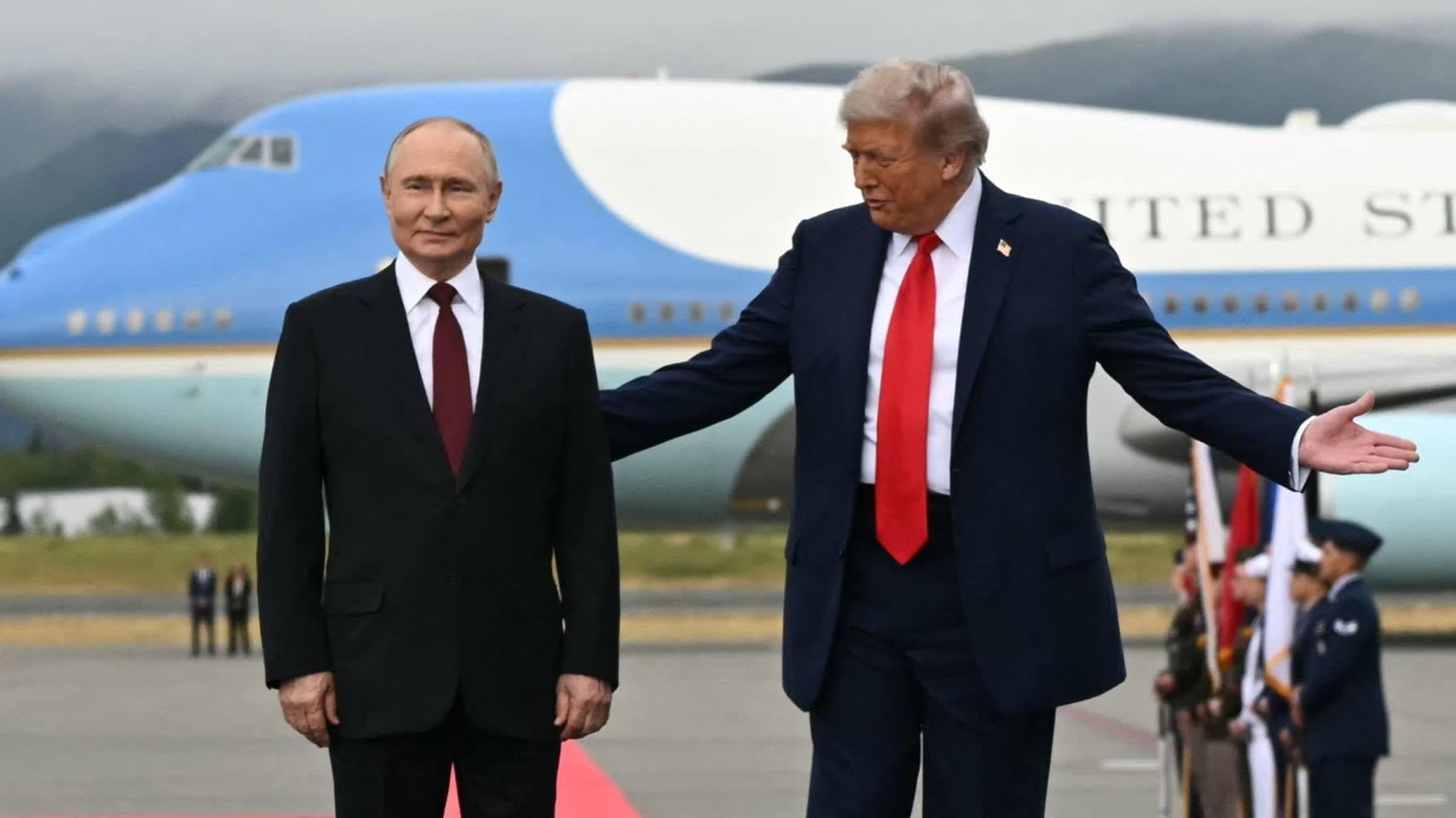
Opinion: Both men gambled on a weak adversary and assumed victory within days. Each is burdening their countries with costs that will persist many years after they have lost power.
Posted by Financial_Army_5557
Opinion: Both men gambled on a weak adversary and assumed victory within days. Each is burdening their countries with costs that will persist many years after they have lost power.
Posted by Financial_Army_5557
1 Comment
When Russia invaded Ukraine in 2022, Donald Trump hailed the move as “genius”. In practice, Vladimir Putin’s war was our age’s costliest great power error until Trump launched Operation Epic Fury three months ago.
Both men gambled on a weak adversary and assumed victory within days. Each is burdening their countries with costs that will persist many years after they have lost power. As case studies of how to throw away strong hands, Putin and Trump are without peer. As the lap into which most of their cards have fallen, China is the main beneficiary.
Neither man can escape their self-created traps. In Putin’s case, the failure of his “special operation” is existential. He is less likely to acknowledge reality because it would cost him his job and possibly his life. Trump’s mental block is chiefly about pride and politics. No amount of AI slop can distract from his humiliation of reaching terms with a regime he has repeatedly claimed to have obliterated. In so doing, he will be cementing its grip.
Those on America’s hawkish right protest that Iran’s regime and Ukraine’s are incomparable. One is a nasty theocracy; the other is a functioning democracy (that is nowadays often less corrupt than Washington). But strategy is measured in real-world outcomes, not wishfulness.
Many schools of thought are being discredited, including the idea on America’s political extremes that Nato is a US plot to encircle Russia. Indeed, this is a tough era for people with any kind of world view. Both the neocons and the America Firsters look foolish — the first for backing yet another ill-judged war of choice; the second for trusting Trump. But great power realists are also in a bind. Though China gains from Putin and Trump’s blunders, medium-sized powers are emerging as the ultimate victors (Israel being the most obvious exception).
America’s sway over the Middle East is broken. Iran will probably emerge as a regional force with which others must come to terms. Ukraine will at minimum be a key partner of any post-US Nato. In very different ways, Kyiv and Tehran are showing the world how to bring a colossus low. Taiwan is not the only country that is studying these lessons closely.