For years, U.S. President Donald Trump berated his predecessors for plunging the country into “forever wars” in the Middle East. His war on Iran may not last forever, but he is now finding it very hard to extricate the United States from a conflict that he has good reason to regret.
Over the weekend, Trump insisted that a deal to end the war with Iran and reopen the Strait of Hormuz was “largely negotiated” and nearly done. Iranian officials also suggested that they were close to agreeing to a memorandum of understanding with the United States that would stop fighting on all fronts and lift a U.S. naval blockade. The terms of this new agreement, however, were unclear and it seemed that the two sides remained far apart on important issues, likely including Iran’s willingness to make immediate concessions about its nuclear program. That uncertainty has now turned into doubt. On May 25, U.S. forces struck targets in the south of Iran, spurring Iran’s Islamic Revolutionary Guard Corps to promise retaliation, with future negotiations and the ostensible cease-fire now in the balance.
Trump’s war on Iran has raised the haunting specters of interventions past. During congressional hearings in late April, U.S. Democratic Representative John Garamendi called the war a “quagmire” and a “political and economic disaster at every level.” Defense Secretary Pete Hegseth responded aggressively, mocking the idea that a two-month mission was a quagmire, before going on to accuse Garamendi of being defeatist and “handing propaganda to our enemies.”
Perhaps quagmire was not the best metaphor. It is so often associated with the Vietnam War, in which U.S. troops were bogged down for years. Iran is also not going to resemble one of the “forever wars” that followed the U.S. invasions of Afghanistan, in 2001, and Iraq, in 2003. Indeed, precisely because American leaders now fear such quagmires, they are reluctant to send significant ground forces into situations in which they may get stuck.
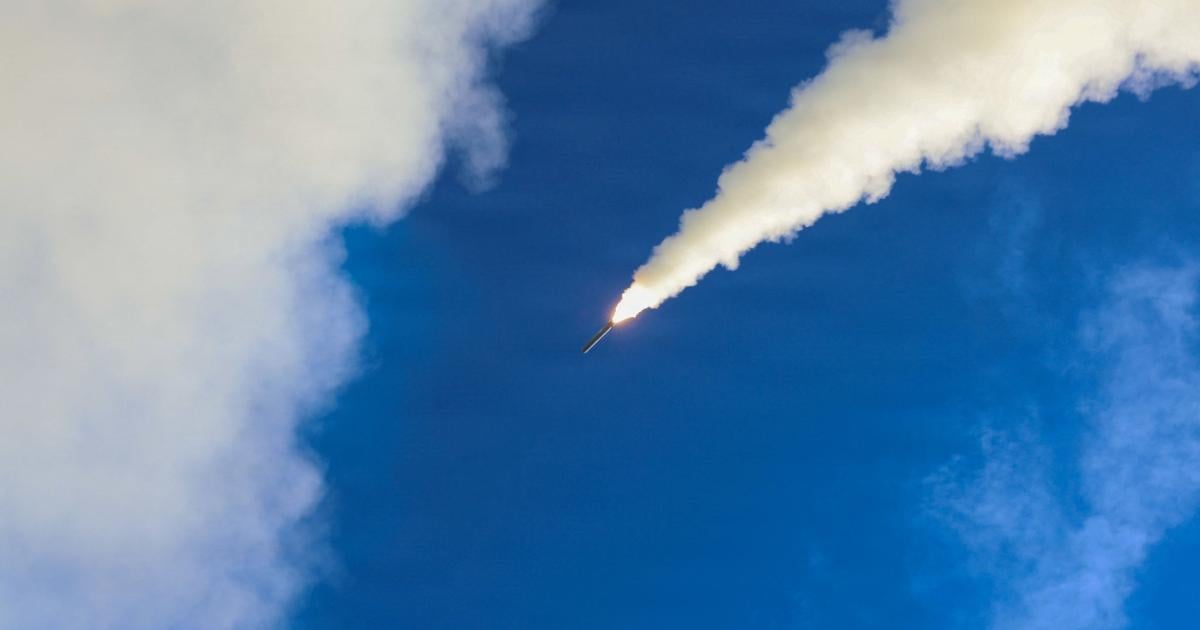
Instead, in the current Iran conflict, the United States is relying on missiles, airpower, and weapons systems enhanced by artificial intelligence. Fighting in this way, however, means that the application of military power can only ever be coercive, pressuring the enemy in the hope that it eventually complies with U.S. demands. The United States cannot simply take what it wants, as it did when it marched on Baghdad and toppled Saddam Hussein’s government. The Trump administration’s frustration today is that the Iranian regime is still refusing to comply—as further evidenced by the latest round of negotiations—and it is not obvious how Tehran can be compelled to give in. Hegseth’s bluster could not hide the fact that the core objectives of Operation Epic Fury—notably, effecting regime change and eradicating Iran’s nuclear program—had not been achieved. And with Iran’s closure of the Strait of Hormuz, the overall situation was worse than it had been before the start of the operation.
Trump’s gambit may not turn out to be a long war, but it has already failed as a short war. Operation Epic Fury did not produce the sort of victory claimed by its leaders. In this respect, it shares some of the features of the wars I discussed in an essay in [*Foreign Affairs*](https://www.foreignaffairs.com/age-forever-wars) last year, in which I warned against the “short-war fallacy”: the conviction that military and technological advantages would allow a state to defeat an enemy with the speed, direction, and ruthlessness of an initial attack. Great powers, I noted, “tend to assume that their significant military superiority will quickly overwhelm opponents.”
From the Russian invasion of Ukraine in 2022 to the bludgeoning U.S.-Israeli campaign on Iran this year, this strategy assumes that moving fast with tremendous force will incapacitate adversaries and achieve swift success on the battlefield. Artificial intelligence makes this possibility even more beguiling, as AI promises to allow even faster decision-making and execution in warfare. But as Russia discovered in Ukraine, wars do not often end so easily. The conflict with Iran shows that Washington has fallen prey to the short-war fallacy, focusing inordinately on the power of its means while losing sight of how to achieve its ends.
DEAD END
At a press conference on April 8, as a cease-fire took effect, Hegseth claimed that “Iran begged for this cease-fire” and that “Operation Epic Fury was a historic and overwhelming victory on the battlefield.” But that was palpably not the case. Iran has acted not as if it has been defeated but as if it has used the war to strengthen its position. As things stand nearly two months later, the operation has failed to achieve its stated political objectives, and it is not even clear how the resumption of military operations, which U.S. officials had threatened on several occasions in recent weeks before launching strikes on May 25, would improve matters.
Instead of the Iranian regime collapsing, it has been reinforced as the hard-liners of the Islamic Revolutionary Guard Corps have used the war to tighten their hold over the country. The Strait of Hormuz, the vital sea corridor through which so much of the world’s oil passes, is now functionally closed. The only thing stopping Iran from taking full advantage of the strait is an American counter-blockade of ships using Iranian ports, all of which has added to the strain on the global economy. Leaving aside the awkward fact that Trump had claimed that the strikes against Iranian enrichment plants in June 2025 had “obliterated” the Iranian nuclear program, he now claims that the economic pain caused by this war is a price worth paying to deny Iran a nuclear weapon. Whether or not the American people agree, Trump’s problem is that he is in no better position to achieve this objective than he was before the war, when serious discussions regarding limits on Iran’s enrichment capacity were apparently underway.
To be sure, Iran is not in a great position itself. Just because the regime has shown resilience should not lead to inflated perceptions of its leverage. The country’s economy is a complete mess, the public’s basic needs can barely be met, and the regime is able to hold on to power only through cruel repression. The emergency of war has helped the regime consolidate its hold on the country, but it has had to absorb many blows and it remains unpopular. Its days may be numbered, even if its ultimate collapse takes years, not months.
The problem for Trump is that the longer the impasse continues the more the American public (never mind the rest of the world) will feel the inflationary consequences of the closure of the strait. Trump wants to move on, but to do so he desperately needs some short-term concessions from Iran to justify his having launched this war. Tehran is not inclined to offer those concessions; after all, this fight is existential for them, not for the Americans. That means that negotiations between Washington and Tehran will be shaped less by the balance of military power and more by the extent to which the belligerents can withstand very different forms of economic pain. That calculation bodes ill for the United States.
The conflict with Iran will likely not be a forever war of the kind that so haunts U.S. policymakers, simply because it has yet to draw in significant numbers of American boots on the ground. But in assuming that its superior firepower and technological capabilities would engineer a swift victory (and avoid repeating quagmires of the past), Washington walked into a dead end. It has succumbed to the short-war fallacy and now finds itself in an invidious position of its own making.
WAGRAMWAGRAM on
Maybe it could have succeeded had Trump acted in late December when protests were going on instead of going el Presidente hunting.
Standard_Ad7704 on
SS:
* Despite executing a massive, AI-enhanced military campaign, the United States failed to achieve its primary political objectives of toppling the Iranian regime and eradicating its nuclear program**.**
* Powerful nations often mistakenly assume that massive military superiority and advanced technology, particularly AI, will easily and quickly overwhelm opponents. This overconfidence leads leaders to launch military campaigns expecting a swift victory that rarely materializes.
* Instead of collapsing, Iran absorbed the military blows, solidified internal control, and successfully counter-escalated by effectively closing the economically vital Strait of Hormuz. The conflict has devolved into a military stalemate, allowing Iran to leverage the global economic disruption caused by the Strait’s closure to negotiate on its own terms.
* When an overwhelming initial strike fails to secure immediate surrender, the superior military power is pushed into a dead end. Unwilling to escalate to a full ground invasion, the stronger state is trapped in an economic war of attrition. This inadvertently empowers the weaker adversary to negotiate on its own terms and forces the more powerful state to accept awkward compromises to exit the conflict. Such is the case of the US’s war on Iran.
Yeangster on
You have Donald Trump who thinks what we did wrong in Iraq is we didn’t just take their oil. Pete Hegseth who thinks what we did wrong in Iraq was we didn’t do enough war crimes. And Bibi Netanyahu who doesn’t care about anything other than his next election.
Really terrible combination of leaders
sleepyrivertroll on
>War is a continuation of diplomacy by other means.

5 Comments
For years, U.S. President Donald Trump berated his predecessors for plunging the country into “forever wars” in the Middle East. His war on Iran may not last forever, but he is now finding it very hard to extricate the United States from a conflict that he has good reason to regret.
Over the weekend, Trump insisted that a deal to end the war with Iran and reopen the Strait of Hormuz was “largely negotiated” and nearly done. Iranian officials also suggested that they were close to agreeing to a memorandum of understanding with the United States that would stop fighting on all fronts and lift a U.S. naval blockade. The terms of this new agreement, however, were unclear and it seemed that the two sides remained far apart on important issues, likely including Iran’s willingness to make immediate concessions about its nuclear program. That uncertainty has now turned into doubt. On May 25, U.S. forces struck targets in the south of Iran, spurring Iran’s Islamic Revolutionary Guard Corps to promise retaliation, with future negotiations and the ostensible cease-fire now in the balance.
Trump’s war on Iran has raised the haunting specters of interventions past. During congressional hearings in late April, U.S. Democratic Representative John Garamendi called the war a “quagmire” and a “political and economic disaster at every level.” Defense Secretary Pete Hegseth responded aggressively, mocking the idea that a two-month mission was a quagmire, before going on to accuse Garamendi of being defeatist and “handing propaganda to our enemies.”
Perhaps quagmire was not the best metaphor. It is so often associated with the Vietnam War, in which U.S. troops were bogged down for years. Iran is also not going to resemble one of the “forever wars” that followed the U.S. invasions of Afghanistan, in 2001, and Iraq, in 2003. Indeed, precisely because American leaders now fear such quagmires, they are reluctant to send significant ground forces into situations in which they may get stuck.
Instead, in the current Iran conflict, the United States is relying on missiles, airpower, and weapons systems enhanced by artificial intelligence. Fighting in this way, however, means that the application of military power can only ever be coercive, pressuring the enemy in the hope that it eventually complies with U.S. demands. The United States cannot simply take what it wants, as it did when it marched on Baghdad and toppled Saddam Hussein’s government. The Trump administration’s frustration today is that the Iranian regime is still refusing to comply—as further evidenced by the latest round of negotiations—and it is not obvious how Tehran can be compelled to give in. Hegseth’s bluster could not hide the fact that the core objectives of Operation Epic Fury—notably, effecting regime change and eradicating Iran’s nuclear program—had not been achieved. And with Iran’s closure of the Strait of Hormuz, the overall situation was worse than it had been before the start of the operation.
Trump’s gambit may not turn out to be a long war, but it has already failed as a short war. Operation Epic Fury did not produce the sort of victory claimed by its leaders. In this respect, it shares some of the features of the wars I discussed in an essay in [*Foreign Affairs*](https://www.foreignaffairs.com/age-forever-wars) last year, in which I warned against the “short-war fallacy”: the conviction that military and technological advantages would allow a state to defeat an enemy with the speed, direction, and ruthlessness of an initial attack. Great powers, I noted, “tend to assume that their significant military superiority will quickly overwhelm opponents.”
From the Russian invasion of Ukraine in 2022 to the bludgeoning U.S.-Israeli campaign on Iran this year, this strategy assumes that moving fast with tremendous force will incapacitate adversaries and achieve swift success on the battlefield. Artificial intelligence makes this possibility even more beguiling, as AI promises to allow even faster decision-making and execution in warfare. But as Russia discovered in Ukraine, wars do not often end so easily. The conflict with Iran shows that Washington has fallen prey to the short-war fallacy, focusing inordinately on the power of its means while losing sight of how to achieve its ends.
DEAD END
At a press conference on April 8, as a cease-fire took effect, Hegseth claimed that “Iran begged for this cease-fire” and that “Operation Epic Fury was a historic and overwhelming victory on the battlefield.” But that was palpably not the case. Iran has acted not as if it has been defeated but as if it has used the war to strengthen its position. As things stand nearly two months later, the operation has failed to achieve its stated political objectives, and it is not even clear how the resumption of military operations, which U.S. officials had threatened on several occasions in recent weeks before launching strikes on May 25, would improve matters.
Instead of the Iranian regime collapsing, it has been reinforced as the hard-liners of the Islamic Revolutionary Guard Corps have used the war to tighten their hold over the country. The Strait of Hormuz, the vital sea corridor through which so much of the world’s oil passes, is now functionally closed. The only thing stopping Iran from taking full advantage of the strait is an American counter-blockade of ships using Iranian ports, all of which has added to the strain on the global economy. Leaving aside the awkward fact that Trump had claimed that the strikes against Iranian enrichment plants in June 2025 had “obliterated” the Iranian nuclear program, he now claims that the economic pain caused by this war is a price worth paying to deny Iran a nuclear weapon. Whether or not the American people agree, Trump’s problem is that he is in no better position to achieve this objective than he was before the war, when serious discussions regarding limits on Iran’s enrichment capacity were apparently underway.
To be sure, Iran is not in a great position itself. Just because the regime has shown resilience should not lead to inflated perceptions of its leverage. The country’s economy is a complete mess, the public’s basic needs can barely be met, and the regime is able to hold on to power only through cruel repression. The emergency of war has helped the regime consolidate its hold on the country, but it has had to absorb many blows and it remains unpopular. Its days may be numbered, even if its ultimate collapse takes years, not months.
The problem for Trump is that the longer the impasse continues the more the American public (never mind the rest of the world) will feel the inflationary consequences of the closure of the strait. Trump wants to move on, but to do so he desperately needs some short-term concessions from Iran to justify his having launched this war. Tehran is not inclined to offer those concessions; after all, this fight is existential for them, not for the Americans. That means that negotiations between Washington and Tehran will be shaped less by the balance of military power and more by the extent to which the belligerents can withstand very different forms of economic pain. That calculation bodes ill for the United States.
The conflict with Iran will likely not be a forever war of the kind that so haunts U.S. policymakers, simply because it has yet to draw in significant numbers of American boots on the ground. But in assuming that its superior firepower and technological capabilities would engineer a swift victory (and avoid repeating quagmires of the past), Washington walked into a dead end. It has succumbed to the short-war fallacy and now finds itself in an invidious position of its own making.
Maybe it could have succeeded had Trump acted in late December when protests were going on instead of going el Presidente hunting.
SS:
* Despite executing a massive, AI-enhanced military campaign, the United States failed to achieve its primary political objectives of toppling the Iranian regime and eradicating its nuclear program**.**
* Powerful nations often mistakenly assume that massive military superiority and advanced technology, particularly AI, will easily and quickly overwhelm opponents. This overconfidence leads leaders to launch military campaigns expecting a swift victory that rarely materializes.
* Instead of collapsing, Iran absorbed the military blows, solidified internal control, and successfully counter-escalated by effectively closing the economically vital Strait of Hormuz. The conflict has devolved into a military stalemate, allowing Iran to leverage the global economic disruption caused by the Strait’s closure to negotiate on its own terms.
* When an overwhelming initial strike fails to secure immediate surrender, the superior military power is pushed into a dead end. Unwilling to escalate to a full ground invasion, the stronger state is trapped in an economic war of attrition. This inadvertently empowers the weaker adversary to negotiate on its own terms and forces the more powerful state to accept awkward compromises to exit the conflict. Such is the case of the US’s war on Iran.
You have Donald Trump who thinks what we did wrong in Iraq is we didn’t just take their oil. Pete Hegseth who thinks what we did wrong in Iraq was we didn’t do enough war crimes. And Bibi Netanyahu who doesn’t care about anything other than his next election.
Really terrible combination of leaders
>War is a continuation of diplomacy by other means.
Some nerd that didn’t have jet planes.