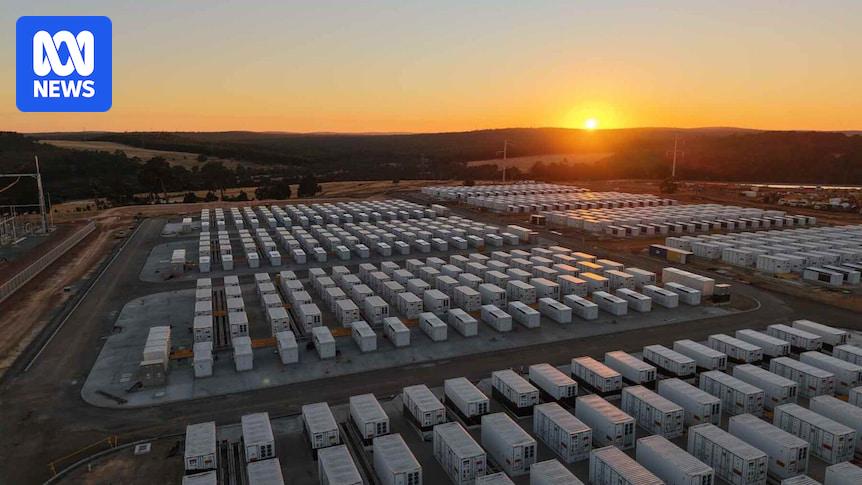
**Submission Statement:** Australia is installing Battery Energy Storage System (BESS) projects at a rapid pace, taking advantage of excess solar energy supply during the daytime and discharging it in the evening at peak demand times. The state of Western Australia is leading the way (with 5% of energy demand now met by battery storage), but the country as a whole is a leader, having the third most installed battery storage grid capacity globally, after only China and the US. Retail electricity rates are smoothing out and in some instances falling.
Adminisnotadmin on
Battery storage is the cleanest form of energy arbitrage (nearly free energy in the day, sell it back at demand during nights) and will probably be the leading form of energy stabilization where places like easy hydroelectric generation have been used.
It’s also the most literal form of energy independence, and creates a more resilient grid by being able to distribute generation close to demand.

2 Comments
**Submission Statement:** Australia is installing Battery Energy Storage System (BESS) projects at a rapid pace, taking advantage of excess solar energy supply during the daytime and discharging it in the evening at peak demand times. The state of Western Australia is leading the way (with 5% of energy demand now met by battery storage), but the country as a whole is a leader, having the third most installed battery storage grid capacity globally, after only China and the US. Retail electricity rates are smoothing out and in some instances falling.
Battery storage is the cleanest form of energy arbitrage (nearly free energy in the day, sell it back at demand during nights) and will probably be the leading form of energy stabilization where places like easy hydroelectric generation have been used.
It’s also the most literal form of energy independence, and creates a more resilient grid by being able to distribute generation close to demand.