
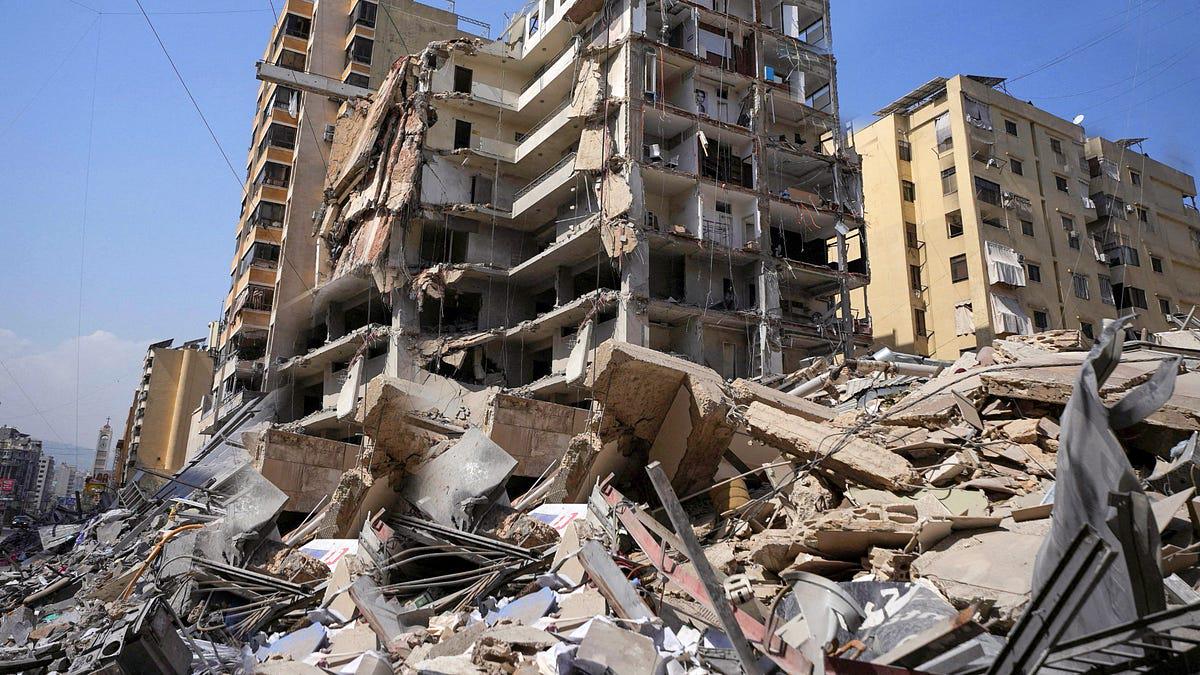
My friends’ internet came back two days ago—three months after Iran cut it. That’s the Islamic Republic’s standard practice when it needs to massacre thousands of people without witnesses. When the connection returned, my phone filled with messages imploring me to share with the world what they cannot say themselves.
I am 27—I left Iran at 18. I am not a geopolitical scholar or a credentialed journalist. I am someone who grew up inside this regime’s machinery and was fed its deadly ideology in its mosques and classrooms. I rejected it, and escaped to build a free life in America. I’ve spent the nine years since watching it closely from the outside, working out how I could help my loved ones left inside. I am writing this as a three-month check-in on a war that was supposed to liberate Iran. And I want to say plainly: the people of Iran have been betrayed.
What Three Months Have Produced on the Ground
Let me tell you what my friends are describing right now.
Since the 2022 Mahsa Amini uprising, the majority of Iranians rejected the regime and its ideology. The minority that continued to support the regime was largely marginalized—ashamed, quieted, outmaneuvered—after Amini’s murder.
In January, Iranians took onto the street to demand an end to the theocracy. My friends were there in the crowd, on Jan. 8 and 9, when millions of unarmed Iranians were met with machine guns. Whether one accepts the more conservative estimates from human rights monitors or the higher figures reported by Iran International’s document review, what is not in dispute is that thousands upon thousands of unarmed Iranians—young and old, men and women—were killed with live ammunition on those two days in the deadliest crackdown on protesters in the Islamic Republic’s history. An untold number were imprisoned and tortured. My friend told me she saw decapitated bodies in the alleys where we used to spend our evenings as teenagers. Her mother was struck in the stomach with a rifle butt hard enough to rupture her kidney. (Human Rights Watch and Amnesty International documented that security forces used beatings alongside live fire during the crackdown, including against bystanders not involved in the protests, while snipers were reported to have fired deliberately at protesters’ heads and torsos.)
A government that massacres its own citizens this efficiently is not a legitimate government but an occupying force. Iranians welcomed the war that followed. Everyone was fed up. Everyone has lost someone, or knows someone who has. As wars go, this one should have been straightforward.
What has happened since is that the war handed the small minority that still supports the regime everything they needed to come roaring back. They are now organized, paid, and armed. I’m not speaking metaphorically—everyone connected to the regime, from those who attend its mosques to those who work in its institutions, from boys in their early teens to women in their ’70s, has been armed. They flood the streets every day waving Islamic Republic and Hezbollah flags, claiming patriotism and screaming that the supreme leader’s death was the fault of women who refused to cover their hair. Some fire at the sky, while others point it at whomever they judge not sufficiently friendly to the regime.
Unlike during the January massacre, when they received orders from above, these loyalists now act entirely on their own initiative. The movement has decentralized. Killing their leaders did not stop them—it freed them. This is one of the war’s most consequential and least-discussed outcomes: the regime has successfully distributed its violence so that no single decapitation strike can contain it anymore.
Large banners have appeared across cities showing the graves of schoolchildren killed in Minab. The caption, addressed to the majority who felt hopeful that America will help free Iran, reads: “Traitors, look—your help has arrived.”
Since the bombing of Iran’s industrial infrastructure—steel mills, petrochemical plants—prices have risen three- to five-fold in weeks. That pain is felt by ordinary Iranians, not by regime supporters who continue receiving generous handouts. Much of the regime’s senior leadership has been decimated—an achievement worth celebrating. Yet the regime survives—weaker, but alive enough to continue enslaving Iranians and threatening the world.
There has never been a stronger internal appetite for regime change in Iran. But the momentum of the January uprising is gone. Those who believed Trump when he said “help is on the way” have watched the regime endure three months of war against two of the world’s strongest military powers, and emerge even more menacing and confident. The demoralization is immense.
Everyone I have talked to from Iran has asked me a variant of this question: “How is it possible that the world’s strongest military power failed to topple a decapitated regime that does not even have support from its own people?” My friend could not comprehend why America would abandon its Iranian allies again. “What is the public opinion in America?” she asked me. “Do they know we’re not with the regime?”
Whatever is driving Washington’s restraint, it cannot be concern for the people it claims to be liberating. Ordinary Iranians are the ones who have suffered most—from the bombs, the economic collapse, and the armed loyalists terrorizing their streets. And yet they are being betrayed and forgotten by Trump’s botched war in Iran.
I had no answer to offer my Iranian friends, because I couldn’t see any coherent endgame. This war seems to be driven by pure impulse, announced in social media posts, and revised every time reality refused to comply.
The Three-Month Arc of American Promises
In January, Trump posted on Truth Social urging Iranian protesters to keep going and take over their institutions—“HELP IS ON ITS WAY.” He declared his support for regime change, calling it “the best thing that could happen.” He told Iranians that seizing their government was “probably your only chance for generations.” His stated military objectives were absolute: completely destroy Iran’s navy and dismantle its missile industry.
Then he announced that Iran had agreed to stop killing protesters—as if that were sufficient—and reversed course. Then came the war. Then, in late March, aboard Air Force One, he told reporters the war had already achieved regime change because enough leaders had been killed. “We’re dealing with different people than anybody’s dealt with before. It’s a whole different group of people. So I would consider that regime change.” Then, on April 1, with no mass uprising materializing, he declared flatly that “regime change was not our goal.” Within days he said he “didn’t care” about Iran’s remaining nuclear material, and walked back his promise to eliminate its missile capability to merely claiming launches had been “dramatically curtailed.”
And now, at the three-month mark: a draft peace deal reportedly including a $300 billion postwar fund for Iran, rebranded from “reparations” to “investment fund” to avoid political embarrassment at home, with provisions for American energy companies to enter Iranian markets once sanctions lift. The regime that just killed six American soldiers and massacred tens of thousands of innocent people is, apparently, now a business partner.
The journey from “help is on its way” to a $300 billion reconstruction gift for a surviving regime is too monstrous for me to believe. It is a betrayal of Iranians and of everyone in the free world who believes freedom is worth something.
Why Half-Measures Are Worse Than Nothing
While Trump has been stalling, the southern ports of Iran remain under a blockade.
I grew up under American sanctions. I know from the inside what sustained economic pressure actually does. It does not destroy authoritarian regimes but the populations they rule.
I had a friend in Tehran named Rana (a pseudonym to protect her identity). She was expelled from the University of Tehran for wearing her hijab “incorrectly.” She pivoted to makeup artistry, spent her life savings on equipment, and built a following on Instagram. A multinational makeup brand noticed her talent and reached out to hire her. She was ecstatic—maybe Milan Fashion Week wasn’t so impossible after all. The moment they discovered she was in Iran, they canceled, citing sanctions. That day, something inside her died, and she still hasn’t fully recovered.
That is who sanctions punish. The men who shattered my friend’s mother’s kidney have the resources to circumvent sanctions and get their ammunition imported. The people who cannot circumvent sanctions are innocent people like Rana.
The economic devastation does have one potential saving grace: if pushed far enough, it could drain the treasury to the point where the regime can no longer pay its loyal 5%. That threshold—where the spatula hits the bottom of the pot, as we say in Farsi—is what actually could threaten the regime’s survival. Every Iranian I spoke to is willing to pay that price if it ends the regime. But anything less inflicts maximum suffering on ordinary Iranians while leaving the regime’s apparatus intact.
The current path’s answer to that question is to present us with the worst of all worlds.
The Only Two Defensible Choices
The United States and Israel face a binary with no justifiable middle.
The first choice is full commitment: go hard enough, with enough sustained resolve, to actually bring this regime down and give the Iranian people the opening they have bled for—either militarily, or via giving real, material support to Iranian protesters willing to fight. This is a compelling charge for nations that present themselves as forces for good—not as imperial powers driven by expediency, but as civilizations guided by genuine humanistic values. This approach could also reflect strategic self-interest. Iranians are overwhelmingly pro-Western; they want to be friends of America and Israel. A free Iran—at the heart of the Middle East, with deep political influence across the region—could become one of the most powerful forces for dismantling Islamic extremism the world has ever seen. That could mean final and lasting peace: no more proxy wars, no more Oct. 7s—an end to the furnace that has fueled hostilities between Muslims and the West for half a century. Isn’t that far more valuable than a momentary deal?
If the West does not want to bring peace to Iran, its second choice is complete withdrawal: lift the sanctions, step aside, and let ordinary Iranians breathe while they find their own path to freedom.
What is not defensible is the current path—killing enough of the regime’s leadership to provoke it, bombing enough of its industry to starve its people, then walking away with a ceasefire that leaves the Islamic Republic intact, possibly even enriched by a reconstruction deal that rewards its survival. The Iranian people arguably had a better chance of liberating themselves from their tormentors before the war rather than after a deal. That is not pragmatism. That is not “America First.” It is a betrayal of American and Iranian lives alike—and a signal to every authoritarian government that they can get away with taunting and extorting America.
The Iranians fighting for freedom have asked the free world to see them as allies. At the three-month mark, the free world should ask itself honestly: Do we?
If this ends the way it is currently heading, the answer is no. And the Iranians who survive it will remember America as a nation that rewards its enemies and abandons its friends.
Posted by TheUnPopulist
9 Comments
**Submission Statement**
For those serious about democracy in Iran, the war has produced the worst of all wars.
1. The IRGC is even more empowered and rich since the January protests and the closing of the Strait of Hormuz.
2. Iranians have no little means of internally resisting at this point.
3. The Iranian regime is more confident than ever in internal repression.
4. The sanctions are still mostly affecting normal Iranian citizens.
5. Trump is now talking about a peace plan that potentially includes a 300 billion dollar postwar fund for Iran.
> The first choice is full commitment: go hard enough, with enough sustained resolve, to actually bring this regime down and give the Iranian people the opening they have bled for—either militarily, or via giving real, material support to Iranian protesters willing to fight. This is a compelling charge for nations that present themselves as forces for good—not as imperial powers driven by expediency, but as civilizations guided by genuine humanistic values. This approach could also reflect strategic self-interest. Iranians are overwhelmingly pro-Western; they want to be friends of America and Israel.
Not sure how you achieve that without an invasion that kills thousands of both Iranian people and US soldiers. This paragraph seems kinda naive of what that would entail. Their also isn’t appetite imo for this they will welcome as our saviors thing by the American public anymore. It’s why Trump imo hasn’t really escalated.
This was one of my biggest fears for the war, and an incredible blackpill on seeing a free Iran at any point in the next few decades. We could have provided literally any support to the protestors while the protests were actually happening, but noooo, we had to avert CENTCOM’s focus to abducting a tinpot South American caudillo. Completely ignored one of the best chances to topple a hated, oppressive, regime that stands opposed to us… and not only did we do that, but we decided to entrench it by launching air strikes with absolutely no plan to follow up. And now we’ve showed our weakness, we’re not going to put any boots on the ground to commit to opening the Strait, so the regime can take a tactical victory from an unwarranted attack and present themselves to the public as the great defenders of Iran against the evil US.
> This is a compelling charge for nations that present themselves as forces for good—not as imperial powers driven by expediency, but as civilizations guided by genuine humanistic values. This approach could also reflect strategic self-interest.
Let’s stop with this delusion here; Trump and Netanyahu are not some post WWII defenders of democracy trying to stamp out evil. Their ideology is that of an imperial power. That is how they view international politics; it is all this selfish view where their country gets the most and everyone else gets the least. Not enough attention has been given to the statements made at Trump rallies of wanting to return to the policies of McKinley one of our most Imperialistic Presidents. They have made it immediately clear that they’re returning to a pre WWII foreign policy approach. The same guy who whined about Zelensky being ungrateful does not care if the protesters win in Iran.
Of course that’s assuming that’s what the US wanted at all. As bad as the Iranian regime is, it is slightly more liberal than that of the Saudis. The US has been against Iran because Iran declared its opposition and hatred for it, not because of its system of government.
> Iranians are overwhelmingly pro-Western; they want to be friends of America and Israel. A free Iran—at the heart of the Middle East, with deep political influence across the region—could become one of the most powerful forces for dismantling Islamic extremism the world has ever seen. That could mean final and lasting peace: no more proxy wars, no more Oct. 7s—an end to the furnace that has fueled hostilities between Muslims and the West for half a century. Isn’t that far more valuable than a momentary deal?
It could, it could also end up like Iraq where internal divisions undermine the country and the next generation grows up radicalized. This whole post makes me think of those people who wanted Saddam Hussein gone.
That said, blaming Iran for the hostility between Islam and the West is ridiculous. Al Qaeda was formed in Afghanistan, it was run by Sunni Muslim nationals from countries allied to the US. They have, at times, opposed or supported Iran but they have very different goals. ISIS and Al Qaeda were the ones carrying out terrorist attacks in Europe and America that were turning people against Muslims; not Iran.
It’s almost like the most comically evil people in America (the Trump admin) are also absolutely incompetent, have no grasp of strategy or nuance, and since they are enemies of democracy in their own country, of course they harm the brave protesters in Iran who gave their own lives trying to reclaim their country from anti-democratic forces there.
I guess it was to be expected. This entire fucking fiasco has been a tragedy of historical proportions and the ramifications of the Trump regime’s actions will harm everyone calling Earth home for years to come.
GOP delenda est.
Yeah, if all the other things (ie, saying the Iranians couldn’t ever have a nuke in June 2025, the perpetually flip flopping goals of the war, the admin’s action of saying, “pretty please go back to the status quo no matter what it takes” every few weeks) didn’t make you realize it, this should make anybody realize how unserious this admin is about this war.
If they really wanted to topple the regime, it would have been attempted when there was some legitimate ground action. If they didn’t want the regime to have a nuke, they would have attempted to topple it then.
> Unlike during the January massacre, when they received orders from above, these loyalists now act entirely on their own initiative. The movement has decentralized. Killing their leaders did not stop them—it freed them. This is one of the war’s most consequential and least-discussed outcomes: the regime has successfully distributed its violence so that no single decapitation strike can contain it anymore.
This isn’t hardly a sign of strength. Decentralized loyalists carrying out massacres and taking matters into their own hands is a classic sign of state collapse and prelude to civil war.
If you look at things like how the Syrian Civil War unfolded there was increased reliance on local militias to crackdown on opposition areas.
That is hardly a sign of strength.
In the current trajectory the Iranian economy is going to continue to collapse and splintering will accelerate.
This doesn’t necessarily mean IRGC’s certain downfall but hardly a sign of stability like the article claims.
IRGC has really no answers to the economic crisis.
This article is tremendously frustrating because it gets *very* close to the stark choice involved now and the manner in which our politics on this choice have been deranged by the man at the top.
Right now, there are two options floating around the American political system:
1. Status quo, more or less. Keep the blockade up, keep pursuing a “deal” of some kind. This is the option Trump himself seems to be favoring. As this article makes clear, this isn’t obviously going to work from the perspective of the Iranian people.
2. Cut and run, go home and let the regime stay, not only intact, but in control of the Strait of Hormuz. This is the Maximize-Trump-Embarrassment option and it is what happens if a War Powers Resolution passes both houses of Congress, or Congress in some other way forces Trump to pull out.
Neither of these options frees the Iranian people. Ending the blockade empowers the regime with new financial resources that can be used to juice both the internal repression apparatus as well as the external proxy network. Continued squeezing with the blockade does not arm and train an Iranian public that wants change but faces a wall of bullets between them and their goals.
So, the obvious option of maximizing the embarrassment for Trump does not actually serve the desperation of the Iranian people *or* the geostrategic goals of the US in the region. It’s also not obvious that the alternative does either of those things: we realistically have no idea how long it would take to foster actual regime collapse using the blockade, and a constriction that lasts many months or even years would obviously be disasterous for the Iranian people.
The truth is, what makes the choice stark, is that neither of these choices are choices at all. Instead, we need to become more serious about what is necessary to actually topple the regime using the deep wells of internal dissent and be willing to bite the bullet of doing whatever that turns out to be. And we need to do it soon. Congress shouldn’t be pressuring Trump to withdraw, Congress should be pressuring Trump to produce results. While the Unitary Executive people would claim Congress has no role in setting foreign policy and especially the nitty gritty of war fighting strategy and goals, the real truth of the matter is that Congress has whatever role it decides it wants. It has the tools to bring the administration to its way of thinking, by persuasion or force, and it needs to be doing that.
This article exposes the genuine information disconnect everyone seems to have about the current American government.
Do I have to elaborate just how cartoonishly evil the current Israeli and US governments have become? The Venezuela intervention was frankly the most obvious example of what Trump wanted.
Now he can’t claim an easy win, so he just pretends that it never happened.