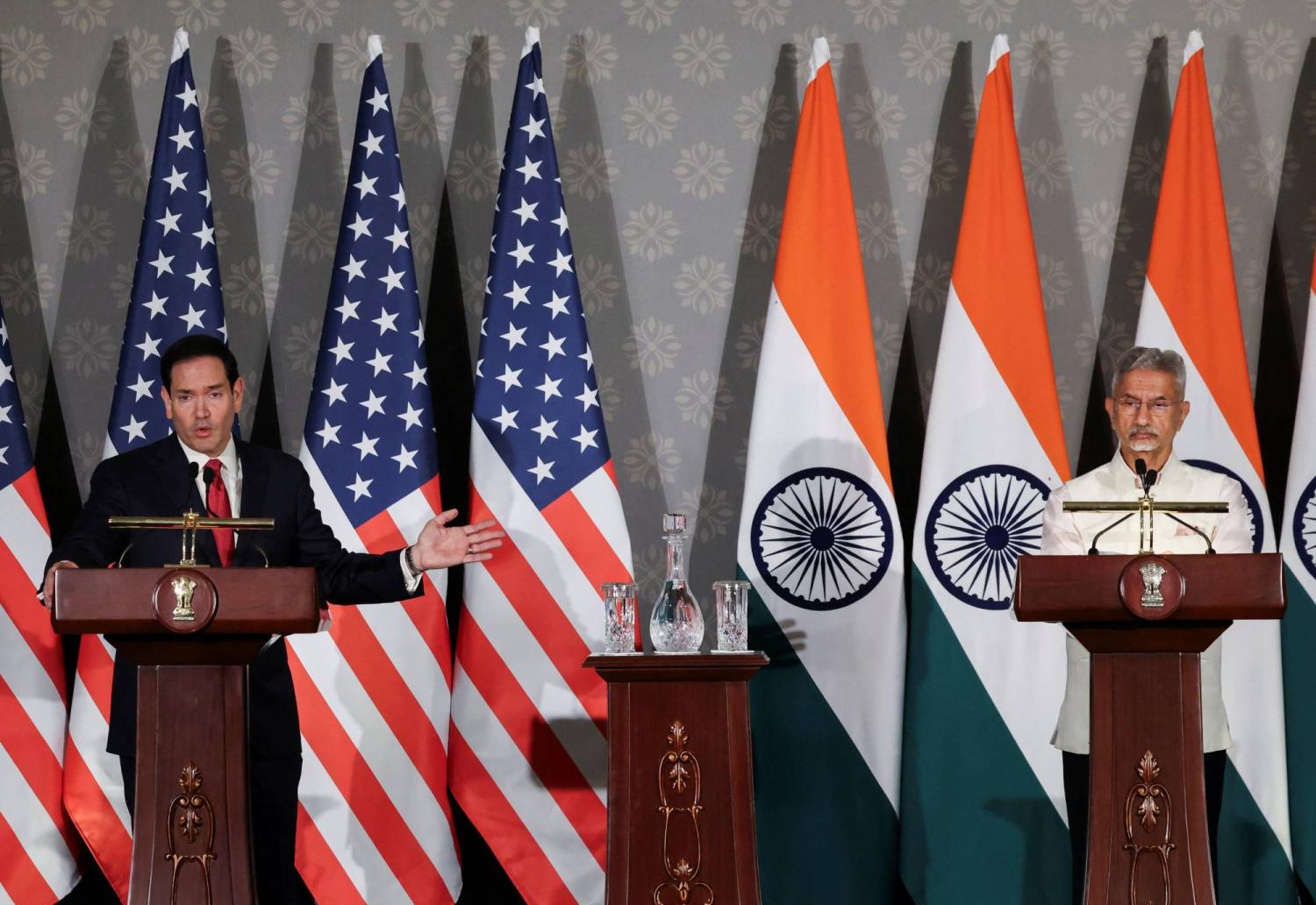
SS: Much has been said about the impact U.S. President Donald Trump’s public insults and weaponization of tariffs have had on America’s relations with India. But the bilateral relationship was under pressure well before Trump’s return to the White House in 2025. In recent years, as India’s regional standing has been steadily eroded by China’s expanding strategic footprint, the United States has pursued policies in India’s strategic backyard that have disregarded Indian interests — and sometimes run directly counter to them.
Bangladesh is a case in point. After the military-backed ouster of Prime Minister Sheikh Hasina’s government in 2024, the U.S. endorsed regime change. But India knew this posed serious risks, which have since materialized: Bangladesh is now gripped by Islamist violence, jeopardizing stability on India’s eastern flank.
Trump has made matters much worse, not least by pursuing closer ties with Pakistan. Never mind that Pakistan continues to provide safe haven, as well as military and intelligence aid, to terrorist groups, or that Pakistani Army Chief Asim Munir staged a constitutional coup last November. Trump’s family members and business associates have struck lucrative deals in the country and that is apparently good enough reason for the Trump administration to revive dangerous strategic dynamics on the subcontinent.
The U.S. has even begun taking a more conciliatory approach toward China. Though the strategic competition between the two superpowers remains intense, Trump’s recent shift toward accommodation in some areas has created considerable uncertainty — not least for India, whose value to the U.S. has long been rooted in its ability to act as a regional counterweight to China.
But while the U.S. has long viewed India as a critical democratic bulwark against Chinese dominance in the Indo-Pacific, it also balks at the idea of Indian regional dominance. As U.S. Assistant Secretary of State Samir Paul Kapur explained in February, the United States is seeking to prevent any single power from gaining too much influence in South Asia. Kapur’s remarks echoed the Trump administration’s National Security Strategy (NSS), according to which the U.S. “cannot allow any nation to become so dominant” that it could “threaten (U.S.) interests” and must maintain “global and regional balances of power.”
India must adapt to this new reality, which demands a fundamental shift in its strategic thinking. India can no longer count on its close relationship with the U.S. to sustain its influence across South Asia and beyond. Instead, it must cultivate regional influence through economic engagement, political sensitivity toward neighboring states and the delivery of tangible public goods that appeal to smaller countries.
The Trump administration seems to hope that the U.S. and India can remain global partners, even as they become regional rivals. But this will be no easy feat, and the outcome will shape not only the future of the bilateral relationship, but also the strategic landscape in South Asia and beyond.
2Lore2Law on
I once read a Chinese think tank paper on something like this.
It was more than a bit nationalist and presupposed a Chinese global hegemony of *at least* a century, but was quite assured that in the background would always be the US and India fighting for #2
HoveringMango on
Not for the first time and still not as bad as 1998. We might not like US but we can’t afford to be outright hostile to them because that is what China wants. We also understand foreign policy of USA might not change after Trump.
That being said we play this game every 15 years, at the current rate by 2035, USA will realise the compounding effect of Chinese investment into R&D, military and their industries. They won’t be able to counter them alone no matter what.
TF_dia on
> But while the U.S. has long viewed India as a critical democratic bulwark against Chinese dominance in the Indo-Pacific, it also balks at the idea of Indian regional dominance.
IMO, this is the crux of the issue, seeing India as having priceless value on the region….. while wanting them to be kept as a junior partner at best and always subservient to the USA. And as India grows and develops they will find that arraignment to be unsatisfactory.
bigwang123 on
I wish there were more links
I had no idea about US-Nepal engagement
considering its geographic position, im not sure what the US could do with Nepal that could leave india without a say

5 Comments
SS: Much has been said about the impact U.S. President Donald Trump’s public insults and weaponization of tariffs have had on America’s relations with India. But the bilateral relationship was under pressure well before Trump’s return to the White House in 2025. In recent years, as India’s regional standing has been steadily eroded by China’s expanding strategic footprint, the United States has pursued policies in India’s strategic backyard that have disregarded Indian interests — and sometimes run directly counter to them.
Bangladesh is a case in point. After the military-backed ouster of Prime Minister Sheikh Hasina’s government in 2024, the U.S. endorsed regime change. But India knew this posed serious risks, which have since materialized: Bangladesh is now gripped by Islamist violence, jeopardizing stability on India’s eastern flank.
Trump has made matters much worse, not least by pursuing closer ties with Pakistan. Never mind that Pakistan continues to provide safe haven, as well as military and intelligence aid, to terrorist groups, or that Pakistani Army Chief Asim Munir staged a constitutional coup last November. Trump’s family members and business associates have struck lucrative deals in the country and that is apparently good enough reason for the Trump administration to revive dangerous strategic dynamics on the subcontinent.
The U.S. has even begun taking a more conciliatory approach toward China. Though the strategic competition between the two superpowers remains intense, Trump’s recent shift toward accommodation in some areas has created considerable uncertainty — not least for India, whose value to the U.S. has long been rooted in its ability to act as a regional counterweight to China.
But while the U.S. has long viewed India as a critical democratic bulwark against Chinese dominance in the Indo-Pacific, it also balks at the idea of Indian regional dominance. As U.S. Assistant Secretary of State Samir Paul Kapur explained in February, the United States is seeking to prevent any single power from gaining too much influence in South Asia. Kapur’s remarks echoed the Trump administration’s National Security Strategy (NSS), according to which the U.S. “cannot allow any nation to become so dominant” that it could “threaten (U.S.) interests” and must maintain “global and regional balances of power.”
India must adapt to this new reality, which demands a fundamental shift in its strategic thinking. India can no longer count on its close relationship with the U.S. to sustain its influence across South Asia and beyond. Instead, it must cultivate regional influence through economic engagement, political sensitivity toward neighboring states and the delivery of tangible public goods that appeal to smaller countries.
The Trump administration seems to hope that the U.S. and India can remain global partners, even as they become regional rivals. But this will be no easy feat, and the outcome will shape not only the future of the bilateral relationship, but also the strategic landscape in South Asia and beyond.
I once read a Chinese think tank paper on something like this.
It was more than a bit nationalist and presupposed a Chinese global hegemony of *at least* a century, but was quite assured that in the background would always be the US and India fighting for #2
Not for the first time and still not as bad as 1998. We might not like US but we can’t afford to be outright hostile to them because that is what China wants. We also understand foreign policy of USA might not change after Trump.
That being said we play this game every 15 years, at the current rate by 2035, USA will realise the compounding effect of Chinese investment into R&D, military and their industries. They won’t be able to counter them alone no matter what.
> But while the U.S. has long viewed India as a critical democratic bulwark against Chinese dominance in the Indo-Pacific, it also balks at the idea of Indian regional dominance.
IMO, this is the crux of the issue, seeing India as having priceless value on the region….. while wanting them to be kept as a junior partner at best and always subservient to the USA. And as India grows and develops they will find that arraignment to be unsatisfactory.
I wish there were more links
I had no idea about US-Nepal engagement
considering its geographic position, im not sure what the US could do with Nepal that could leave india without a say