
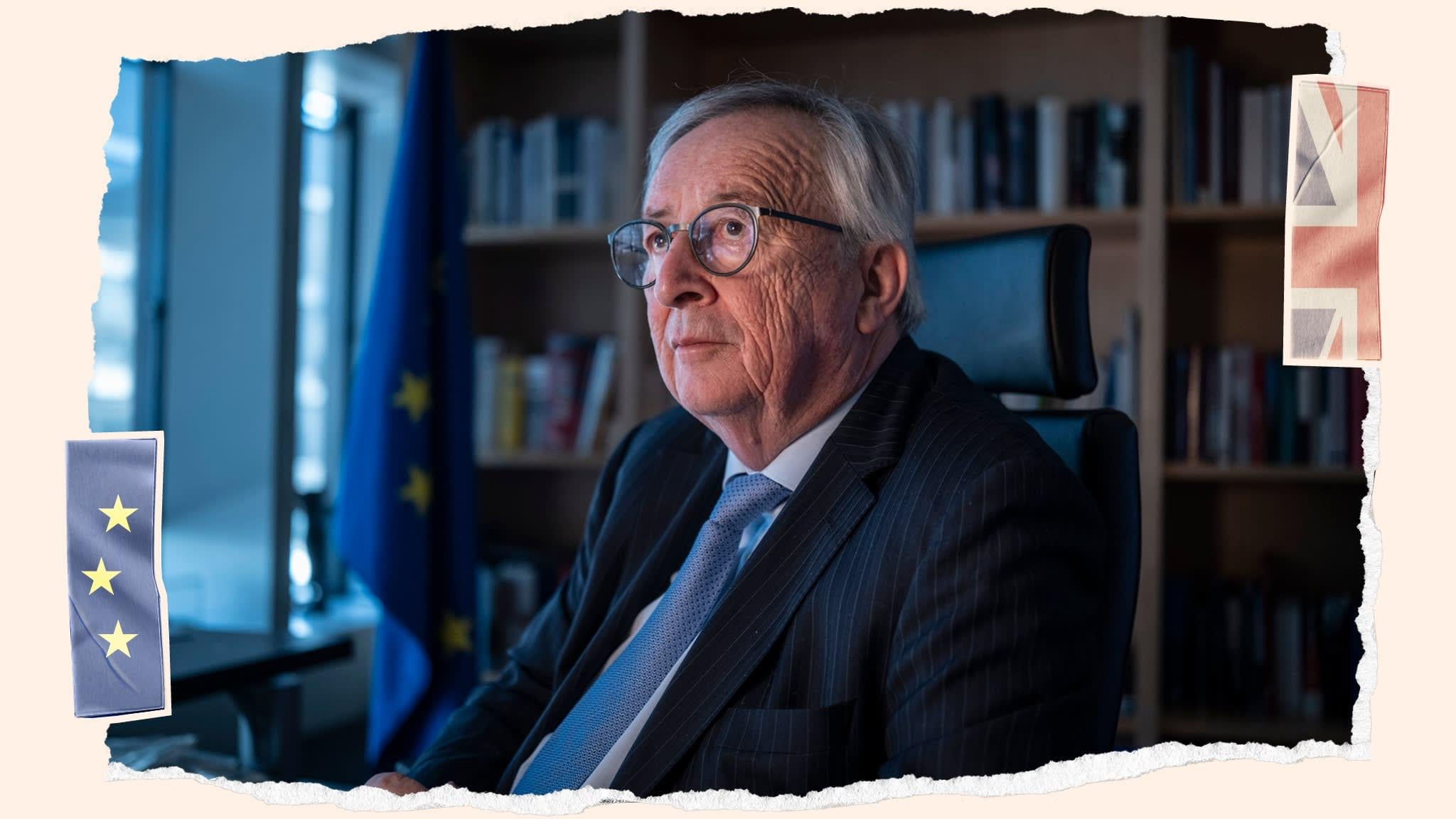
The UK would be “cold-shouldered” by “wounded” EU member states if it applied to rejoin the bloc, says the man who presided over its exit process.
Jean-Claude Juncker, former president of the European Commission, told the FT: “I don’t think [rejoining] is possible. Because all of us, we are wounded to some extent by this . . . historic step the British have taken.”
“A majority of European governments would cold-shoulder this, because the British are very close to the US, whereas the US is not very popular for the time being inside the European Union,” he added.
Ten years on from the UK’s vote to leave the EU, and with Sir Keir Starmer under pressure to quit as prime minister, many centre-left politicians see reversing Brexit as a radical agenda that could invigorate progressives.
Lord Spencer Livermore, a UK Treasury minister, recently said rejoining the EU was an “inevitability”. Some European heads of government, including Spain’s Pedro Sánchez and Poland’s Donald Tusk, have said they would welcome such a move.
But Juncker said the favourable terms the UK had as an EU member would no longer be available. They included an opt-out from adopting the euro and the Schengen borderless travel zone, as well as a budget rebate.
“If Britain would start by saying, ‘We want our money back’, we would say, ‘There is no money there’.”
A deal given to former prime minister David Cameron to try to sell the idea of staying in the EU during the June 2016 referendum campaign, which allowed reduced social security payments for EU citizens living in the UK and an opt-out from a commitment to “ever closer union”, would also not be renewed, he said.
“I don’t think that [an application to rejoin] would go through like a letter in the post,” said Juncker, a former prime minister of Luxembourg.
He also doubted that Starmer’s successor would back rejoining because of the “vivid counter-reaction” it would provoke in Britain.
Juncker became a virtual hate figure for many Brexit supporters, who saw him as exemplifying high-handed Brussels federalism. He said Cameron told him not to take part in the 2016 referendum campaign on the assumption that his pro-European intervention would repel Remain voters.
“So I didn’t say a word during the campaign . . . although I should have done this because [Brexit architect Nigel] Farage and others spread so much wrong, fake news.”
Now 71, and still using an office in the Commission’s Berlaymont headquarters, he said he believed in the nation state, not a federalist EU. He admitted that Brussels had made mistakes by proposing unnecessary red tape, alienating London.
Soon after he took office in 2014, for example, he was presented with a plan to harmonise regulations on toilet flushing across the bloc. He vetoed it, saying “I will not start my mandate with toilets”.
He said that the UK’s departure had been a loss to the EU because the country had brought “common sense” to European discussions.
But he defended the deal he struck with Cameron before the 2016 campaign, which also allowed limits on free movement. He still has a letter from the former UK premier thanking him and saying it would allow him to campaign for Remain in the Brexit referendum. Cameron hardly mentioned the achievement during the campaign, however.
Juncker said he always believed the Leavers would win.
“The British never felt at ease in the European Union. [Previous governments] were explaining to the British public that Britain was there for economic reasons.”
Juncker’s main aim throughout the Brexit negotiations was to ensure unity and to deter other member states from leaving.
“Given the marvellous result of Brexit, I don’t think that anyone is inspired by this move,” he joked.
“What happened since [Brexit] in Britain was foreseeable because all the lies which were told during the campaign are revealing themselves as having been lies and nothing of the expected advantages from the exit of Britain has happened.”
One unexpected memento in Juncker’s office is a photo of him with Farage, taken when the UK politician was a member of the European parliament.
Juncker said he had a “fair and respectful” relationship with Farage, now leader of rightwing populist party Reform UK. “I will remember him as a tough guy, a good debater and as a liar,” he added.
Posted by Desperate_Wear_1866
1 Comment
well, i mean duh