
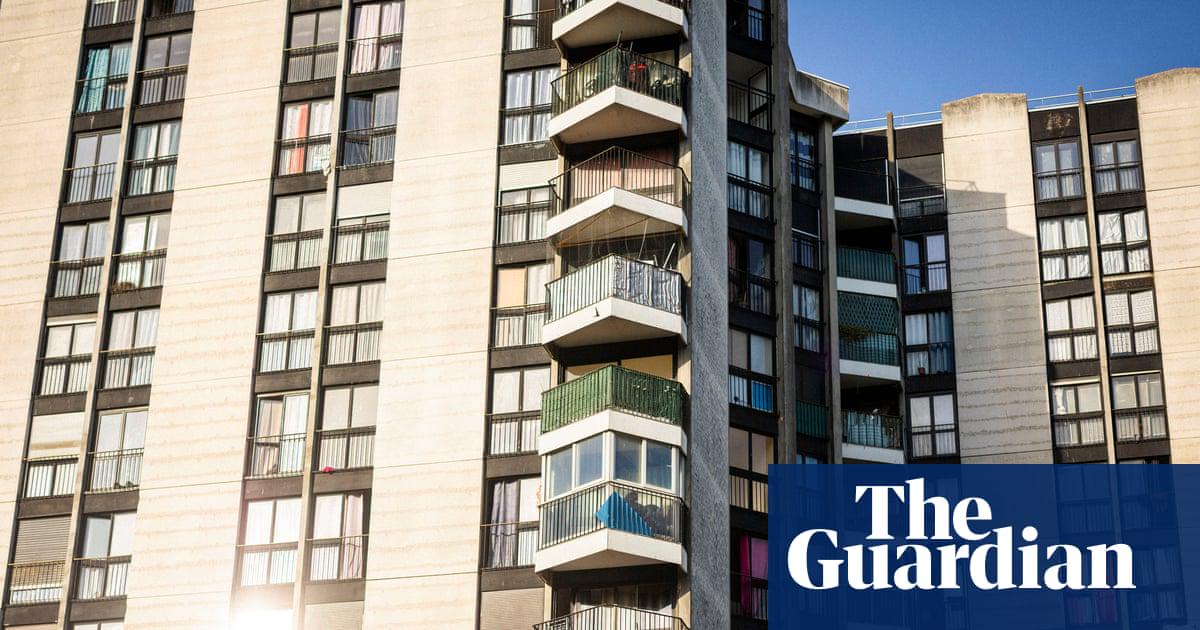
Submission statement: A look at how climate change is impacting the poorest and most vulnerable in developed nations, as the current heatwave is putting French infrastructure under severe stress and highlighting the inadequacy of the current housing stock. And a supplement to the AC discourse, to show that mass equipment won't be enough to mitigate the impact of global warming on the population.
France is the hardest-hit country in the exceptional June heatwave currently developing over Europe, having experienced its three hottest days ever recorded on Tuesday, Wednesday and Thursday with a national heat index (avg of 30 stations over 24h) of 30C, with highs of 40-44C across most of the territory. 51 million people are now under extreme heat alerts, and Parisian hospitals are now "saturated" with heat-related emergencies; dozens of people have died across the country from heatstrokes, dehydration and drownings trying to cool down in rivers and lakes.
The intensity and precocity of the heatwave has highlighted the inadequacy of French infrastructure in withstanding very high temperatures despite decades of warnings about the rapidly warming climate of Western Europe and the destructive impact of heatwaves, which are becoming more common, intense and precocious.
The school year doesn't end in France until the first year of July, and millions of children have been suffering in non-climate controlled classrooms reaching upwards of 35-40C, causing 13,500 schools – about a quarter of them – to cancel classes in the afternoons or outright close down. Teachers' unions have called for a strike this Thursday to denounce "unacceptable" work conditions after dozens of incidents of teachers and students passing out from heat exhaustion, as millions of high and middle schoolers are taking their end-of-cycle exams in overheating rooms.
Power outages were reported across the country as cables and transformers ceded under the searing heat, and three nuclear reactors had their power reduced due to the high temperature of the rivers used to cool them down. The railways were hit by severe disruptions in Paris and Bordeaux, and regional trains in Nouvelle-Aquitaine were stopped between 10AM and 6PM to avoid stressing the rails and wires.
A [2023 report by economists Jean Pisani-Ferry and Selma Mahfouz](https://www.vie-publique.fr/rapport/289488-incidences-economiques-de-l-action-pour-le-climat-rapport-pisani-ferry) (fr) warned that France should increase its annual public spending for the green transition to €66 billion (against €42.7 billion currently) to withstand the economic impact of global warming on the country. But budgetary constraints stemming from mishandled public finances and anemic growth threaten France in the long term, as voters are called to the polls for major elections in 2027.
Posted by RaidBrimnes
3 Comments
!ping ECO&EUROPE&FRANCE
I have to say that 107 degrees (in freedom units) with no AC sounds about as miserable as possible. No way I could sleep.
This heatwave making me think I should have moved to Svalbard instead of Lyon.
At least AC uptake is on the rise even if the politicians are being stupid about it. I get there’s environmental concerns and as I have the money and resources I’ll probably get a transvaporative cooling system instead but holy shit France has just about the cleanest electricity in the world this should be a no brainer