
THE GLOBAL LINGUISTIC MATRIX: HOW LANGUAGE TURNED HUMANKIND INTO PROPERTY
Most people sincerely believe they are free. They go to work, vote in elections, pay taxes, and consider themselves responsible, conscious citizens. They operate under the assumption that the language they speak is merely a convenient, neutral tool for exchanging thoughts and communicating with one another. This is perhaps the greatest illusion of the modern era.
Language is never just a tool for communication. Language is an operating system. It is the primary software code that shapes our perception of reality, defines our legal boundaries, and quietly fixes our status within a system of control. Whoever wrote the code established the rules of the game, and we have been playing by them for centuries without realizing it.
Today, a global linguistic matrix is fully complete across both continents, utilizing different but equally effective linguistic codes of control.
In the West, the English-speaking society has been deeply conditioned to perceive their "State" as an abstract public contract or a social institution. People remain completely unaware that, both linguistically and legally, they are operating inside a commercial corporate structure.
Meanwhile, in the Slavic world, the deception is even more direct. People there have completely lost the true meaning of their native words. Proudly calling themselves "patriots of the Государство" (Gosudarstvo), they have forgotten the literal roots of the term. They genuinely believe this structure belongs to them, while the language itself openly states the opposite: this territory is the private estate of a specific Master who collects tribute from his tenants.
If we strip away the layers of social propaganda and look at the literal root-meanings of the words we speak every day, the matrix falls apart. Language cannot lie; it keeps the precise record of our subjugation right on the surface. We can see this clearly by examining the five core substitutions that hold the matrix together.
- Man vs. Human: The Grounding of the Eternal Spirit
In the history of the English language, the word "Man" originally signified a thinking, spiritual being endowed with higher consciousness. Over time, the system quietly substituted this with the word "Human."
The etymological root of "Human" comes directly from the Latin adjective humanus, which is tied to the noun homo and, crucially, the root humus. The literal translation of humus is "dirt," "soil," "mud," or "dust." In its original Latin context, it meant "the earthy one" or "born from the dust."
It is no coincidence that from this very same root, the English language also derived two other telling words: humility (submission, obedience) and humiliate (to crush, to degrade).
By enforcing the term "Human," the system erases the concept of an immortal spiritual being and grounds us to the level of biological matter. Through this linguistic code, we are stripped of a higher nature and fixed as temporary biological objects made of carbon and water. We are programmed for absolute submission, viewed as nothing more than "creatures of the dirt"—dust under the system's boots, ready to be managed, tallied, and disposed of.
- Sem-Ya vs. Family: The Blueprint of Ownership
The English word "Family" is globally celebrated as a symbol of love and kinship. However, its legal and historical roots tell a dark story. The word comes from the Latin Familia, which originates from famulus, meaning "a slave" or "a servant."
In Roman Law, Familia was strictly a property and economic term. It never described a emotional or biological union. Instead, it was a legally registered economic estate owned entirely by the master (pater familias). This estate included land, buildings, cattle, tools, and all the subjugated people on equal terms. The master held absolute authority over his familia—with the legal right to trade, sell, or even end the lives of anyone on that asset list.
Contrast this with the native Slavic code for family, which is written as "Семь-Я" (Sem-Ya). This is a direct visual and linguistic code: "Семь" means Seven, and "Я" means I / Self. It literally translates to "Seven of Me." It does not describe mere roommates sharing an apartment; it represents the cosmic chain of a bloodline. It encompasses three generations of ancestors behind you, your current self in the center, and three generations of descendants ahead. It is the eternal reflection of one's essence through seven generations in the physical world.
By applying the Western term "Family" to modern life, the system automatically transfers its ancient legal logic of ownership into our minds. Instead of maintaining a sacred, living bloodline union, we are tricked into registering ourselves into a corporate inventory list of assets and dependents managed by a property department.
- The Biological Subject vs. Persona: The Theater of Masquerade
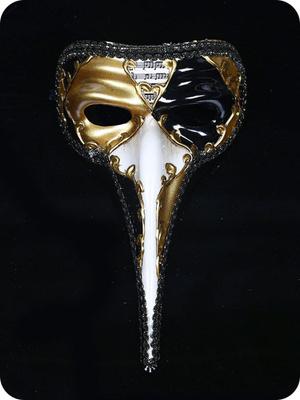
The word "Persona" in Latin originally referred to a theatrical mask worn by actors on stage to amplify their voice (per-sonare). In modern statutory law, a "Persona" (or Person / Legal entity) is an artificial paper fiction—our passport, ID, and tax numbers.
This mask operates as a dual-sided illusion. Facing us, it serves as the system's only way to interact with us. The state cannot directly interact with a living, breathing individual of flesh and blood; it completely lacks the jurisdiction and tools to perceive spirit or biology. It requires a paper double. When we present our ID, we voluntarily put on this theatrical mask. The system judges, fines, and tracks the document—not us—but the physical consequences are transferred to our real lives, stripping us of our natural rights to the Earth.
Facing backward, this exact same mask is used by the system as a shield. Behind the faceless "Personas" of corporate entities, ministries, courts, and departments, there are always real, living individuals making decisions. However, when they act under the mask of the "State" or a "Department," they put on a corporate persona. This allows them to completely dissolve personal liability. A living individual cannot easily hold another living individual accountable, because both are hidden behind the paper masks of actors playing their roles in a grand legal theater.
- Free Will vs. Citizen: The Walls of the Enclosure
We are taught to take immense pride in being a "Citizen," believing it is the ultimate badge of freedom. However, the etymology of the word on both sides of the world exposes a deep structural trap.
In the Slavic language, the word for citizen is "Гражданин" (Grazhdanin). It originates from the ancient roots городить (gorodit) and ограждать (ograzhdat), which literally mean "to build a fence," "to barricade," or "to create a corral for animals." From the same root, we get the word Gorod (city), which historically meant a fenced-in, walled area. Therefore, a Grazhdanin is literally "an inhabitant of a fenced pen."
The English word "Citizen" mirrors this logic perfectly. It comes from the Old French citezen and the Latin civitas. Historically, this root traces back to a fortified military fortress or walled strongpoint ruled by a feudal lord. In ancient common law, a citizen was someone under the jurisdiction and inside the walls of that specific castle, who owed service, allegiance, and tribute to the local lord in exchange for defensive protection.
On both continents, the matrix achieved the exact same result. The absolute free will granted to us across the entire Earth is artificially restricted to the borders of a corral or a fortress. We voluntarily step inside the fence, celebrate our status, and trade our total freedom for endless obligations: paying tribute to the owner and defending the walls of his private corral against the inhabitants of neighboring pens.
- Gosudarstvo vs. State: The Master’s Estate and Corporate Bookkeeping
The ultimate culmination of this linguistic trap lies in how we perceive the geopolitical structures we live in.
In the Slavic tongue, the word for the state structure is "Государство" (Gosudarstvo). Its root is explicitly "Государь" (Gosudar), which means "Lord," "Master," or "Private Owner." The suffix -stvo indicates a domain or a system of ownership. Therefore, Gosudarstvo literally translates to "The Master's Estate" or "The Lord's Private Property."
The Western word "State" approaches the same concept from a commercial angle. It comes from the Latin status, meaning "a condition" or "a standing." In Anglo-Saxon law, this word evolved into Estate, which legally always signifies property, landholdings, or an accumulated mass of assets. Thus, a State is literally an estate condition or a corporate balance sheet.
While the English-speaking society is trained to believe they built a public social institution, the linguistic and legal nature of the term clearly indicates that it is a commercial trust managing assets. In this system, the territory itself is registered as a fixed asset, while the population is reduced to a ledger entry—the circulating capital that backs the yield of the estate.
We are taught to be patriots of these structures and lay down our lives for them. But linguistically, you cannot be a patriot of someone else's pocket or a corporate balance sheet. The language screams the truth: this is a private estate, and we are merely tenants paying a lifelong fee just for the right to stand on the master's ground.
CONCLUSION: THE POWER OF AWARENESS
Language is a deep program, and whoever learns to read it takes the first step toward mental freedom. To achieve this, we do not need to break physical walls or fight anyone. It is enough to stop confusing ourselves with the enforced masks and remember who we truly are by right of our birth on this planet.
Each of us eventually faces this choice: to keep living in a comfortable, pre-programmed illusion, or to find the courage to look at the mechanisms of this world without linguistic filters.
Will we, having realized the true nature of the words around us, be able to change our perception and restore language to its original, living power?
Posted by OldNoob80
3 Comments
Take an upvote
Can’t even type out you own post. Have to resort to AI. Quite unfortunate.
We learn to spell at a young age.
Spell…spelling
Magic spell etc etc.
Your word is your wand.