
Tom O'Neill already devoted an entire book, Chaos, to exploring these questions, and I'm not asking anyone to summarize it. I'm more interested in hearing what people actually think about the broader theory and where they personally draw the line between documented history and speculation.
First of all, we need to understand the context of that era.
By 1968–1969, the political landscape in the United States had changed dramatically. During the height of McCarthyism in the 1940s and 1950s, critics of government policy could often be dismissed as communist sympathizers. By the late 1960s, however, that strategy had become far less effective. Opposition to the Vietnam War was no longer confined to a small political fringe. It included college students, veterans, musicians, clergy, civil rights activists, academics, and millions of ordinary Americans who increasingly believed the war was either unwinnable or morally unjustifiable.
Public confidence in the government had also been shaken by the Tet Offensive and the assassinations of Martin Luther King Jr. and Robert F. Kennedy. At the same time, the Nixon administration was expanding the conflict rather than winding it down. Operation Menu secretly bombed Cambodia, while other covert operations extended into Laos in an effort to disrupt the Ho Chi Minh Trail. Years later, the Pentagon Papers revealed that multiple administrations had misled both Congress and the American public about the true state of the war while privately recognizing how difficult victory had become.
Against that backdrop, it is not surprising that some people became deeply suspicious of the government. If large portions of the country were turning against the war, and officials believed maintaining public support was strategically important, it is understandable why some continue to ask whether authorities might have been willing to tolerate or exploit certain events if those events weakened the anti-war movement or discredited the broader counterculture. That is not the same as saying such a thing happened, but it helps explain why these questions continue to be raised.
We also know that U.S. intelligence and law enforcement agencies carried out extraordinary covert operations during this period.
The FBI's COINTELPRO infiltrated political organizations, spread disinformation, encouraged internal conflict, and targeted groups ranging from second-wave feminist organizations and hippie movements to the Brown Berets, the American Indian Movement, Vietnam Veterans Against the War (VVAW), and the Black Panther Party.
The CIA's MKUltra program explored behavior modification through LSD, hypnosis, and psychological experimentation. Dr. Donald Ewen Cameron's work at Montreal's Allan Memorial Institute remains one of the most disturbing examples of how far some of these experiments went. Operation CHAOS investigated whether the American counterculture was being influenced by the Soviet Union under Leonid Brezhnev or by Mao Zedong's China, even though the investigation ultimately found no evidence supporting those suspicions.
Meanwhile, in Southeast Asia, Operation Phoenix involved the interrogation, torture, and killing of South Vietnamese civilians suspected of supporting the Viet Cong, while MACV-SOG carried out highly classified operations in Laos, Cambodia, and North Vietnam that officially did not exist.
The domestic response was often aggressive as well. In 1969, Black Panther leader Fred Hampton was killed during a police raid in Chicago after the FBI had targeted his organization through COINTELPRO. In 1970, the Kent State shootings saw members of the Ohio National Guard open fire on students protesting the Vietnam War, killing four and wounding nine. Events like these reinforced the perception among many Americans that the government was increasingly willing to use extraordinary measures against movements it viewed as threatening.
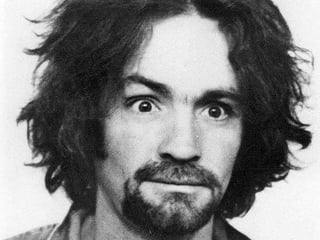
Against that backdrop, Charles Manson remains an unusually strange figure.
He repeatedly violated parole conditions yet somehow avoided returning to prison for years. Researchers have pointed to his connections with the Haight-Ashbury Free Medical Clinic, where Dr. Louis Jolyon West—whose research has been linked to MKUltra-related projects—has attracted continued interest. Whether these connections are meaningful or simply coincidences remains heavily debated.
Manson himself was also deeply fixated on Terry Melcher. Some believe that resentment over Melcher's rejection of his musical ambitions became part of his personal motivations. At the same time, Manson promoted his infamous "Helter Skelter" narrative, claiming that an apocalyptic racial war was imminent and that his followers had a role to play in it. His ability to manipulate vulnerable young people through isolation, drugs, fear, charismatic control, and psychological influence has remained one of the most disturbing aspects of the case.
None of this proves that Manson was directed by any government agency. There is no definitive evidence establishing that conclusion.
However, some people find it reasonable to ask whether a dangerous and highly manipulative individual could have been viewed as useful—or at least insufficiently prioritized—if his actions ultimately helped undermine the public image of the counterculture. Before the Tate-LaBianca murders, many Americans associated the hippie movement with peace, anti-war activism, communal living, and opposition to the Vietnam War. Afterwards, media coverage increasingly emphasized cults, drugs, brainwashing, violence, and social collapse. Although Manson was never representative of the broader counterculture, the Manson Family became, for many Americans, its defining image.
If one imagines a purely hypothetical scenario in which some element of the state knowingly allowed Manson to remain free despite repeated opportunities to imprison him, some argue that the political consequences might have been viewed as advantageous. At a time when opposition to the Vietnam War was growing, public support for the government was declining, and authorities were already conducting covert operations against domestic political movements, the destruction of the counterculture's public image could have been seen as politically useful. Again, there is no historical evidence demonstrating that such a scenario occurred, but the broader context explains why some people continue to consider the possibility worthy of discussion.
On the other hand, it is equally possible that the unusual aspects of the Manson case resulted from bureaucratic failures, investigative mistakes, coincidence, and the tendency to connect unrelated events in hindsight.
For decades, the dominant interpretation remained Vincent Bugliosi's Helter Skelter theory, reinforced by his bestselling book and later popularized by the 1976 television adaptation Helter Skelter. More recently, Tom O'Neill's Chaos has encouraged many readers to revisit unresolved questions—not by providing definitive answers, but by highlighting inconsistencies and unanswered issues surrounding the investigation.
Personally, I don't think the evidence proves that Charles Manson was a CIA puppet or any other intelligence agency. But I also don't think it's unreasonable to examine the irregularities surrounding the case in the broader context of an era when governments demonstrably carried out covert operations, psychological experiments, political infiltration, disinformation campaigns, and violent repression of movements they regarded as dangerous. Whether those irregularities ultimately point to coincidence, institutional incompetence, or something more remains an open question, and reasonable people can disagree.
So where do you draw the line? Are these simply coincidences surrounding an infamous criminal, or do you think the unanswered questions are significant enough to justify continued skepticism? I'm interested in hearing where people stand.
Posted by Infamous_Bother_1996
1 Comment
I say this anytime Manson is brought up, he’s nothing special. Just a twisted man who spent most of his life behind bars before he even went to Spawn Ranch. A failed musician who orchestrated a revenge killing but then since he was too stupid to know that his intended target moved so Sharon Tate got murdered instead and it spawned all this conspiracy nonsense about him and turned into a mythical figure.
Don’t get me started about his schizophrenia thoughts that the beatles were talking to him through the white album.