
Summary:
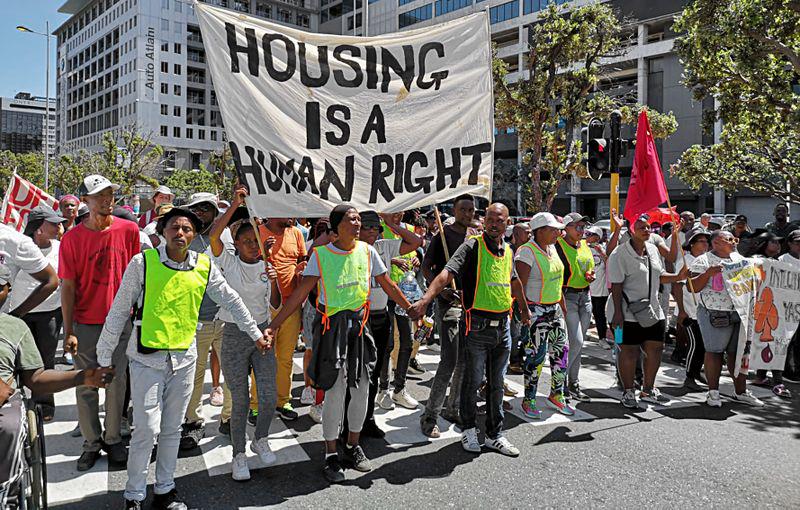
A decade ago, the City of Cape Town sold land and the affluent suburb of Sea Point to a private school. Affordable housing activists took the city and province to court arguing that they were neglecting their responsibility to build affordable housing and actively undo the spatial legacy of Apartheid. It is worth remembering that Apartheid was, at its core, driven by racist urban planning – people were moved and infrastructure was designed to segregate by race and plunder people of colour. Today, Black, Coloured and Indian South Africans who still live in the areas the Apartheid government relocated them to face social and economic burdens as a result of that racist urban planning. This is what is meant by the spatial legacy of Apartheid – people having to live on the other side of the city from where they work, not because the city was rationally designed to work like that for good reasons, but because of racism.
The Constitution says the government has to actively undo the legacy of Apartheid, not recreate it decade after decade. The courts have now found that the DA led governments in Cape Town and Western Cape failed to do this when it came to the sale of this specific parcel of land in Sea Point. The sale will be overturned and the city must build affordable housing on that plot so that some of the people who work in Sea Point can live in Sea Point.
This is a defeat for the Democratic Alliance, which has now completely lost the narrative on housing and affordability in Cape Town. This is the core issue in Cape Town today, and even featured in a New York Times piece. Even affluent residents are increasingly balking at property prices. Ratepayers Associations recently won their own court case against the mayor, who wanted to raise their municipal charges. The Sea Point victory for working class residents of colour was facilitated by NGOs and well organised activist groups. What this means is that the DA is fighting and losing against organised groups at every level of the income distribution on housing.
2026 is a local government election year. There is now basically no part of its base that the DA has not fought against or upset in the last two years – left and right, rich and poor, Black and White; farmers, suburbanites, working class, anti-corruption, technocrats, farmers… If outcomes translated directly into votes, the DA should be worried about losing support this November.
Relevance: affordable housing; smart, walkable, mixed-use urbanism; liberal electoral politics; liberalism vs social democracy
Posted by Top_Lime1820
1 Comment
NB: I wrote “Summary” but I should actually have written “Submission Statement”. My post text does not summarise the article.