
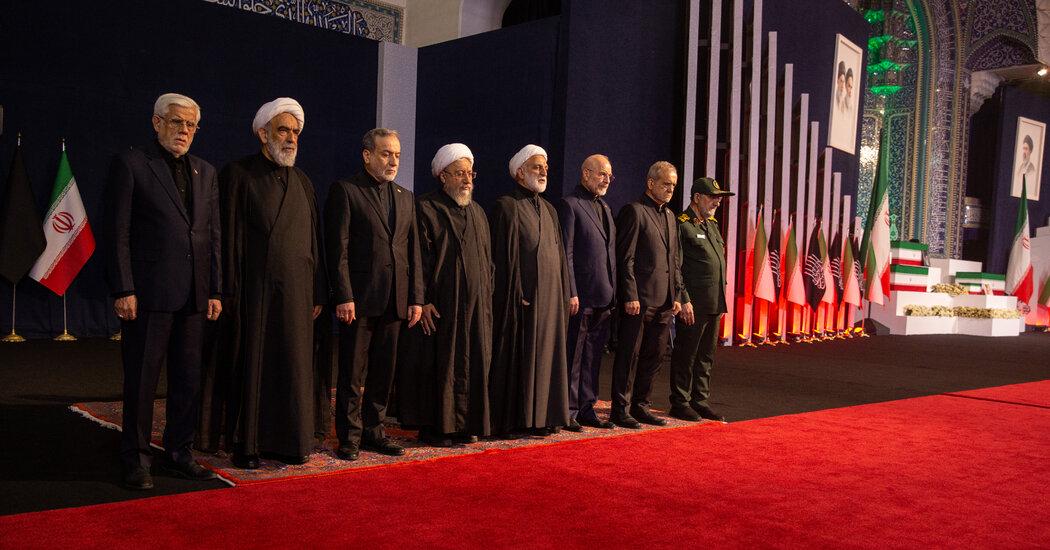
- During the final stages of the talks, when Ayatollah Khamenei was hesitating about approving the preliminary cease-fire deal, Mr. Pezeshkian visited him, according to the four officials familiar with the details of the meeting. The president told the supreme leader that the economic situation was dire, that the U.S. naval blockade was crippling Iran, and that he would step down if he rejected the agreement, the officials said.
- The head of the Central Bank, Abdolnaser Hemati, also wrote a letter to Ayatollah Khamenei saying the country was facing an acute budget crisis, and critical food and medical supplies would run out by the end of August if the naval blockade persisted, the officials said. Mr. Hemati’s letter explained that it was impossible for Iran to sell its oil and find alternative trade routes at the scale it needed.
- Now, in the void left by the killing of the senior supreme leader, who exerted absolute power over all important decisions, the conservatives have split. One side describes itself as pragmatic, arguing that survival will require ending hostilities with the United States and opening the economy. The other, a minority of hard-liners, rejects any concessions to the United States, including on Iran’s nuclear program, and believes Iran can prevail by prolonging the war.
- the pragmatic branch — which includes senior generals of the Revolutionary Guards, Mr. Ghalibaf, President Masoud Pezeshkian and Gen. Mohammad Bagher Zolghadr, the head of the Supreme National Security Council — has gained the upper hand.
- Iranian officials said part of the reason hard-liners were so averse to a deal with U.S. officials was because they understood the current negotiations were broader than the 2015 nuclear deal with world powers, and could pave the way for sweeping changes if Iran and the United States reached a détente after 47 years of hostility.
Posted by Affectionate_Bee6434