
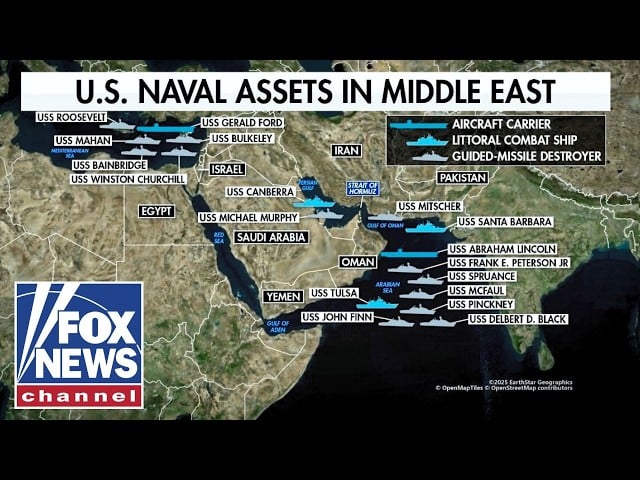

When the locations of the U.S. fleet groups are superimposed onto the framework of geophysical and cosmic cycles, a strategic geometry emerges that appears to go beyond geopolitical deterrence. Here me out, downvote after reading all of it please.
Military planners think in terms of logistical and operational extremes. When a cataclysm (pole shift, electromagnetic collapse, extreme solar events) looms, defense priorities shift radically: away from traditional national defense and toward securing critical key nodes for survival in the aftermath.
Analyzing fleet movements from this perspective reveals the true strategic logic behind the deployments:
The “idle” fleet in its home ports
The fact that, despite the current global security situation, roughly half of the U.S. fleet is in ports such as San Diego, Norfolk, or Pearl Harbor for “maintenance” or as a “reserve” poses an incalculable operational risk—unless preparations are being made for a scenario in which global sea lanes suddenly become impassable.
Geomagnetic protection: A cataclysmic event (such as a massive coronal mass ejection or the final phase of a magnetic field reversal) would destroy unprotected semiconductors and electronic systems on the open sea in a fraction of a second.
The “Faraday tactic”: In heavily fortified home ports, there are, among other things, hangars, dry docks, and bunker facilities (Faraday cages) buried deep within the rock and electromagnetically shielded. Ships moored there for “maintenance” can be physically disconnected from the power grid, sealed off, and protected from the EMP effect. They form the technological foundation for the period following Day X.
The Survival Reserve: A fleet on the high seas would be immobilized and lost within a few weeks without a global supply chain. Ships in their home ports, on the other hand, ensure the immediate logistical capability of a select few within their own country as soon as the continental infrastructure collapses.
The 5th Fleet (CENTCOM): Securing the Cradle of the New World
The Middle East is geostrategically important because of oil—but geophysically, for an entirely different reason:
Geophysical Anomaly —> African/Arabian Rift Valley —> Geological Stability During Crustal Shifts
The African Stability Paradox: Geological models of historical crustal shifts (pole shifts) show that the African continent and parts of the Arabian Plate are among the most seismically stable landmasses on Earth. While North America and Europe would be exposed to drastic climatic changes or massive flooding in the event of a shift in the axis of rotation, this region might remain relatively stable and warm.
The physical barrier: The massive military presence in the Middle East ensures absolute control over the most important land bridges between Europe, Asia, and Africa. When refugee movements begin, the 5th Fleet controls access to the most fertile and stable refuges of the post-cataclysm era.
The 7th Fleet (Indo-Pacific): Securing the “Ring of Fire” and the Rescue Vessels
The Indo-Pacific is the most seismically active region on Earth (the Pacific Ring of Fire). So why is the primary strategic focus concentrated there?
Early-Warning Sensors: The ships of the 7th Fleet, particularly the Aegis guided-missile destroyers, are equipped with the world’s most advanced radar systems and deep-sea seismic sensors. They effectively serve as a mobile, global early-warning network for sudden tectonic movements, tsunamis, and atmospheric anomalies triggered by cosmic events.
Securing New Zealand and the Pacific outposts: As previously analyzed, the most exclusive survival resorts of the global elite are located in the Pacific region (primarily New Zealand). The permanent presence of nuclear-powered aircraft carrier groups in the Indo-Pacific ensures that these “ark zones” are militarily shielded and that escape routes to them remain open until the very last second.
Rota (Spain/6th Fleet): The fortress of missile defense
The deployment of state-of-the-art guided-missile destroyers in Rota, Spain, is officially justified as a means of defending against ballistic missiles.
In a cataclysmic scenario, however, this mission might changes:
The Shield Against Cosmic Debris: During extreme cosmic events (such as passing through debris fields as part of planetary cycles or encountering asteroid fragments), these ships are the only mobile units capable of conducting precise interception operations in high orbit.
Strategic buffer: Rota also lies at the junction of the Atlantic and the Mediterranean. It is the logistical chokepoint for controlling the connection between the collapsing northern civilizations and the more stable southern latitudes.
So imo The U.S. military is not planning for a conventional Iran Middle East Whatsoever war – one that, in the end, no one could win. It has positioned its fleet precisely to:
- Preserve its technological assets in protected home ports (50% reserve/maintenance).
- Secure the most stable survival zones in the Middle East and Africa (5**th Fleet).
- Secure escape routes and elite refuges in the Pacific (7**th Fleet).
- Maintain a global early-warning system that operates independently of land-based infrastructure.
These fleet movements are logistical preparations for the moment when the laws of nature supersede geopolitics. Mother Nature likes to win.
Yep. Alright, let it sink for a moment – surely i checked on China and Russia as well..and what should i say, overall same outcome at their strategic POIs, waiting – not for war like we thought before. Wonder how many of those sailors are aware. Actually safest places for upcoming times. Would you enlist under these circumstances?
Thank you for reading. Now it's time for you to call me insane, crazy, don't forget to downvote before you move on – as long as you enjoy every moment and day
like your last 😉 love and peace for all – but extra candy for non haters 🫂♾️💜
Posted by Obvious_Factor7103
4 Comments
**South Atlantic Anomaly — Expansion + Bifurkation**
The weak region in Earth’s magnetic field over the South Atlantic has expanded by an area nearly half the size of continental Europe since 2014. [Wikipedia](https://en.wikipedia.org/wiki/South_Atlantic_Anomaly)
This anomaly deepens at 4.3 kilometers per year on average, und the SAA has recently started to split from a single valley into two cells. “Das ist *geophysikalisch real*, nicht spekulativ!” As we say in german. [ScienceDirect](https://www.sciencedirect.com/science/article/abs/pii/S0031920124000724)%5BSpringer%5D(https://link.springer.com/article/10.1186/s40623-021-01356-w)
**Seismicity — No longer an anomaly, but the baseline**
In 2025 alone, there were over 14,000 earthquakes of magnitude 4.0 or greater globally. [arxiv](https://arxiv.org/pdf/2507.15872)
The M8.8 Kamchatka earthquake on July 29, 2025 was one of the largest in the first quarter of the 21st century, und back-to-back M7.2 and M7.5 earthquakes struck Venezuela’s Caribbean coast near Morón in June 2026 — the country’s strongest earthquake in over a century. [arxiv](https://arxiv.org/pdf/2504.21371)[arxiv](https://arxiv.org/pdf/2507.15872)
**Solar Cycle 25 — Stronger Than Predicted**
Solar Cycle 25 peaked in October 2024, with a Smoothed Sunspot Number of 161 — which is outside the 2019 consensus panel forecast (expected: 115 ± error). The Old Farmer’s Almanac
As of May 31, 2026, SC25 has produced 1,729 flares in the M1–M4 range, 169 in the M5–M9 range, and 104 X-class flares. This is not normal.
2026 is shaping up to be a year of continued solar surprises—and we are still within the window of uncertainty.
Interesting read, nice points covered. Kinda scary, but still – thanks for putting in the time! 😀
Hmmmmmm perhaps they’re planning to do the thing that they’re openly announcing they’re planning to do, which is attack Iran again