
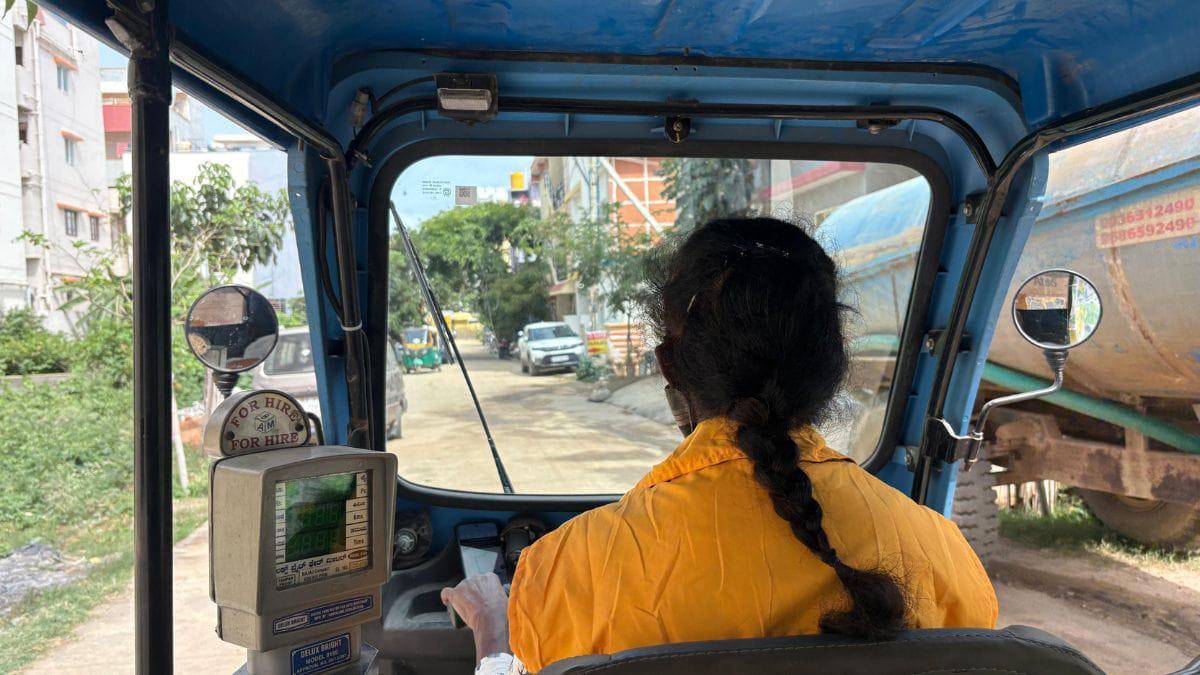
This article goes into senior poverty in india. how the elderly also play a role in the gig economy some of them are in it becuase of debts because they have to pay bills because they have always done that. i think its an interesting thing into how elder poverty and the gig economy intersect.
Posted by ewatta200
2 Comments
**Bengaluru:** Every morning at 7 am, Reshma, a 56-year-old cancer survivor, loads several oversized white delivery sacks onto her electric rickshaw and sets off through the streets of Bengaluru. She has been working as an Amazon delivery associate for the past five years.
[](https://vdo.ai/contact?utm_medium=video&utm_term=theprint.in&utm_source=vdoai_logo)
[](https://theprint.in/india/more-rain-in-store-for-odisha-as-low-pressure-over-bay-of-bengal-to-intensify-imd/2987857/?utm_campaign=theprint&utm_medium=ticker&utm_source=vdoai_ticker)
The left side of her face is permanently stretched after surgeons reconstructed it using skin and bone taken from her thigh during cancer surgery. One of her eyes bulges and waters constantly. She cannot raise one arm. Yet she climbs staircases, waits outside house gates and carries parcels door to door because there is no other income keeping her household afloat.
“People tell me, ‘If you can’t climb upstairs, why are you doing this job?’,” she said, adjusting the cloth mask that covered half her face as she sorted through the parcels.
Reshma (56), a cancer survivor, now delivers packages for Amazon | ThePrint: Sakshi Mehra
For Reshma, the delivery bag is the only thing standing between her family and another month of unpaid bills. Across the country, many older workers tell a similar story.
India’s platform economy is often described through numbers. Millions of young workers, billions of deliveries, rapid growth in e-commerce and ride-hailing. The promise of the gig economy is flexibility. Companies speak of independence, entrepreneurship and the ability to earn on one’s own terms. But on the streets of Bengaluru, another reality is taking shape. A growing number of people doing app-based work are men and women in their fifties, sixties and beyond who have either entered or remained in the gig economy because they cannot afford to stop working.
Rising living costs, debt, healthcare expenses, family responsibilities and the absence of adequate retirement security have turned delivery bags and autorickshaws into lifelines long after most expect to retire.
A cancer survivor delivering parcels. An autorickshaw driver who fought schools over children’s right to education. A 66-year-old Uber driver paying off debt taken during the pandemic. Their stories reveal a side of India’s platform economy shaped by years of debt, illness, financial insecurity and responsibilities that remain largely invisible to the people using these platforms.
“Even today, many drivers and delivery workers in their sixties are on the road because they simply cannot afford to retire. They have no pension from the government, and the companies they work for don’t provide any retirement security. If they had been able to save enough, they would not still be working 12 to 14 hours a day. But they have rent to pay, food to buy and medicines to afford. Many suffer from diabetes and high blood pressure, yet they continue working because stopping is not an option,” said Inayat Ali, vice-president of the Indian Federation of App-Based Transport Workers.
Before leaving, Reshma unlocked her phone to check the next delivery. Instead, a shopping app opened by mistake. She stared at the screen for a moment, unsure what to do. With a few quick taps, the app disappeared, and the delivery screen returned. “My daughter taught me how to use the phone for deliveries. Apart from that, I don’t really know how to use it,” she smiled sheepishly.
***Also read:*** [*India leans on overseas citizens to prop up Rupee; global media also reports on Wangchuk’s hunger strike*](https://theprint.in/global-pulse/india-leans-on-overseas-citizens-to-prop-up-rupee-global-media-also-reports-on-wangchuks-hunger-strike/2986196/)
# Rebuilding a life after cancer
Before the delivery job, Reshma stitched shirts for garment factories from her home and earned nearly Rs 1,000 a day. It was enough to keep the household running and the bills paid.
The pandemic changed everything. Garment factories shut, tailoring orders stopped coming in, and the work she had relied on for years vanished. Left with no choice, she joined an Amazon delivery vendor and has been carrying parcels across Bengaluru ever since.
For Reshma, the delivery bag is the only thing standing between her family and another month of unpaid bills | ThePrint: Sakshi Mehra
Her life had already been shattered once. In 2014, her son suffered kidney failure. For seven months, he remained in hospital while the family borrowed money and sought help from anyone willing to lend.
“We spent nearly Rs 7 lakh trying to save my son. We did everything we could. After seven months in the hospital, we brought him home. We couldn’t save him,” she said.
A year later, she was diagnosed with mouth cancer. In May 2016, surgeons reconstructed part of her face using skin and bone from her thigh.
Today, she earns about Rs 700 a day. The amount used to be Rs 730, she said, before it was reduced by the vendor. Her daughter works at a car showroom and earns around Rs 15,000 a month. Reshma has also borrowed nearly Rs 7-8 lakh from microfinance companies to keep the household running and to prepare for her daughter’s marriage.
“I took a loan to buy gold earrings for my daughter’s wedding. I even got her a gold chain because all her friends wear one. Now I may have to return them because I can no longer keep up with the interest payments,” said Reshma.
She said her husband contributes little to the household. She said that after she had managed to save Rs 10,000, he took the money and spent it on alcohol. He has struggled with alcohol dependence ever since their son’s death and has been unemployed.
Reshma’s frustration surfaced repeatedly as she spoke. She said he spends most of his time at home while the responsibility of paying the rent, repaying loans and keeping the household running falls almost entirely on her and her daughter.
“I work so hard just to earn enough for one meal, and this is what happens,” she said.
Yet she continues to work every day. Some customers refuse to answer calls and later complain that the parcel was delayed. Others ask her to climb several floors despite her condition. Many stare at the scar on her face and her frail frame before taking their packages. But she remembers the rare kindness too.
“Once, a woman stopped me, looked at me and gave me Rs 500. She said, ‘Please eat something.’ I have never forgotten that,” said Reshma.
I was wondering why this disabled, middle-aged woman had to work like this. Then I got to this part,
> In 2014, her son suffered kidney failure. For seven months, he remained in hospital while the family borrowed money and sought help from anyone willing to lend.
> “We spent nearly Rs 7 lakh trying to save my son. We did everything we could. After seven months in the hospital, we brought him home. We couldn’t save him,” she said.
> A year later, she was diagnosed with mouth cancer. In May 2016, surgeons reconstructed part of her face using skin and bone from her thigh.
> Today, she earns about Rs 700 a day. The amount used to be Rs 730, she said, before it was reduced by the vendor. Her daughter works at a car showroom and earns around Rs 15,000 a month. Reshma has also borrowed nearly Rs 7-8 lakh from microfinance companies to keep the household running and to prepare for her daughter’s marriage.
> “I took a loan to buy gold earrings for my daughter’s wedding. I even got her a gold chain because all her friends wear one. Now I may have to return them because I can no longer keep up with the interest payments,” said Reshma.
> She said her husband contributes little to the household. She said that after she had managed to save Rs 10,000, he took the money and spent it on alcohol. He has struggled with alcohol dependence ever since their son’s death and has been unemployed.
I get borrowing money for medical expenses, but jewellery? Come on now.
And alcoholic husbands drinking away money earned by their wives/families is a story far too common.
I’m gonna read the rest of the stories, but I’m gonna guess most of them are life screwing them in unfortunate ways and them not having a safety net or a support system to fall back on.