
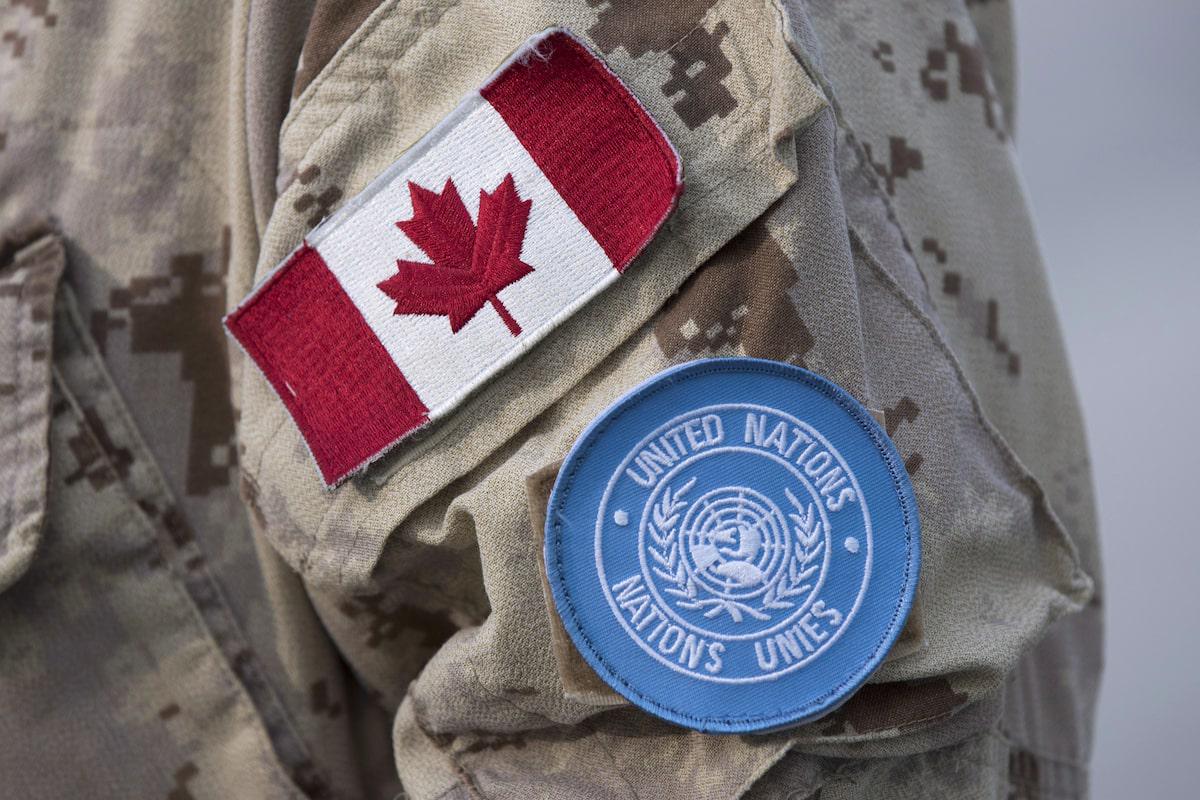
Ottawa’s decision to slash its troop contribution to United Nations missions is sparking concern that the cuts will undermine Canada’s new Africa strategy and jeopardize its longstanding peacekeeping traditions.
By the middle of next year, the Department of National Defence says, Canada will withdraw its peacekeepers from UN missions in Congo, South Sudan, Kosovo and Cyprus and sharply reduce its role in a multinational mission in the Sinai.
Even before the withdrawal, Canada’s troop contribution ranked only 65th in UN peacekeeping missions, with fewer than 30 personnel deployed − the smallest number it has ever contributed.
After the latest planned cuts, it will rank about 100th, according to Walter Dorn, a peacekeeping expert and defence studies professor at Canadian Forces College in Toronto.
“The decision kills a long and proud tradition of Canadian peacekeeping,” said Prof. Dorn, who recalled that former prime minister Lester Pearson won Canada’s first Nobel Peace Prize in 1957 for helping create the first UN peacekeeping force during the Suez Crisis.
“At a time when the United Nations needs more support, Canada is reducing it,” he told The Globe and Mail. “We seem to have unlearned the lessons of two world wars that taught us how security must be thought of globally and international organizations need to be vigorously supported.”
In its announcement, DND said the cut to its UN contributions will allow Canada to better align its resources with higher-priority areas, including the Euro-Atlantic and Indo-Pacific regions.
“This rebalancing will help sustain our commitments and strengthen readiness, enabling Canada to continue to contribute effectively alongside allies and partners,” Defence Minister David McGuinty said in a statement last month.
About 50 to 60 members of the Armed Forces will be reassigned as a result of the planned withdrawals and reductions, the department said.
While the numbers are small, the move is symbolically significant after decades of strong Canadian support for peacekeeping. In UN missions such as the Democratic Republic of the Congo, where Canada has fewer than a dozen troops, it traditionally punches above its weight by providing senior officers and top logistical specialists − including the mission’s deputy commander for most of the past 20 years.
In late 2023, for example, Canadian peacekeepers played a key role in planning the defence of Goma, a city in eastern Congo that was eventually captured by the M23 rebel militia.
Congo is currently struggling with several armed insurgencies and a fast-spreading Ebola outbreak. “By pulling out of the mission, Canada will weaken the force at a time of continued conflict, when the UN is much needed to save lives and alleviate suffering,” Prof. Dorn said.
In the new Africa Strategy it unveiled last year, Ottawa promised to boost its support for peace operations and conflict prevention efforts in Africa. But while the strategy raised hopes that Canada would see the continent as a priority, “those hopes now look misplaced,” said Chris Roberts, a University of Calgary political scientist who has studied Canada’s military role in Africa.
“Within DND, Africa remains peripheral even as allies and rivals expand their military and security presence and many conflicts continue unabated,” he told The Globe. “For a trading and rules-based country like Canada, treating the continent as peripheral is strategic negligence.”
In addition to the shutdown of Canada’s troop contribution in four UN peacekeeping missions, DND said it will reduce its personnel in the Sinai mission from about 40 to about 10 by the end of this year. The Sinai operation is technically a multinational effort, rather than a UN mission.
Canada also plans to keep sending military aircraft to a UN supply hub in Uganda, but it has deployed few such flights over the past year.
As recently as 2016, the federal government was promising to deploy an additional 750 troops and police officers to reinforce UN peacekeeping missions worldwide. But aside from a brief deployment of 250 personnel in a helicopter unit in Mali from 2018 to 2019, the Canadian contribution has steadily dwindled.
“The Carney Liberals are abandoning Canada’s peacekeeping legacy at a time of global instability,” NDP foreign affairs critic Heather McPherson said.
“They need to explain what Canada’s new defence priorities are − and whether building and keeping peace is among them.”
Posted by IHateTrains123