
SS: "I take a nap and the world changes," says Chen Tianyu.
His world certainly does. The 28-year-old keeps up with the latest technology by spending his spare time in factories that are switching to automation. That way he knows what to prioritise when teaching his class about artificial intelligence (AI) and robotics.
In front of him, around 30 college students are studying code. One of them is typing furiously as his eyes dart from the screen to the robot: "The idea is it will grab that cylindrical piece and move it over there."
A line of industrial robots are waiting to be programmed, and in another part of the classroom, students are trying to develop robotic medical instruments. As he guides them, Chen declares: "If you are not needed by the world of AI and robotics, then you'll definitely be among those eliminated".
For the people in this room, this is a step – or rather a leap – towards a future that China is meticulously building: Xi Jinping's $20bn (£14.7bn) plan to put his country at the forefront of innovation and in direct competition with the US.
The evidence is all around them. They are in the Hangzhou Technician Institute, one of several huge, purpose-built vocational schools that want to churn out the next generation of tech-savvy engineers. The campus sits on the outskirts of Hangzhou, a former imperial capital whose futuristic skyline is just the first hint of its role as a global tech hub.
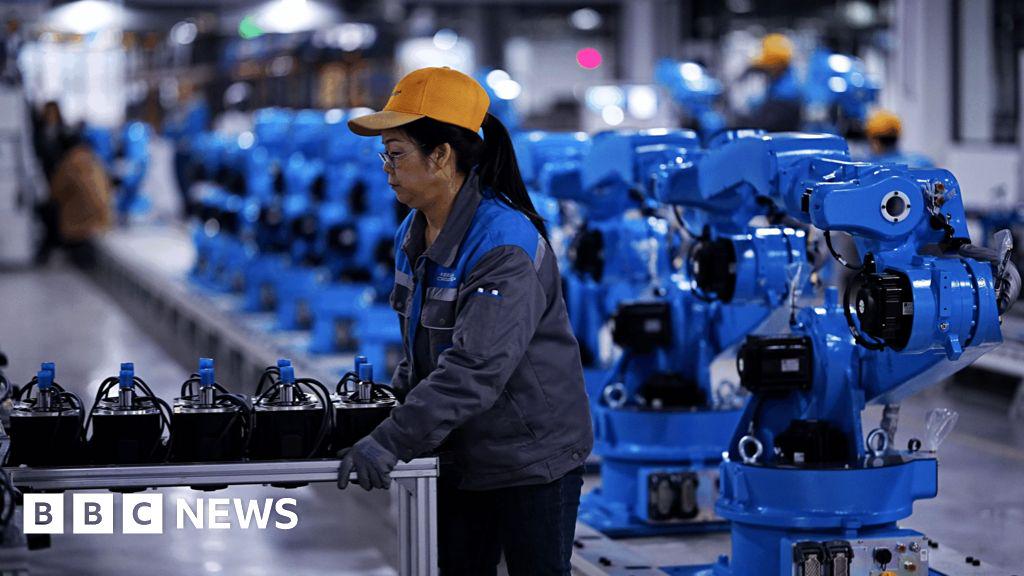
Across the country, there are more than two million robots working in China's factories – which is more than anywhere else – and they are continuing to scale up at extraordinary speed.
Posted by NerubianAssassin
1 Comment
American manufacturing
