The ceremony came weeks after Modi’s government cleared Semicon 2.0, the second phase of its semiconductor mission, giving it a budget of 1.275 trillion rupees ($13.4 billion), money that will go toward developing a chip design and manufacturing ecosystem.
The 760 billion-rupee first phase, the India Semiconductor Mission, was launched in December 2021. It was intended to reduce India’s reliance on imported chips, offering to subsidize up to 50% of silicon fabs, compound semiconductor facilities, assembly and testing units, and chip design labs. So far, approval has been given to 12 manufacturing units with a combined investment of over 1.64 trillion rupees.
Among the first dozen is ASIP Technologies’ 30-acre semiconductor assembly and test (OSAT) project in Vizag. The facility, being established in a partnership with South Korea’s APACT, has an initial investment of over 4.6 billion rupees. After the foundation stone was laid on Aug. 1, ASIP said in a statement that it will have an annual production capacity of 96 million chips. The facility is to provide chips for [artificial intelligence](https://archive.md/o/UoGxU/https://asia.nikkei.com/business/technology/artificial-intelligence), high-performance computing, data centers and high-speed communications.
ASIP also plans a more than 20 billion-rupee expansion to scale up its advanced semiconductor packaging operations, the statement says, adding that the project is expected to directly create over 1,000 jobs for highly skilled workers and indirectly bring another 1,600.

1 Comment
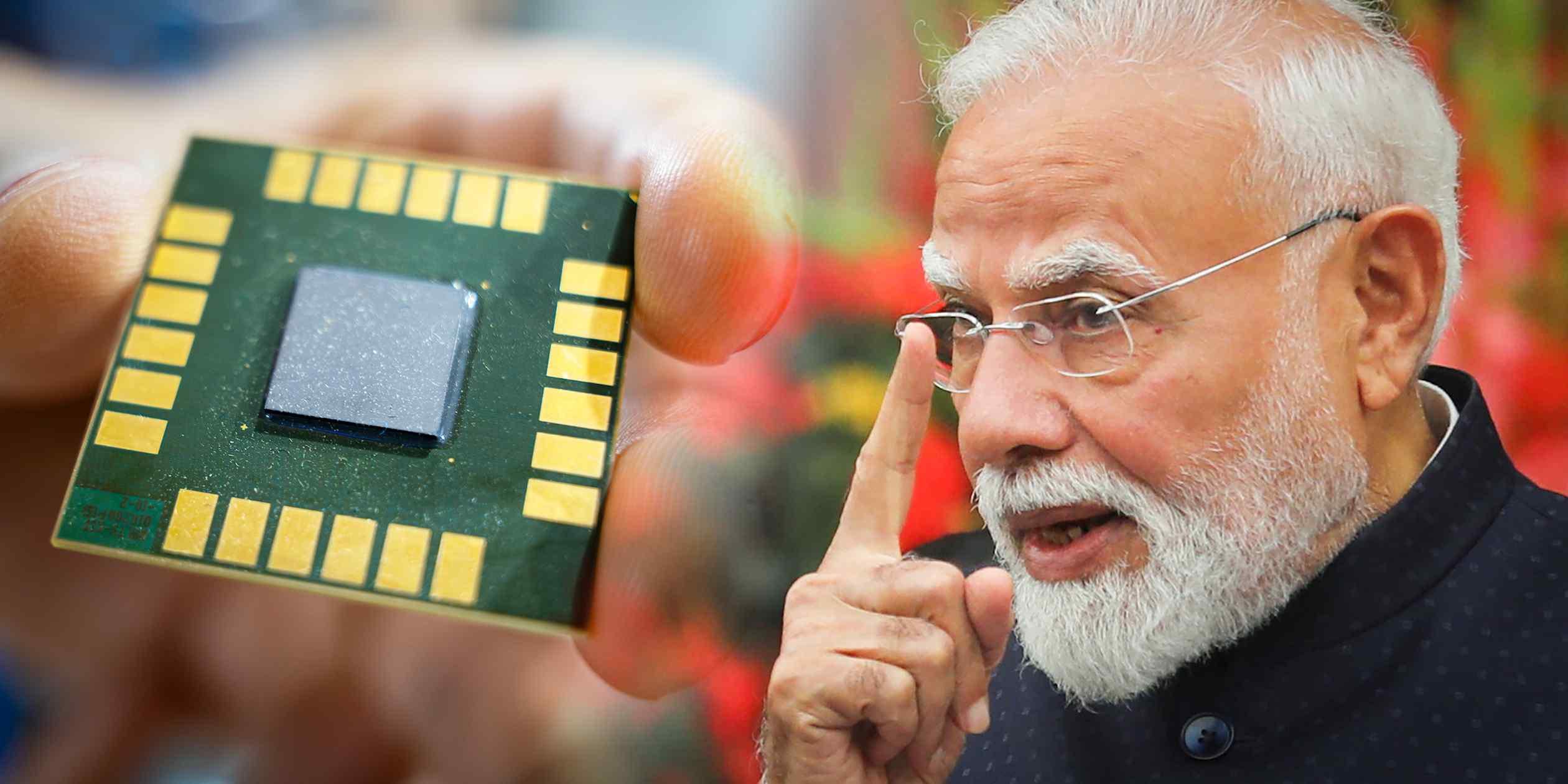
VIZAG, India — While Prime Minister Narendra Modi was visiting the coastal city of Vizag in the southern state of Andhra Pradesh to [inaugurate India’s newest international airport](https://archive.md/o/UoGxU/https://asia.nikkei.com/business/transportation/modi-opens-vizag-airport-as-india-s-south-seeks-southeast-asian-travelers) earlier this month, he also virtually laid the foundation stone for a 25 billion-rupee ($262.25 million) semiconductor facility, the first in southern India approved under the country’s ambitious chip-making initiative.
The ceremony came weeks after Modi’s government cleared Semicon 2.0, the second phase of its semiconductor mission, giving it a budget of 1.275 trillion rupees ($13.4 billion), money that will go toward developing a chip design and manufacturing ecosystem.
The 760 billion-rupee first phase, the India Semiconductor Mission, was launched in December 2021. It was intended to reduce India’s reliance on imported chips, offering to subsidize up to 50% of silicon fabs, compound semiconductor facilities, assembly and testing units, and chip design labs. So far, approval has been given to 12 manufacturing units with a combined investment of over 1.64 trillion rupees.
Among the first dozen is ASIP Technologies’ 30-acre semiconductor assembly and test (OSAT) project in Vizag. The facility, being established in a partnership with South Korea’s APACT, has an initial investment of over 4.6 billion rupees. After the foundation stone was laid on Aug. 1, ASIP said in a statement that it will have an annual production capacity of 96 million chips. The facility is to provide chips for [artificial intelligence](https://archive.md/o/UoGxU/https://asia.nikkei.com/business/technology/artificial-intelligence), high-performance computing, data centers and high-speed communications.
https://preview.redd.it/3fk0uvrrv3mh1.jpeg?width=1355&format=pjpg&auto=webp&s=fc5e9c9cd6f985ae173950ba0937543fa49a82a9
ASIP also plans a more than 20 billion-rupee expansion to scale up its advanced semiconductor packaging operations, the statement says, adding that the project is expected to directly create over 1,000 jobs for highly skilled workers and indirectly bring another 1,600.