
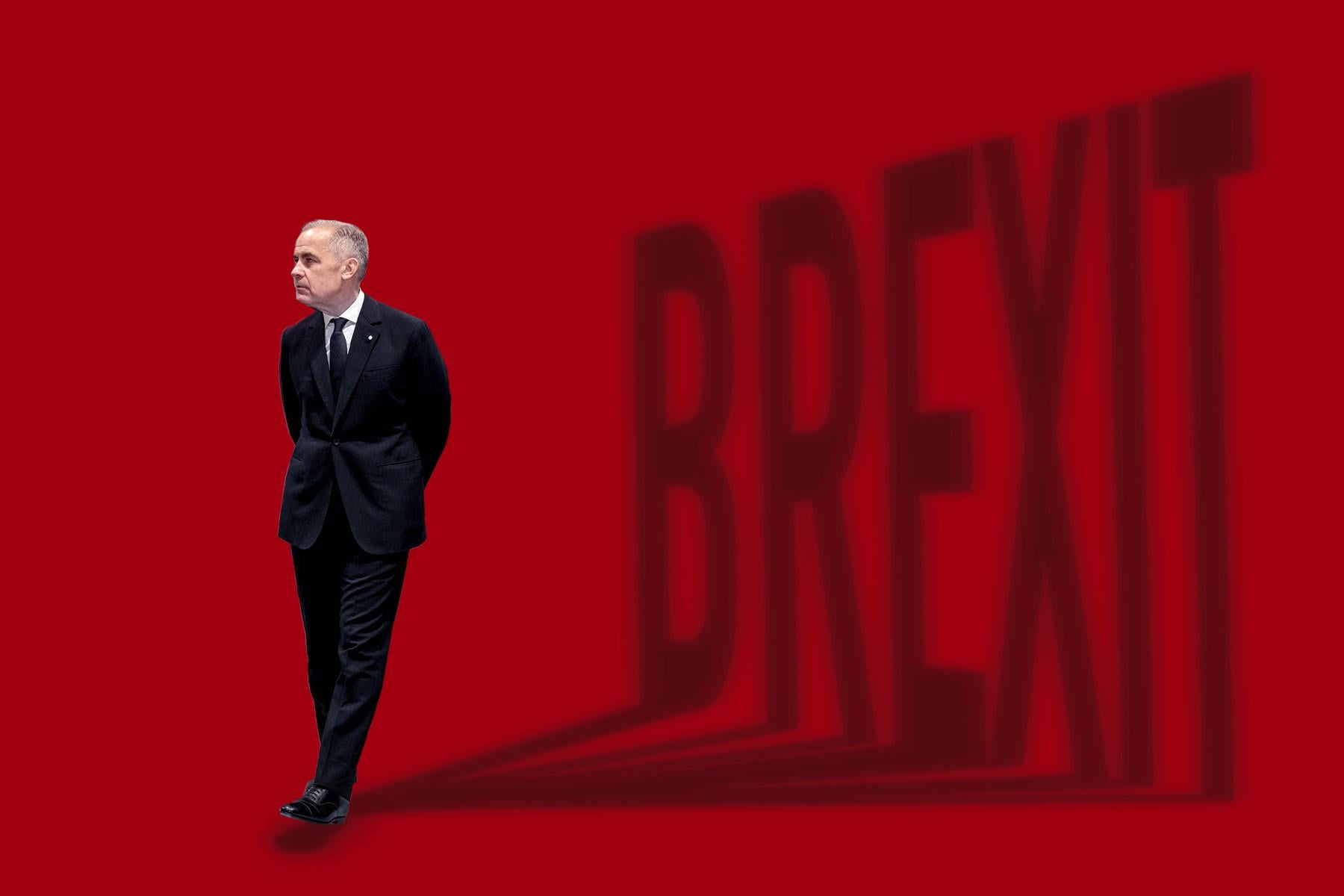
It explains why the prime minister has given the province almost everything it wants
In January 2013, the United Kingdom’s then prime minister David Cameron announced his intention to let voters decide whether the UK should remain part of the European Union or leave. “It is time for us to settle this question,” he declared. “I say to the British people: this will be your decision.”
Cameron himself didn’t want Brexit to happen. He thought a referendum would finally silence opponents who felt otherwise, including many in his own Conservative Party. Yet he also sympathized with British citizens who “resent the interference in our national life by what they see as unnecessary rules and regulation” and tried to leverage that resentment in negotiations for a better deal with the EU. When the referendum was held in 2016 and Leave won with 52 percent of the vote, Cameron resigned the next day in disgrace. The UK spent the next four years negotiating the terms of its divorce with continental Europe. In 2020, they reached an agreement, and Brexit became official reality.
The UK cycled through three prime ministers during those seven tumultuous years. But the Bank of England had just one governor that whole time, whose tenure from 2013 to 2020 overlapped this cautionary tale with eerie precision: Mark Carney.
Imagine the déjà vu Carney must be grappling with today as Alberta skips down the path paved by Brexit. “Alberta’s future will be decided by Albertans,” Premier Danielle Smith said in May, when she announced the referendum Albertans will vote on this fall—a vote to decide if the province wants to pursue a vote on separation. “It’s time to have a vote, understand the will of Albertans on this subject, and move on,” Smith echoed.
Like Cameron before her, Smith emphasized her personal desire to remain in Canada and promised to campaign to that effect, while positioning herself as the champion of separatist resentments. Lord knows if she appreciates how closely her rhetoric matches that of Brexit’s accidental enabler. But there’s no doubt Carney does.
“It’s a dangerous bluff—we’re literally at ten years’ anniversary of Brexit, and I saw first-hand what gets sold in these referenda,” he told reporters in June, when asked about the threat of Alberta’s separatist movement. “It’s very reminiscent.”
That was a rare moment for Carney, who doesn’t spend a lot of time publicly recalling Brexit. But Alberta’s separatist movement has been a major subplot of his time in office; defanging that movement goes a long way to explaining what many Canadians—myself included—have been scratching our heads over: Why is this former United Nations Special Envoy on Climate Action and Finance being so damn nice to the oil patch?
For seven years, the man had a front-row seat to the mechanics of political mischief. He watched ludicrous promises and unabashed racism carry the day against all odds (2016 was also the year Donald Trump, a vocal Brexit proponent, first became president of the United States). The experience clearly left an indelible mark on Carney’s political world view. If Smith is accidentally repeating history, Prime Minister Carney seems determined to do the opposite. To understand how, and why, it’s helpful to review how Governor Carney navigated Brexit.
Ten years ago, Carney had to be careful about expressing his opinions; the head of a national bank isn’t supposed to meddle in politics any more than an army general would. But assessing the potential economic impact of major policy decisions—entering a trade pact, say, or starting a war—is part of the top banker’s job. That was Carney’s way into the Brexit debate.
Three months before that referendum, in a televised meeting with British members of Parliament, Carney described the prospect of Britain leaving the EU as “the biggest domestic risk to financial stability” facing the UK. He also wrote a public letter to the UK Treasury Committee cataloguing the positive influence the UK’s relationship with the EU had on the nation’s finances. These statements infuriated pro-Leave MPs, who scolded Carney for stepping outside his lane. It was “beneath the dignity of the Bank of England to be making speculative, pro-EU comments,” Conservative MP Jacob Rees-Mogg told Carney during that meeting. Many others agreed. A few days after Leave won the referendum, Nigel Farage, a central Brexit protagonist, suggested Carney should resign.
Instead, he kept issuing warnings. At that point, the task turned to negotiating the world’s most complicated divorce settlement; initially, the deadline was for March 2019, but the UK pushed that back repeatedly and appeared to be heading for a “no-deal Brexit”—that is, simply severing the complex web of political and economic agreements tying the UK to the EU, without any new deals to replace them. Carney spoke frequently of the economic chaos that might ensue if that happened. “With no deal, the shock to the economy is instantaneous,” he told the BBC in August of 2019. The UK and the EU did ultimately close a deal at the eleventh hour, but Carney’s warnings drew fresh ire from pro-Brexit politicians, who accused Carney of reviving “Project Fear.”
Project Fear was the label pro-Brexiteers stuck on their Remain opponents (Carney very much included), casting their gloomy predictions of post-Brexit calamity as hysterical fear mongering. By contrast, the Leave campaign dealt in promises instead of threats. Some were high minded, like the prospect of spending the billions the UK sent to the EU each year on the country’s tattered health care system instead; others appealed to voters’ basest instincts, like the notion of halting an imaginary flood of violent immigrants into Europe. Never mind that neither of those promises came true (Britain’s immigration levels rose after 2020 and peaked in 2023, while a slight increase in health care spending came from increased taxes instead of EU savings). What mattered was, they worked.
Carney brought lessons from that ordeal home. We’ve seen them in action from the moment he won Canada’s last federal election—a period that has seen Alberta’s separatist movement grow from fringe joke to serious political threat.
First, the movement, led by the citizen-run initiative Stay Free Alberta, gathered hundreds of thousands of signatures for a petition to force a referendum. In late January, Trump’s treasury secretary, Scott Bessent, expressed his sympathy for the separatist cause. Shortly afterward, it came out that a small group of the movement’s leaders had been travelling to Washington to meet with unnamed American officials. “Alberta has a wealth of natural resources, but they won’t let them build a pipeline to the Pacific,” Bessent said in an interview with right-wing commentator Jack Posobiec. He noted there was “a rumor that they may have a referendum on whether they want to stay in Canada or not,” and said, “Alberta is a natural partner for the US.”
A few weeks later, those rumours became reality. On February 19, Smith announced Alberta would hold a fall referendum on separation. She was forced to change the wording of the question after a judge ruled such a referendum would violate First Nations’ treaty rights; come October, Albertans will now vote on whether to hold a future vote on separation—that was the backdrop for her subsequent May address about the referendum. But even with that concession, the separatists have gained an astonishing amount of ground.
Carney may be the only Canadian outside Alberta who wasn’t surprised by these developments. He’s been working to head them off since the day he took office; instead of threatening Alberta with disaster should it secede, Carney has overwhelmingly given the province—or, at least, its government—almost everything it wants. Smith emphasized this point in her referendum address in May: “The federal Liberals, led by their new leader, Prime Minister Mark Carney, adopted most of Alberta’s positions on energy and resource development,” she noted. “The destructive federal electricity regulations are gone. The economically disastrous oil and gas production cap has been scrapped. New pipelines carrying nearly a million barrels of Alberta oil to the United States are proceeding with speed toward construction. And a new million-barrel-a-day oil pipeline to the BC West Coast is well in progress and on track to have its permitting completed by September of next year.”
Project Fear, it appears, has morphed into Project Appeasement. As Smith boasted in her referendum speech, Carney has given Alberta almost everything it asked for, scrapping the vast majority of his predecessor Justin Trudeau’s climate regulations while pushing aggressively to expand oil production. Instead of a consumer carbon tax, emissions cap, or clean-electricity regulations, pro-oil Albertans—the separatists’ core demographic—now have a prime minister moving aggressively to build a million-barrel-per-day pipeline to BC.
Will it work? Probably. After a solid year of rising momentum, the separatists’ campaign appears to have stalled out. Unlike the Brexit fiasco (a June poll by the European Council on Foreign Relations registered a profound national regret, with 75 percent of Britons now wanting closer relations with the EU—including two-thirds of those who voted Leave), no high-profile politicians are campaigning for separation. To the contrary, almost every politician from every political party is campaigning for Alberta to remain, albeit with varying degrees of enthusiasm. But if Alberta’s secession seems unthinkable today, recall that it wasn’t so long ago that the prospect of a Conservative Alberta premier praising a Liberal prime minister seemed equally impossible.
Perhaps, though, there’s a better question to be asking than whether Carney’s tactics will keep Alberta inside Canada. As climate impacts keep worsening, as the world beyond North America embraces the energy transition, and as Canada’s economy grows ever more beholden to the oil patch, it might not be too long before Canadians wonder: At what cost?
Posted by IHateTrains123