
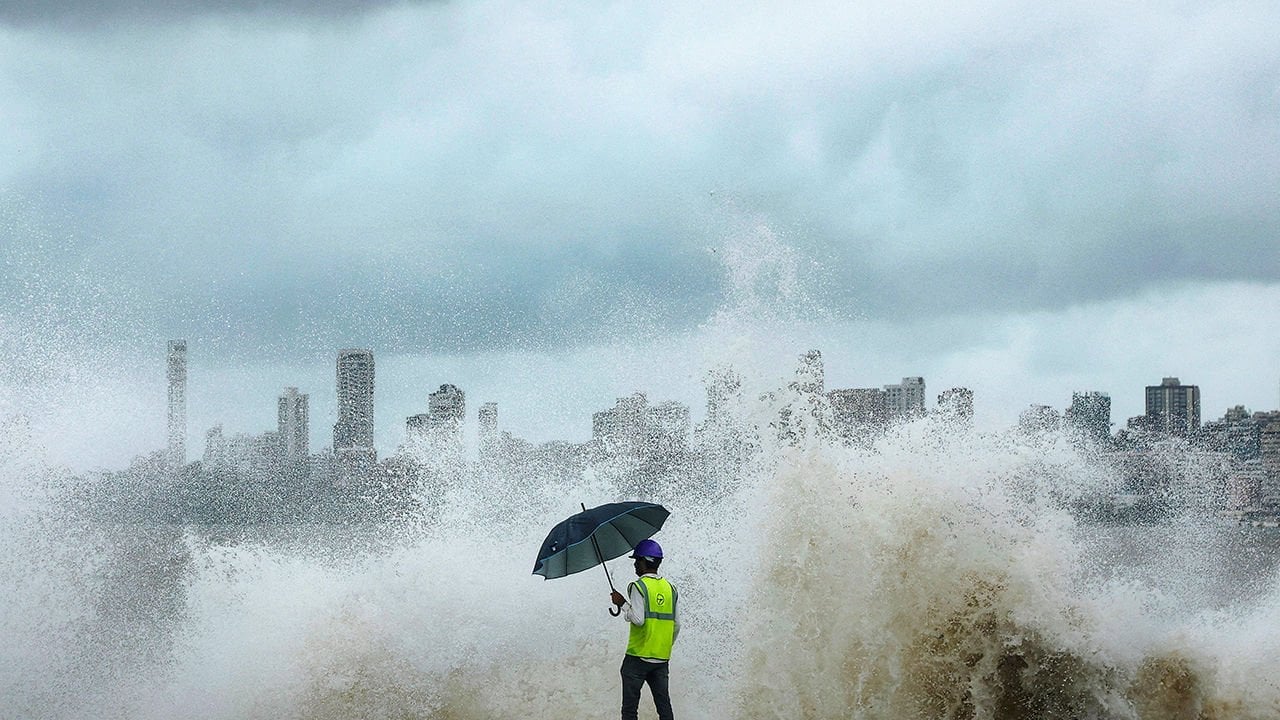
Indian cities are utterly unprepared for what is about to hit them | The urban population is set to double by 2050
Posted by Independent-Low-2398
Indian cities are utterly unprepared for what is about to hit them | The urban population is set to double by 2050
Posted by Independent-Low-2398
1 Comment
> Splurging on infrastructure, though necessary, will not be enough. Metro lines and coastal highways were first proposed in the 1960s, when Mumbai’s population was just over 5m. Today that number is estimated at around 20m. It is projected to double by 2050. So is the population of urban India as a whole. “If you think that urbanisation is a problem today…try overlaying another Mumbai on top of this Mumbai,” says Shashi Verma, who oversees technology at London’s transport authority and advises Indian policymakers on a pro bono basis. Preparing for this growth, says Mr Verma, “is not tomorrow’s problem. It’s not even today’s problem. It is actually yesterday’s problem.”
> India is far from ready. No one knows how many people live in its cities today. The last census was taken 13 years ago. The central government shows no signs of conducting a fresh one. The census definition of an urban area is narrow, but even by its strict standards one in three people lived in cities in 2011. Today perhaps as many as one in two do. One thing is clear: the hundreds of millions of urban Indians will soon be joined by hundreds of millions more. Yet the Ministry of Housing and Urban Affairs was allocated a mere 1.7% of the national budget announced on July 23rd. For India’s cities to cope, urban authorities must focus on three things.
> The first is to deal with the main reason that cities fail to build adequate housing: land-use regulations. An overly prescriptive, 2,200-page National Building Code and a surfeit of local rules prevent developers from making optimal use of pricey urban land. Mumbai has some of the most restrictive land-use regulations of any global megacity. In most well-functioning cities about 90% of land is given over to streets, public spaces and buildings. In Mumbai and other Indian cities, those uses take up less than half of the land area, according to analysis by Bimal Patel, an urban planner. The rest is wasted on “private open spaces”—mostly building compounds that are walled off and put to no good use.
> Making India’s cities denser and more affordable would help with the second challenge: public transport. If India’s cities are to double in size, private vehicles cannot be the answer. Of the world’s ten most gridlocked cities, three are in India. The government has splashed out on costly metro-rail systems in recent years, but less glamorous (and more useful) public bus networks have been neglected.
> The third issue facing India’s cities is climate change. This year the country experienced its longest-ever heatwaves. They will only become more frequent, India’s chief meteorologist told a local newspaper. Urbanisation is itself a cause of higher temperatures, accounting for roughly 38% of warming in Indian cities, according to a recent study. Concrete and tarmac retain heat, cars stuck in traffic radiate it and air-conditioners breathe it out. The poorest suffer the most. In Mumbai, densely packed slums can be between 5°C and 8°C hotter than neighbouring residential areas. Researchers estimate that the city’s economy stands to lose $6bn annually from excessive rain and flooding by 2050.
!ping YIMBY&IND&ECO