
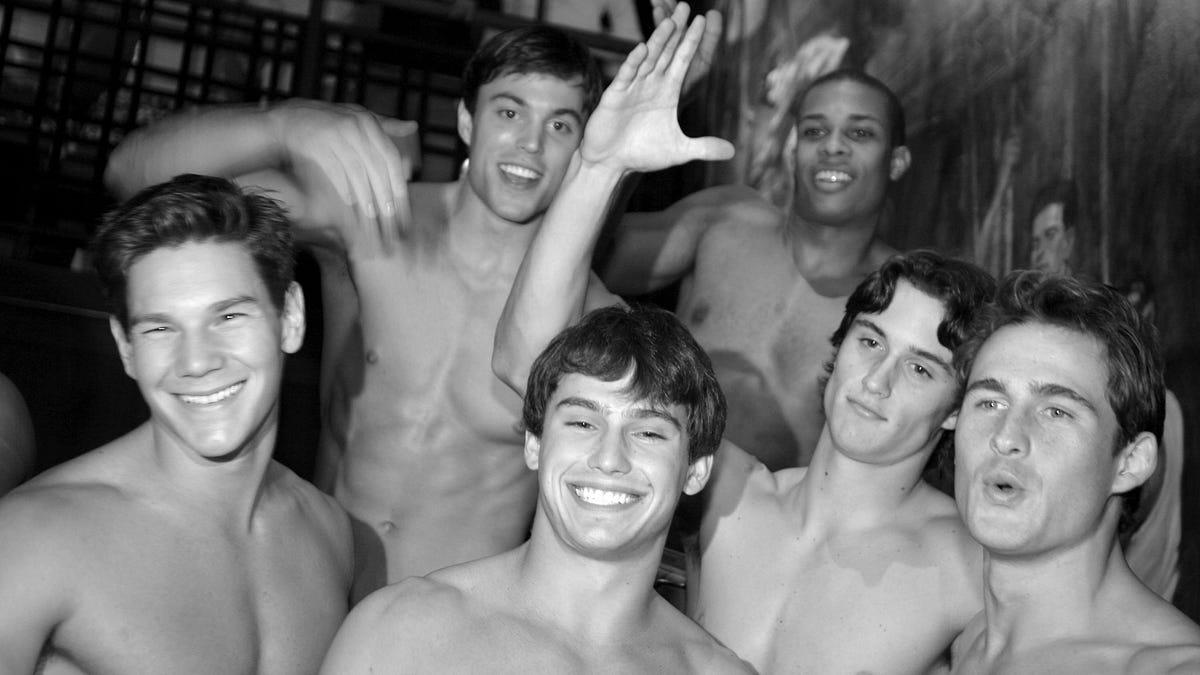
Gen Z men are sadder and lonelier than any generation before them—but damn, they look good while doing it. While previously men turned to drink, drugs, or ill-advised sex to cope with the pressures of being young, today men in their 20s are heading to the gym more than any previous generation.
Wellness is a big topic for younger generations today. A 2025 survey showed that Gen Z and Millennials account for over forty percent of wellness spending, with Gen Z consumers counting a “better appearance” in their top three wellness concerns after sleep and health. As with any interest in this day and age, the concern with appearance is expressed as much through consuming as by doing. Gen Z consumers show a keen interest in wellness products such as health-tracking devices, mindfulness apps, and massage tools.
What in the 1990s would be described as “metrosexual”—a man interested in his appearance, with a certain personal style and a passion for skincare—has transformed into a new pressure on men to strive to be their best physical selves. Men’s health and wellness have gone mainstream, with the market projected to double by 2030 to nearly $3 trillion. Gen Z men are also encountering beauty products differently: while previous generations tended to buy products in response to obvious needs such as shaving or requiring deodorant, today young men begin their beauty journey with general skincare. Men are also increasingly searching for particular brands online, suggesting active decision-making rather than grabbing the first vaguely suitable product they find in the grocery store.
Of course, beauty is more than skin(care) deep. In 2025, adults aged 18-24 accounted for 54% of all new gym memberships, with men making up a higher proportion. With the well-documented decline of “third places” such as malls or bars for young people to hang out in, the gym offers a place to spend time outside of home, work, or study. This interest in fitness has been enhanced by the trend for wearable devices, from smartwatches to smart rings, making it easier than ever to track results. And in many ways, this is all positive.Who doesn’t want to be healthy? Developing habits such as gym-going and a balanced diet in your 20s sets you up well for later in life.
But there’s a dark side to the wellness fad. Today’s beauty standards for men are arguably as punishing as those for women.
While women are expected to be as thin and as smooth as if they were wearing a real-life Instagram filter, men are pushed to be athletic and chiseled, with angular features and defined abs. Which perhaps helps explain why Gen Z are unhappier thanever. Part of why they recognize the importance of mental health is because they struggle so much with it.40% of Gen Z report that they feel “almost always stressed.” This is exacerbated by high levels of screen time, leading to constant reminders that others’ lives are going better than theirs, compounded by a fear of missing out (FOMO).
Just as many women have already discovered, the hyperfocus on appearance, far from providing a sense of accomplishment and satisfaction at having achieved the “ideal” body, is making men unhappier.
Male beauty standards saw a huge shift around 2021.Male spending on self-care took off in the spring of that year. For those stuck at home with nothing to do except doomscroll and buy products online, self-improvement became an easy hobby. This trend has continued: 19% of men report caring more about beauty now than they did ten years ago.
This trend is in part driven by the market: at the same time as women were embracing the viral “clean girl” aesthetic, which required fewer (but not zero) products, the beauty industry moved to meet men’s needs, too. COVID saw a rise in sales of skincare products, as these were not only a distraction but made skin feel healthy at a time when consumers wanted to decrease stress and look well. Skincare is an easier sell to male consumers than makeup, which allowed this trend to cross the gender barrier.
But the biggest driver of changing male beauty standards by far is social media and influencer culture—particularly trends such as “looksmaxxing,” a subculture within the manosphere in which young men and boys encourage each other online to maximize their looks to an extreme degree. According to proponents, there are two types of looksmaxxing: softmaxxing, which can include skincare, diet, and a healthy gym routine, and hardmaxxing, which is much more extreme.
As with anything, softmaxxing can be healthy in moderation—though making an identity out of the pursuit of perfection is likely to fail, regardless of how healthy the activities are. Hardmaxxing, on the other hand, involves dangerous or invasive procedures to get extreme results. This could mean steroids, plastic surgery—or worse. One of the most famous influencers is Clavicular (real name Braden Peters), who chronicles his attempts to achieve the “perfect” face for his 1.2 million subscribers on TikTok and another 437,000 on Kick, mostly young men. The 20-year-old has said that his mother confiscated his hammer as he kept using it to smash his face into a more preferable shape. He also claims to have injected himself with so much testosterone that he is now infertile. His videos, and those of other hardmaxx influencers, hyperfixate on small details about the face such as chin measurements and ratios, desperately trying to fix every perceived flaw.
Looksmaxxing has its origins in online incel, “black pill,” and alt-right communities that have grown more mainstream since the pandemic. Such communities push the idea that women are superficial and that men must go to extreme measures to be sexually attractive. In this telling, looks are everything—a message that’s amplified across social media. Of course, not every young man who’s really into fitness takes their cue from these communities. But their prevalence shows the dark side of a culture that is taking advantage of a generation of lost and lonely young men.
This is the ultimate irony behind looksmaxxing: it derives from and feeds the loneliness epidemic. Gen Z are famously having less sex than any previous generation. Courtships start—and often stay—online, meaning potential romantic partners are kept at a safe, virtual distance. Sure, the lack of dating gives young men the time—not to mention the energy—to hit the gym, but it comes at the expense of genuine connection.
Spend even five minutes reading about modern dating online, and you will be presented with caricatures of both sexes: men are pathetic and entitled, while women only want rich men over six foot tall. Neither is true, yet because Gen Z men and women now inhabit different spheres of the internet, these same-sex echo chambers reinforce myths about the opposite sex, and toxic ideals which both sexes are expected to attain. Yes, some women like six-packs, but plenty don’t—at least half of women prefer “dad bods”—and many will actively be put off by partners too steeped in online wellness or manosphere spaces. It should go without saying that no one wants to date someone who thinks the only way to look attractive is to take a hammer to the face.
Gen Z is struggling. Social media reinforces not only the feeling that you’re not good enough, but also that the future is hopeless. Eating disorders and self-harm have long been destructive ways for young women to cope with external pressures that feel overwhelming. Now, a new generation of influences is preying on the same urges in men. As both sexes turn away from each other, seeking refuge in social media rather than the real world, more and more young men will find themselves trapped in a cycle of painful improvement—instead of finding happiness in themselves.
Posted by AmericanPurposeMag
6 Comments
I live on a college campus.
It’s remarkable how much better looking students of both genders have gotten than 5-10-20 years ago.
For whatever reason the Chinese students in particular seem to be super well put together.
Not me, I look like a sad 12 year old
**Submission Statement**
It’s genderslop discourse day from Fukuyama mag! While we have a lot to talk about “The Great Disruption” or why “The Great Feminization has not Gone Far Enough” the boomers have taken notice to the effects of “looksmaxxing” and its consequences as well, namely how it feeds even more into the loneliness epidemics as “looksmaxxing” is filled with many absurd myths about gender.
*Yes, some women like six-packs, but plenty don’t—at least half of women prefer “dad bods”—and many will actively be put off by partners too steeped in online wellness or manosphere spaces. It should go without saying that no one wants to date someone who thinks the only way to look attractive is to take a hammer to the face.*
I am just not sure how much more can be said about this topic by people looking in from the outside.
Early Gen Z is entering their 30s and a lot of these influencers are serving people in their mid 20s, but a lot of articles just seem to be treating this as some kind of teenage fad.
Like, just to dissect “soft looksmaxxing”, has any generation of young men actually not cared about what they look like? People seem to be equivocating this sort of semi-ironic lingo with a real movement.
I do agree that the extremes have become more serious and more loud, but the urge to classify everyone is missing the point.
These days you just look at a photo of jeans on the internet with a list of advertised info and buy it, how the fabric feels is not totally irrelevant but deeply prioritized, for sure. And unfortunately every activity that involves selection of humans are getting dangerously close to this.
I’m not sure “human commodification” is even the harsh word here, but it’s true that you now advertise yourself on the internet for jobs and romantic partners as if you’re a product on Amazon. Catch phrases, stats, list of functions, photos that are immediately eye-catching, etc. Are patience and vulnerabilities in relationships even matter at the onset anymore? It’s not just impossible standards. No, crazy standards have always existed. This is just utter dehumanization. A
Ngl I’ve already got a husband. But if I was still dating these days, I probably couldn’t handle the social media stress. Probably will still try my luck with biking groups, book clubs, and activist meetings instead.
The boys are all right (even if Clavicular claims to be apolitical).
It is very unsurprising that intensifying beauty standards for men are causing the exact same problems they do for women.