
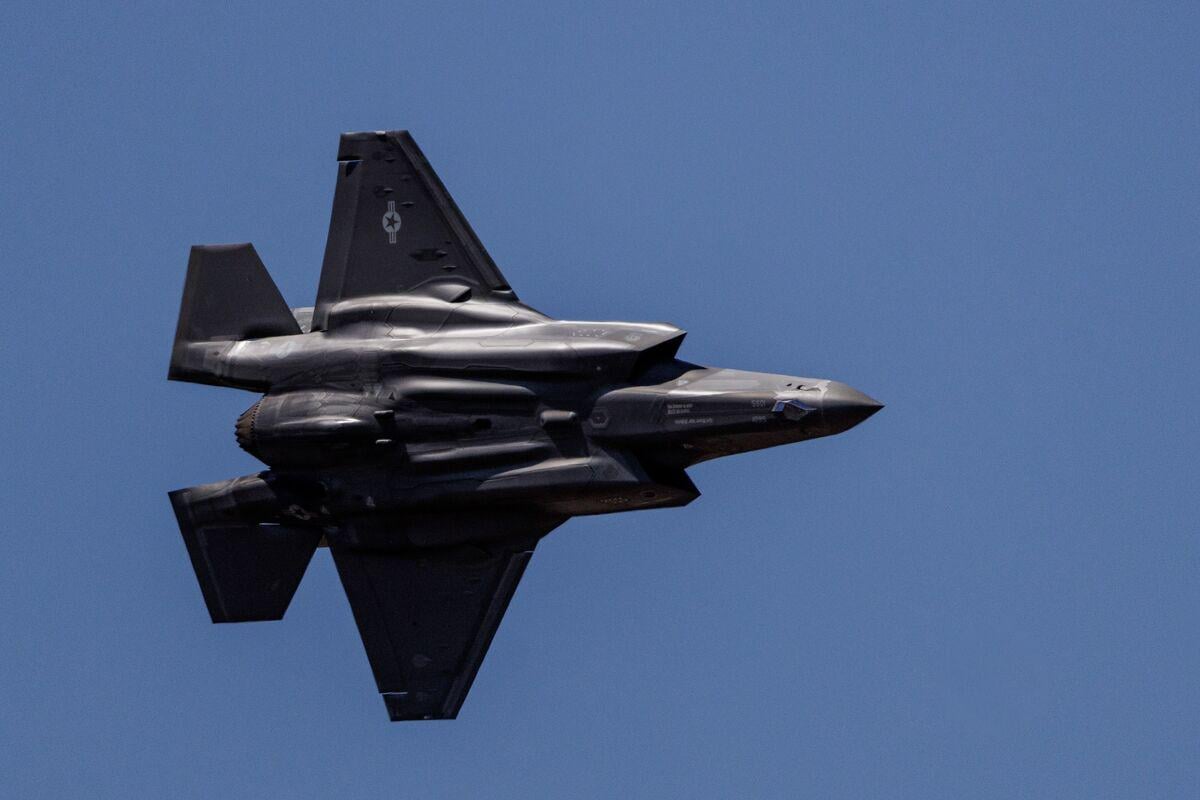
China managed to get a hold of parts from an F-35 stealth fighter jet after a United Parcel Service Inc. employee missed an email warning not to route the shipment through Hong Kong, according to a person briefed on the incident.
The email from freight forwarder firm DSV A/S said that the parts — an F-35 cockpit canopy and weapons-bay door coated in radar-absorbing material — must not transit through certain countries to comply with the US International Traffic in Arms Regulations. The rules, known as ITAR, are meant in part to keep sensitive US weapons technology from falling into the hands of US adversaries.
The shipment of warplane parts was originally meant to travel to San Francisco via South Korea and Taiwan — both US defense partners. But the shipment was late leaving Australia and was mistakenly routed via Hong Kong in an effort to speed up delivery, the person said, declining to be named because they weren’t authorized to speak publicly.
DSV, working on behalf of F-35 developer Lockheed Martin Corp., sent the email noting the ITAR designation, as required by US regulations, the person said. The DSV email may have been sent through a different IT system than the one used by the UPS agent, the person added.
The previously unreported details about the diverted shipment were outlined by Pentagon officials Sept. 29 in a roughly hour-long meeting with staff of the House foreign affairs and armed services committees.
The fresh details shed further light on an incident that has attracted scrutiny over the possibility that a series of errors inadvertently allowed China to gain access to some of the US’s most sensitive military technology. It has proven to be an embarrassment for the Pentagon and for Lockheed Martin.
DSV spokesman Stephan Ghisler-Solvang and UPS spokesman Malcolm Berkley declined to comment.
UPS doesn’t provide a complete breakdown of revenue by sector but in recent years the company has highlighted a strategic push to garner more business in sectors that could also include aerospace and defense.
The incident has prompted investigations by the Pentagon and the State Department and alarmed US lawmakers, who have demanded a review of the global supply chain for US armaments to ensure a similar error doesn’t happen again.
The F-35 is the world’s most advanced warplane and the most expensive US weapons program in history — and China has for years targeted the aircraft in espionage efforts.
Both parts of the warplane were coated with radar-absorbing material that enhances stealth capabilities, and were being sent to the US for possible repair or disposal in late May, according to people familiar with the incident.
“It’s not good the Chinese now have” an F-35 canopy, said Diana Maurer, who oversees F-35 support reviews at the non-partisan Government Accountability Office, calling the loss “a big deal.”
“I’m sure the Chinese celebrated and then they got busy trying to reverse engineer it and figure out how to counter it with their own technical capabilities,” she added. “I’m sure that’s what they were up once they got those things.”
Lockheed Martin, which manages much of the global spare parts pool that sustains the aircraft’s use by the US and 19 other nations, said in a statement last month when Bloomberg first reported the missing parts that “our logistics decisions are not made unilaterally.” The company selects carriers that best align with government regulations, it said.
Read More: China Is Holding Sensitive F-35 Parts Diverted to Hong Kong
“While we cannot discuss the details of which logistics partner was involved, we are working closely with them to help develop and implement preventive measures to strengthen our collective oversight and prevent recurrence,” Lockheed said.
Presented with the new details about the diversion, Lockheed said in a statement on Wednesday that “we have nothing to add or correct on the series of events you mentioned.”
At the congressional briefing, Erica Plath, the deputy assistant secretary of defense for logistics, said a team she assembled was taking steps to prevent another such mishap, the person familiar said. A Pentagon spokesman said the Defense Department would have nothing more to provide when asked about specific steps it was taking to prevent a repeat.
Also in attendance at the briefing was a compliance official from the State Department’s Directorate of Defense Trade Controls, which enforces export control laws and is currently investigating the diversion, the person added.
Senator Mark Warner, the ranking Democrat on the intelligence committee had demanded the Pentagon briefing on the incident. The committee chairman, Senator Tom Cotton has demanded a supply chain review.
Senator Kevin Cramer of North Dakota, a Republican who chairs the Armed Services Committee panel that’s investigating the incident, has asked “Did China have a plan all along to intercept this?”
The Pentagon has publicly distanced itself from any responsibility for the errant shipment, and downplayed the value of the parts, calling them “unserviceable.” The US Transportation Command, for example said in a statement, “it was not involved in the transportation or coordination of the shipment in question.”
“We are actively working with U.S. authorities and industry partners to retrieve these components, investigate the incident, and place safeguards to avoid a future occurrence,” the Defense Department said in a statement.
Posted by kamkazemoose
2 Comments
I know shit about logistics and supply chain so please enlighten me. But the fact that we’re shipping it via UPS with this level of security is pretty concerning. Looks like too many parts of the process operate based on confidence and aren’t fail-saved at all
It’s insane that they’re shipping sensitive defense materials through UPS where a simple clerical error can hand fighter jet parts to an adversary. How dumb/negligent are these people?