My father was the captain of a (mammoth) tanker. We lived in Friesland. Yet at home, Singapore and Sydney sounded more familiar to us than, say, Assen and Hoogeveen. I had heard of the Strait of Hormuz before I had heard of the Princess Margriet Canal.
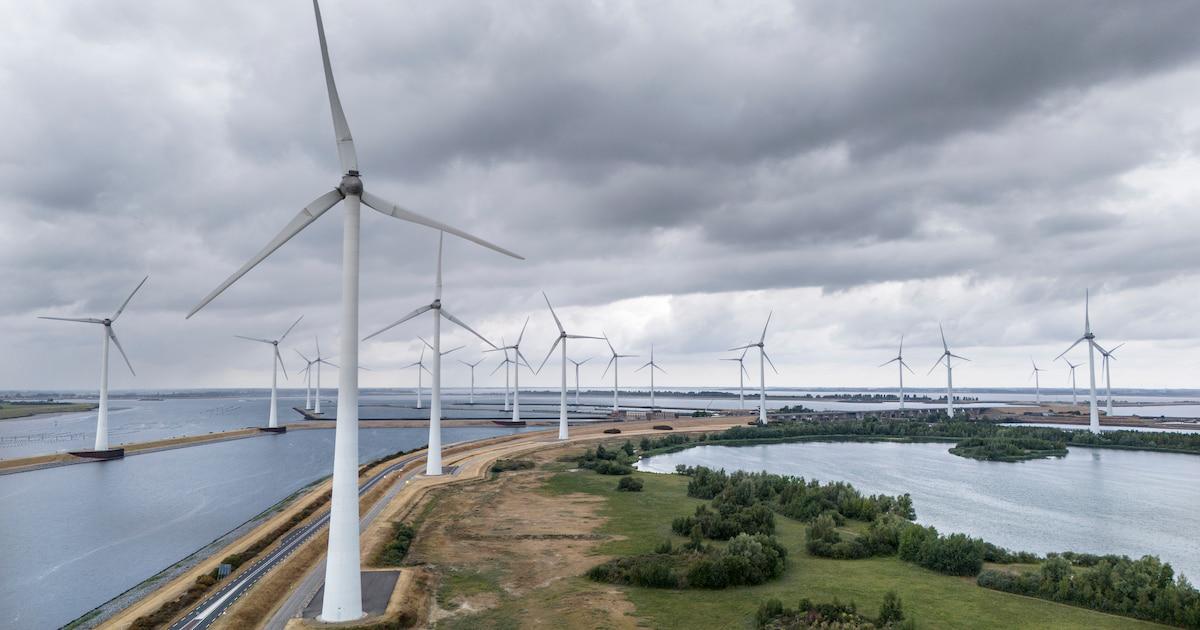
I myself graduated in the early 1980s with a thesis on the large-scale application of small-scale wind energy. The funny thing is that I received a scholarship from an oil company to finance my studies. In hindsight, a number of key elements of the energy transition were already present in our family.
I often think about this when I see images of attacks on oil facilities and the immediate concern that arises regarding supply, oil prices, and the uncertainty that comes with it. And then the question arises: are we bombing our way out of the fossil fuel era?
Our relationship with oil is primarily a geographical story. We extract it from the ground in a limited number of places, transport it thousands of kilometers—often through vulnerable straits—refine it, and then deliver the gasoline to a gas station just around the corner. If something goes wrong anywhere along that long journey, we feel it immediately in our wallets, and everyone is in an uproar.
These consequences could accelerate the end of the fossil fuel era. The more expensive and uncertain oil and gas become, the more attractive alternatives become. Not because war causes the energy transition, but because it makes the cost of our dependence visible. The recent attacks on Saudi energy infrastructure demonstrated this mechanism once again: the price of oil rose amid fears of supply disruptions.
It was no different in 1973 and 1979. The oil-producing countries turned off the tap, prices rose, and the Netherlands saw “car-free Sundays.” A new term was coined: stagflation—a stagnant economy with rising prices. Our response was neoliberal policy, with room for the market, deregulation, and privatization.
More than fifty years later, something fundamental has changed. Back then, for many applications, we had virtually no alternative to oil and gas. Now, we increasingly do have alternatives, and we can therefore pursue different policies.
That is the gist of *The Age of Power*, a report recently published by the energy think tank Ember. The report describes the energy transition not primarily as climate policy, but as a broader technological and economic development.
The reasoning is relatively simple. Over the past half-century, we have electrified information. The letter became email, music and photography went digital, and the telephone became a small computer. Now, a similar shift is taking place in our energy consumption. Gas-powered cars are becoming electric, heat pumps are replacing boilers, and solar panels and batteries are generating and storing electricity.
Behind these applications lie largely the same technologies: chips, sensors, batteries, and electric motors. And it is precisely the costs of these technologies that have fallen sharply. According to Ember, only 21 percent of final energy consumption worldwide has been electrified. Technically, about 90 percent could be. For about three-quarters of that, electrification is already economically feasible.
Electricity also has a major advantage. Oil and gas must be found where nature has left them. Electricity can be generated in many places: at sea, on land, on a rooftop, or at home. Ember calls this the shift from geology to technology.
That doesn’t mean we’ll become independent. Solar panels, batteries, and chips require raw materials, factories, and expertise. These, too, are unevenly distributed. But it’s not just what you have that counts; increasingly, it’s about what you can develop, make, and organize.
And that’s also about power. Whoever has oil possesses something that others cannot simply produce. Technology can be improved, scaled up, and produced more cheaply. China understands this better than anyone. Since 2010, the country has doubled its electricity production; electric cars now account for more than 60 percent of new car sales there; and China has the world’s largest fleet of industrial robots.
So the struggle over energy isn’t going away. It’s changing in nature.
Much of the technology for that new world already exists. But the old system won’t disappear on its own. Behind the fossil-fuel economy lie enormous investments, companies, jobs, vested interests, and a powerful lobby. As the alternative becomes more serious, resistance will also grow.
In this context, it is interesting to revisit the ideas of Karl Marx. He wrote that the bourgeoisie gave birth to its own gravediggers. Perhaps the gravediggers of the fossil fuel era are Donald Trump, Vladimir Putin, and Mohammed bin Salman. All three defend, each in their own way and with great conviction, the power of oil and gas.
With a little imagination, Marx might even recognize this as “Verelendung.” The old system makes the problems so severe that the alternative becomes increasingly appealing. The more expensive and uncertain the supply of gas and oil becomes, the more appealing it becomes to escape it.
The more emphatically the world leaders mentioned above defend the power of fossil fuels, the more visible its vulnerability becomes. As the proverb goes, he who digs a grave for another falls into it himself. Let’s hope that applies at least a little to fossil fuels as well.
Joseph Schumpeter called the phenomenon described above “creative destruction.” New technology does not politely stand alongside the old; rather, it undermines its economic foundation. “Old” companies and business models disappear, and new ones take their place. As Monty Python once argued: “Always look on the bright side of life.”
Perhaps we should also focus our policies more on this: becoming less dependent on fossil fuels internationally without becoming completely dependent on China for new technology; investing in grids, storage, and affordable electricity; and ensuring regionally that new technology can take root here. And, of course, we will have to reduce energy demand. Higher energy prices are contributing to this shift. We must not only look at the supply side but also, as consumers, take a hard look at ourselves.
My father and I were often at odds. He on his supertanker, I with my wind turbines. In hindsight, I perhaps should have better understood what he was already showing me through his work: a supertanker doesn’t change course on a whim.
It’s no different with the fossil fuel era. The course correction has begun, but the tanker still has enormous mass and momentum.
Bombings can only make the need to change course even greater. But ultimately, someone has to take the helm, and leadership is a necessary prerequisite.
My father had actually made that clear to me a long time ago.
Europe destroying Russian fossil fuel infrastructure while Iran doing the same in Saudi Arabia.
*Perhaps the gravediggers of the fossil fuel era are Donald Trump, Vladimir Putin, and Mohammed bin Salman. All three defend, each in their own way and with great conviction, the power of oil and gas.*
Energy and electrification are the big topics where the European Union and China converge and find themselves on the same page.

3 Comments
My father was the captain of a (mammoth) tanker. We lived in Friesland. Yet at home, Singapore and Sydney sounded more familiar to us than, say, Assen and Hoogeveen. I had heard of the Strait of Hormuz before I had heard of the Princess Margriet Canal.
I myself graduated in the early 1980s with a thesis on the large-scale application of small-scale wind energy. The funny thing is that I received a scholarship from an oil company to finance my studies. In hindsight, a number of key elements of the energy transition were already present in our family.
I often think about this when I see images of attacks on oil facilities and the immediate concern that arises regarding supply, oil prices, and the uncertainty that comes with it. And then the question arises: are we bombing our way out of the fossil fuel era?
Our relationship with oil is primarily a geographical story. We extract it from the ground in a limited number of places, transport it thousands of kilometers—often through vulnerable straits—refine it, and then deliver the gasoline to a gas station just around the corner. If something goes wrong anywhere along that long journey, we feel it immediately in our wallets, and everyone is in an uproar.
These consequences could accelerate the end of the fossil fuel era. The more expensive and uncertain oil and gas become, the more attractive alternatives become. Not because war causes the energy transition, but because it makes the cost of our dependence visible. The recent attacks on Saudi energy infrastructure demonstrated this mechanism once again: the price of oil rose amid fears of supply disruptions.
It was no different in 1973 and 1979. The oil-producing countries turned off the tap, prices rose, and the Netherlands saw “car-free Sundays.” A new term was coined: stagflation—a stagnant economy with rising prices. Our response was neoliberal policy, with room for the market, deregulation, and privatization.
More than fifty years later, something fundamental has changed. Back then, for many applications, we had virtually no alternative to oil and gas. Now, we increasingly do have alternatives, and we can therefore pursue different policies.
That is the gist of *The Age of Power*, a report recently published by the energy think tank Ember. The report describes the energy transition not primarily as climate policy, but as a broader technological and economic development.
The reasoning is relatively simple. Over the past half-century, we have electrified information. The letter became email, music and photography went digital, and the telephone became a small computer. Now, a similar shift is taking place in our energy consumption. Gas-powered cars are becoming electric, heat pumps are replacing boilers, and solar panels and batteries are generating and storing electricity.
Behind these applications lie largely the same technologies: chips, sensors, batteries, and electric motors. And it is precisely the costs of these technologies that have fallen sharply. According to Ember, only 21 percent of final energy consumption worldwide has been electrified. Technically, about 90 percent could be. For about three-quarters of that, electrification is already economically feasible.
Electricity also has a major advantage. Oil and gas must be found where nature has left them. Electricity can be generated in many places: at sea, on land, on a rooftop, or at home. Ember calls this the shift from geology to technology.
That doesn’t mean we’ll become independent. Solar panels, batteries, and chips require raw materials, factories, and expertise. These, too, are unevenly distributed. But it’s not just what you have that counts; increasingly, it’s about what you can develop, make, and organize.
And that’s also about power. Whoever has oil possesses something that others cannot simply produce. Technology can be improved, scaled up, and produced more cheaply. China understands this better than anyone. Since 2010, the country has doubled its electricity production; electric cars now account for more than 60 percent of new car sales there; and China has the world’s largest fleet of industrial robots.
So the struggle over energy isn’t going away. It’s changing in nature.
Much of the technology for that new world already exists. But the old system won’t disappear on its own. Behind the fossil-fuel economy lie enormous investments, companies, jobs, vested interests, and a powerful lobby. As the alternative becomes more serious, resistance will also grow.
In this context, it is interesting to revisit the ideas of Karl Marx. He wrote that the bourgeoisie gave birth to its own gravediggers. Perhaps the gravediggers of the fossil fuel era are Donald Trump, Vladimir Putin, and Mohammed bin Salman. All three defend, each in their own way and with great conviction, the power of oil and gas.
With a little imagination, Marx might even recognize this as “Verelendung.” The old system makes the problems so severe that the alternative becomes increasingly appealing. The more expensive and uncertain the supply of gas and oil becomes, the more appealing it becomes to escape it.
The more emphatically the world leaders mentioned above defend the power of fossil fuels, the more visible its vulnerability becomes. As the proverb goes, he who digs a grave for another falls into it himself. Let’s hope that applies at least a little to fossil fuels as well.
Joseph Schumpeter called the phenomenon described above “creative destruction.” New technology does not politely stand alongside the old; rather, it undermines its economic foundation. “Old” companies and business models disappear, and new ones take their place. As Monty Python once argued: “Always look on the bright side of life.”
Perhaps we should also focus our policies more on this: becoming less dependent on fossil fuels internationally without becoming completely dependent on China for new technology; investing in grids, storage, and affordable electricity; and ensuring regionally that new technology can take root here. And, of course, we will have to reduce energy demand. Higher energy prices are contributing to this shift. We must not only look at the supply side but also, as consumers, take a hard look at ourselves.
My father and I were often at odds. He on his supertanker, I with my wind turbines. In hindsight, I perhaps should have better understood what he was already showing me through his work: a supertanker doesn’t change course on a whim.
It’s no different with the fossil fuel era. The course correction has begun, but the tanker still has enormous mass and momentum.
Bombings can only make the need to change course even greater. But ultimately, someone has to take the helm, and leadership is a necessary prerequisite.
My father had actually made that clear to me a long time ago.
https://preview.redd.it/q2qgnoxsc3vh1.jpeg?width=680&format=pjpg&auto=webp&s=b52b7f8d98b829574aa2e6173382cd7ab3ddb5e1
Europe destroying Russian fossil fuel infrastructure while Iran doing the same in Saudi Arabia.
*Perhaps the gravediggers of the fossil fuel era are Donald Trump, Vladimir Putin, and Mohammed bin Salman. All three defend, each in their own way and with great conviction, the power of oil and gas.*
Energy and electrification are the big topics where the European Union and China converge and find themselves on the same page.