
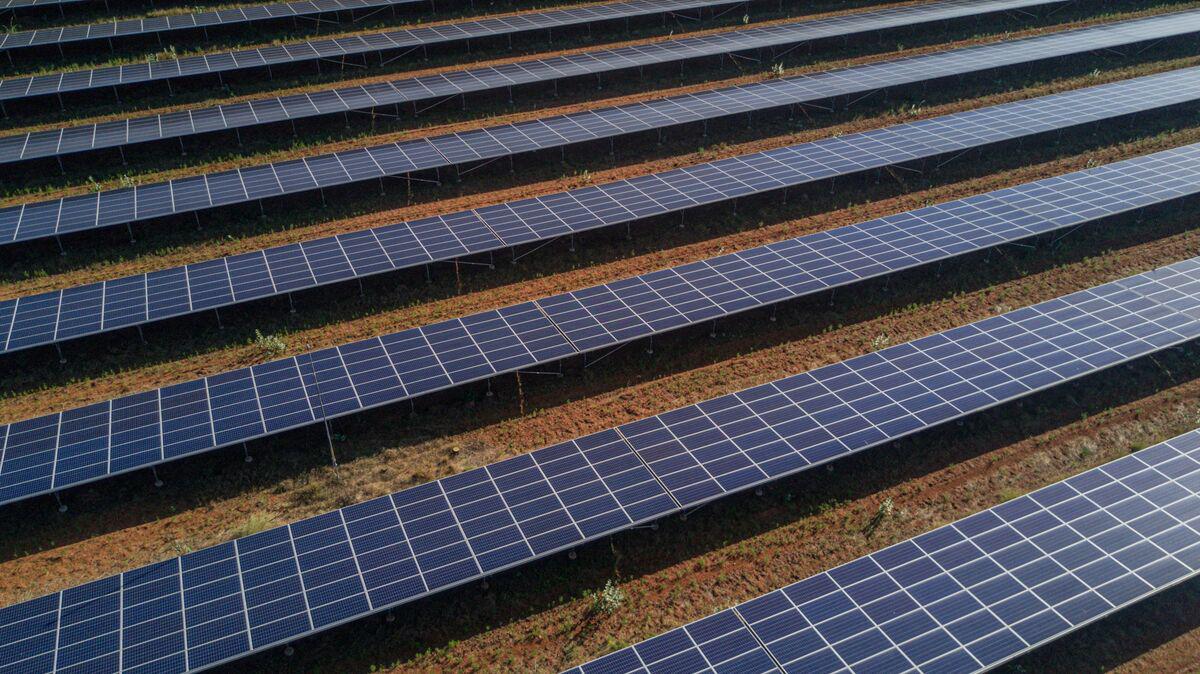
Submission Statement: India’s renewable energy capacity has quadrupled over the past decade to about 300 gigawatts, putting the country well ahead of its voluntary commitments under the Paris Agreement, Prime Minister Narendra Modi said.
Programs including incentives for rooftop solar and sun-powered irrigation pumps have lowered consumer costs while helping reduce emissions, Modi said Tuesday at the Bloomberg New Economy Forum in New Delhi. The expansion helped India become the first Group of 20 nation to meet its voluntary Paris pledge of having 40% of installed power capacity from non-fossil sources, nine years ahead of the 2030 deadline.
Non-fossil fuel sources accounted for more than half of India’s installed power capacity last year, when the country surpassed the US to become the world’s second-biggest builder of solar and wind projects after China, according to BloombergNEF. The South Asian nation has since pledged to raise the share of renewable energy in installed power capacity to 60% and cut the economy’s emissions intensity by 47% from 2005 levels by 2035.
India’s 304 gigawatts of non-fossil fuel-based generation capacity at the end of August, includes almost 9 gigawatts of nuclear as well as hydropower plants of more than 25 megawatts capacity. Large hydro facilities account for 17% of India’s clean power capacity.
Posted by DifficultBarber6969
1 Comment
!ping IND&ECO