
Opinion: MPs are right to take a stand: the government must give Parliament the documents it demands
Posted by IHateTrains123
Opinion: MPs are right to take a stand: the government must give Parliament the documents it demands
Posted by IHateTrains123
2 Comments
Archived version: [https://www.proquest.com/canadiannews/docview/3115142082/6AA721CDE66D4A37PQ/](https://www.proquest.com/canadiannews/docview/3115142082/6AA721CDE66D4A37PQ/)
Summary:
We have heard all this [unsavoury things] for one reason only: because of the [foreign interference] commission’s broad powers under the Inquiries Act, and under its own rules, to compel the production of these witnesses and documents – powers enforceable in a court of law. One suspects this is why the Prime Minister was so reluctant to call it.
Meanwhile in the House of Commons, MPs are again at loggerheads, for at least the fifth time in the last 15 years, over the government’s refusal to turn over documents that Parliament or its committees have demanded.
The issue that prompted the demand – allegations of conflict of interest and misappropriation of funds at a now-defunct federal agency, Sustainable Development Technology Canada (SDTC) – need not detain us here. The issue is the government’s failure to hand over the documents.
You will sometimes see this described as a “dispute,” as if it were a matter that was open to debate. It is not – any more than it is open to debate whether the government is accountable to Parliament. The right of Parliament to send for “persons, papers and things” is one of the most ancient and undoubted of parliamentary privileges. It is crucial to the Commons’ ability to act as a check on the executive.
[…]
So when the Commons passed a motion on June 10 demanding that the government hand over all documents related to SDTC within 30 days, that should have been the end of it. And when, in September, the Speaker of the House, Greg Fergus, ruled that the government had failed to produce all the documents – some were produced, but many were not, and many more were produced only in heavily redacted form – and that as such there was a prima facie breach of privilege, that should have been the government’s cue to comply.
Instead the government has continued to stall, insisting it has the right to decide for itself what documents Parliament may see, based on whatever grounds it thinks sound convincing: cabinet confidentiality, solicitor-client privilege, even the privacy laws, what have you. These are all interesting points. They may even be points Parliament might want to consider. But they are irrelevant to the core issue, which is that Parliament, in its wisdom, has demanded to see the documents. In law, that is all that matters.
We have been here before. In 2009, the Harper government refused to accede to a parliamentary committee’s demand for documents related to the treatment of prisoners of war by our allies in the war in Afghanistan – a confrontation that was only resolved after the government prorogued Parliament. In 2011, the same government refused to hand over documents on government costs, notably for the F-35 fighter-jet contract, for which it was found in contempt of Parliament by a vote of the House – a first in Canadian and indeed Commonwealth history.
And yet the Trudeau government, which came to power promising to reverse the Harper government’s abuses (among them: “Stephen Harper has used prorogation to avoid difficult political circumstances. We will not.”) soon followed in its anti-democratic footsteps. There was the WE Charity affair, where it not only refused for months to release the unredacted documents a parliamentary committee had demanded, but cut short its inquiries altogether by, you guessed it, proroguing.
And of course there was the later matter of the two Chinese spies working in the Winnipeg infectious disease laboratory. Once again a Speaker ruled that a government’s failure to hand over the documents was in breach of Parliamentary privilege. Once again a government was found in contempt of Parliament. And the government’s response? First it sued the Speaker. Then it dissolved the House.
[…]
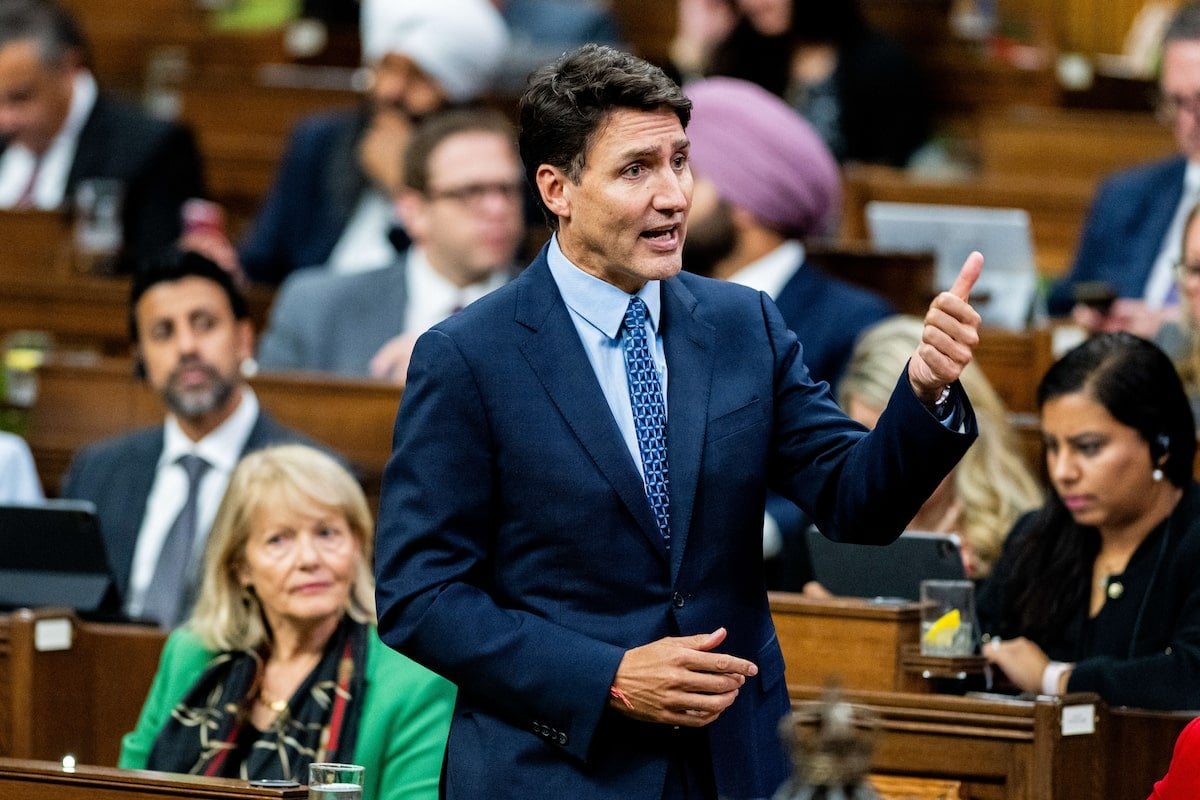
That is why the House is now in turmoil – why no business (other than Question Period) has been allowed to proceed for nearly two weeks. It is the motion to send the matter to committee that MPs are debating, but it is the government’s breach of privilege they are protesting. As rightly they should.
I don’t doubt that there is also politics involved. Not only does it provide the Opposition with a chance to paint the government as high-handed and anti-democratic, but it raises the question of why they are so anxious to keep the documents – which remember have to do with allegations of government corruption – under lock and key. If nothing else, the mayhem in the House adds fuel to Conservative arguments that this government has reached the end of its useful life, and ought to be dismissed.
But just because the Conservatives are saying it doesn’t mean it isn’t true. Yes, it’s theatre, yes it’s partisan – and yes, the Conservatives, given their own assaults on the same ancient and undoubted right, are flaming hypocrites, every bit as much as the Liberals – but there is still a deadly serious issue at stake. It may be a show, but it is in the service of saving Parliament from becoming nothing but a show.
!ping Can
The merits of the arguments on either side are totally irrelevant… at the end of the day, the government must comply with the House on this, regardless of consequence or precedent. It’s very black-and-white. Failure to do so puts the government on a collision course with being found in contempt of Parliament.
As for the threat of prorogation, the Liberals are currently only considering it if the PM resigns. They know how bad it looks otherwise.