>As the Ukrainian soldiers raced through the ruins of the destroyed city under the spying eye of Russian drones, the skeletal remains of blasted-out buildings cast eerie shadows in the light of a full moon.
>
>Burned-out cars littered the road next to craters from artillery strikes in this city, Toretsk, in the Donetsk region of eastern Ukraine, that is now on the front line of the war with Russia.
>
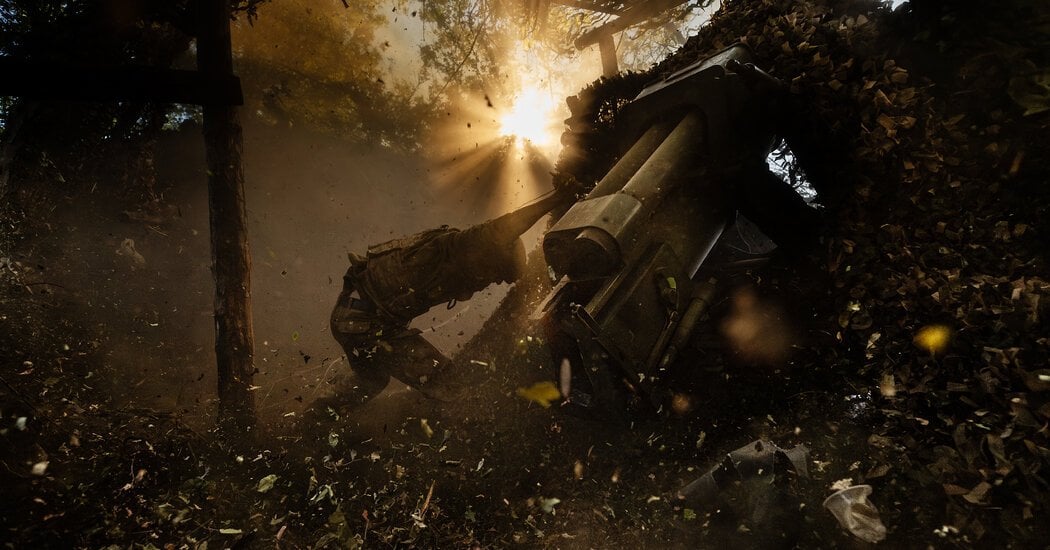
>The hot July night smelled of violence — smoke and dust from destroyed buildings mixed with the sulfurous scent of explosives. The only signs of life were the soldiers of the 32nd Mechanized Brigade, who were trying against the odds to hold their positions in an abandoned pharmacy under withering Russian bombardment.
>
>The brigade allowed us to accompany them recently to view the destruction of Toretsk up close and the challenges Ukrainian forces face as they battle to keep control of the city. The only restrictions were that we not provide specific locations or other operational details that could compromise security.
>
>[…]
>
>Recent gains by Russian forces have expanded an arc of destruction across eastern Ukraine that began at the outbreak of the full-scale war in February 2022 and has intensified in recent months.
>
>The loss of long-held Ukrainian defensive positions outside Toretsk and inside New York, a smaller town a few miles to the south, underscored the growing strains of unrelenting Russian attacks and devastating aerial bombardments are placing on Ukrainian forces.
>
>While Kyiv has stepped up efforts to mobilize soldiers to replace tens of thousands killed or wounded in battle, Moscow continues to exploit the lack of Ukrainian reserves and the time it takes to train new soldiers and deploy them to the front.
>
>Despite the Russian advances along the front, military analysts and U.S. officials [have said](https://archive.fo/o/6BuCb/https://www.nytimes.com/2024/07/09/us/politics/russia-ukraine-nato.html) a major breakthrough remains unlikely, citing Russia’s inability so far to turn small territorial gains into a larger advance that could broadly unhinge Ukrainian defenses.
>
>It is also unclear how long Russia can maintain its tempo of offensive operations given its staggering losses in troops and equipment. More than 70,000 Russian soldiers were killed or injured in May and June, according to a [report](https://archive.fo/o/6BuCb/https://x.com/defencehq/status/1815417171368882672?s=48&t=bZcrLpl8DTxSpYLBntBfhQ) by a British military intelligence agency — a figure that could not be independently verified. The agency [estimated](https://archive.fo/o/6BuCb/https://x.com/DefenceHQ/status/1819650263042359705/photo/1) Russia continued to lose 1,000 soldiers a day in July and said the high rate of casualties would continue through August as it maintains offensive operations.
>
>But if Russian forces manage to seize the longtime defensive bastions in the Toretsk area, they would be poised to press on toward Kostiantynivka, a logistical linchpin for Ukrainian forces in the east, from yet another direction of attack.
>
>For months, the Russians have been bombarding Chasiv Yar, a city to the north of Kostiantynivka, with the same goal in mind, Ukrainian commanders and military analysts say. The Russians are also pressing to cut off the main highway running south from Kostiantynivka to the city of Pokrovsk, advancing several miles in that direction in recent weeks and unbalancing Ukrainian defenses.
>
>Even if the pace of Russia’s gains suggests that it is unlikely to soon capture the remaining cities of the Donetsk region, an advance of just a few more miles would expose those cities to even more fearsome daily bombardments. Hundreds of thousands of civilians could be forced to flee, complicating the logistics of the Ukrainian defense in the east.
>
>That makes the defense of Toretsk, like Chasiv Yar, vitally important, Ukrainian commanders and military analysts say.
>
>[…]
>
>For the past year, the oldest brigade in the Ukrainian Army — the 24th, which was created in 1992 — has stood guard along the oldest part of the front.
>
>“The trenches were deep, the dugouts were well organized, the control posts were good and everything was working,” Petro Liakhovych, 38, a senior sergeant in the 2nd Battalion of the 24th Mechanized Brigade, said in an interview.
>
>“We understood the enemy and understood their movements and how to react,” he said.
>
>But in May, the 24th was told they were being moved to Chasiv Yar, a need deemed more urgent as the Russians advanced to the doorstep of the destroyed town. They would be replaced by the 41st Mechanized Brigade, which had been defending Chasiv Yar when the Russians managed to advance into its outskirts.
>
>Soldiers from the 24th said they were already seeing signs of an imminent attack on Toretsk and warned senior commanders against the rotation at such a critical time.
>
>Such rotations of units can be extremely dangerous moments. It takes time for units to become familiar with their new terrain and, soldiers said, even when successfully executed, they are moments of acute vulnerability.
>
>The rotation was carried out over several weeks and by early June, the 41st had moved from Chasiv Yar to take command of the Toretsk area. The 24th brigade was now in Chasiv Yar.
>
>Two days after the rotation was complete, soldiers said, the Russians attacked.

1 Comment
Archived version: [https://archive.fo/6BuCb](https://archive.fo/6BuCb).
Summary:
>As the Ukrainian soldiers raced through the ruins of the destroyed city under the spying eye of Russian drones, the skeletal remains of blasted-out buildings cast eerie shadows in the light of a full moon.
>
>Burned-out cars littered the road next to craters from artillery strikes in this city, Toretsk, in the Donetsk region of eastern Ukraine, that is now on the front line of the war with Russia.
>
>The hot July night smelled of violence — smoke and dust from destroyed buildings mixed with the sulfurous scent of explosives. The only signs of life were the soldiers of the 32nd Mechanized Brigade, who were trying against the odds to hold their positions in an abandoned pharmacy under withering Russian bombardment.
>
>The brigade allowed us to accompany them recently to view the destruction of Toretsk up close and the challenges Ukrainian forces face as they battle to keep control of the city. The only restrictions were that we not provide specific locations or other operational details that could compromise security.
>
>[…]
>
>Recent gains by Russian forces have expanded an arc of destruction across eastern Ukraine that began at the outbreak of the full-scale war in February 2022 and has intensified in recent months.
>
>The loss of long-held Ukrainian defensive positions outside Toretsk and inside New York, a smaller town a few miles to the south, underscored the growing strains of unrelenting Russian attacks and devastating aerial bombardments are placing on Ukrainian forces.
>
>While Kyiv has stepped up efforts to mobilize soldiers to replace tens of thousands killed or wounded in battle, Moscow continues to exploit the lack of Ukrainian reserves and the time it takes to train new soldiers and deploy them to the front.
>
>Despite the Russian advances along the front, military analysts and U.S. officials [have said](https://archive.fo/o/6BuCb/https://www.nytimes.com/2024/07/09/us/politics/russia-ukraine-nato.html) a major breakthrough remains unlikely, citing Russia’s inability so far to turn small territorial gains into a larger advance that could broadly unhinge Ukrainian defenses.
>
>It is also unclear how long Russia can maintain its tempo of offensive operations given its staggering losses in troops and equipment. More than 70,000 Russian soldiers were killed or injured in May and June, according to a [report](https://archive.fo/o/6BuCb/https://x.com/defencehq/status/1815417171368882672?s=48&t=bZcrLpl8DTxSpYLBntBfhQ) by a British military intelligence agency — a figure that could not be independently verified. The agency [estimated](https://archive.fo/o/6BuCb/https://x.com/DefenceHQ/status/1819650263042359705/photo/1) Russia continued to lose 1,000 soldiers a day in July and said the high rate of casualties would continue through August as it maintains offensive operations.
>
>But if Russian forces manage to seize the longtime defensive bastions in the Toretsk area, they would be poised to press on toward Kostiantynivka, a logistical linchpin for Ukrainian forces in the east, from yet another direction of attack.
>
>For months, the Russians have been bombarding Chasiv Yar, a city to the north of Kostiantynivka, with the same goal in mind, Ukrainian commanders and military analysts say. The Russians are also pressing to cut off the main highway running south from Kostiantynivka to the city of Pokrovsk, advancing several miles in that direction in recent weeks and unbalancing Ukrainian defenses.
>
>Even if the pace of Russia’s gains suggests that it is unlikely to soon capture the remaining cities of the Donetsk region, an advance of just a few more miles would expose those cities to even more fearsome daily bombardments. Hundreds of thousands of civilians could be forced to flee, complicating the logistics of the Ukrainian defense in the east.
>
>That makes the defense of Toretsk, like Chasiv Yar, vitally important, Ukrainian commanders and military analysts say.
>
>[…]
>
>For the past year, the oldest brigade in the Ukrainian Army — the 24th, which was created in 1992 — has stood guard along the oldest part of the front.
>
>“The trenches were deep, the dugouts were well organized, the control posts were good and everything was working,” Petro Liakhovych, 38, a senior sergeant in the 2nd Battalion of the 24th Mechanized Brigade, said in an interview.
>
>“We understood the enemy and understood their movements and how to react,” he said.
>
>But in May, the 24th was told they were being moved to Chasiv Yar, a need deemed more urgent as the Russians advanced to the doorstep of the destroyed town. They would be replaced by the 41st Mechanized Brigade, which had been defending Chasiv Yar when the Russians managed to advance into its outskirts.
>
>Soldiers from the 24th said they were already seeing signs of an imminent attack on Toretsk and warned senior commanders against the rotation at such a critical time.
>
>Such rotations of units can be extremely dangerous moments. It takes time for units to become familiar with their new terrain and, soldiers said, even when successfully executed, they are moments of acute vulnerability.
>
>The rotation was carried out over several weeks and by early June, the 41st had moved from Chasiv Yar to take command of the Toretsk area. The 24th brigade was now in Chasiv Yar.
>
>Two days after the rotation was complete, soldiers said, the Russians attacked.