> Housebuilders will be required to pay to offset pollution caused by their developments under an overhaul of environmental rules that ministers say will unblock the construction of tens of thousands of homes. Developers will be required to pay a levy into a “nature restoration” fund when their proposals for homes damage the habitat and would otherwise have been delayed or blocked. The fund will pay for conservation and environmental mitigation schemes to improve “nature, water and air quality” and protect habitats and species, the government said.
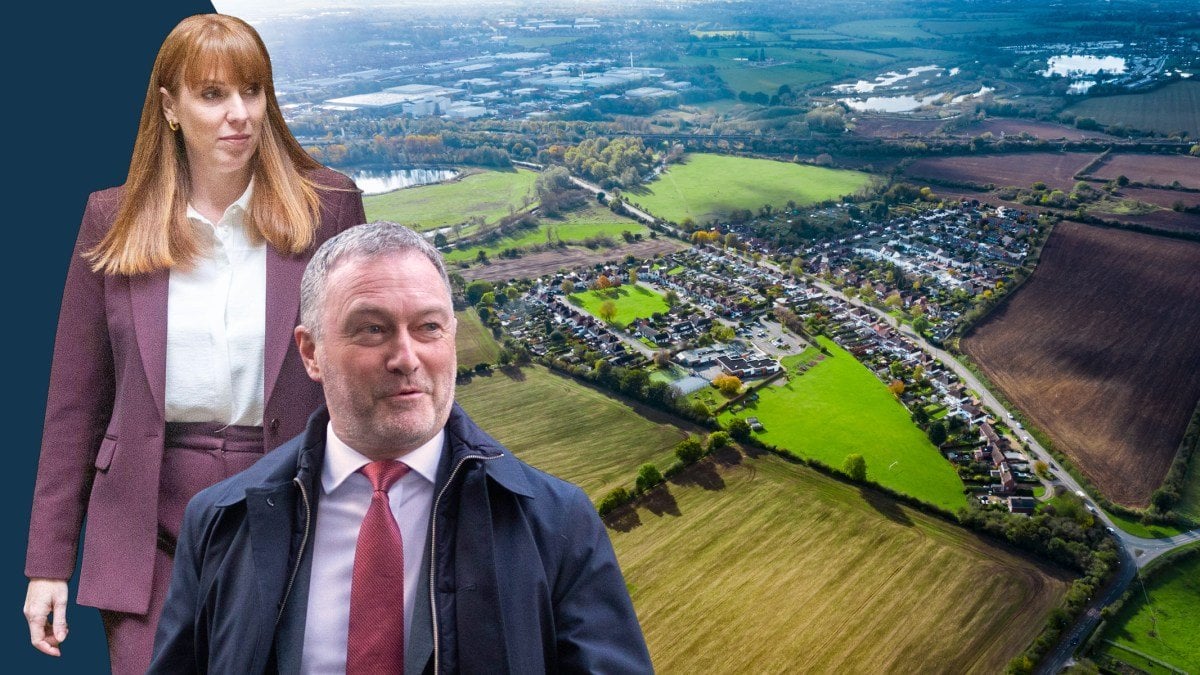
> The reforms are announced today by Steve Reed, the environment secretary, and Angela Rayner, the deputy prime minister, who argue that “too many housing and infrastructure projects” are being stalled by green regulations. Writing jointly for The Sunday Times, the ministers said that while Labour was elected to both protect nature and “get Britain building again”, the “system is not working” and must change. Rayner will unveil sweeping new powers on Monday for England’s mayors in a government white paper, including the ability to overrule local authorities in their jurisdictions that seek to block big developments. At a speech in Leeds, Rayner is expected to confirm that combined mayoral authorities such as Greater Manchester, the Liverpool City Region and Tees Valley will be given more powers, matching those held by Sadiq Khan, the mayor of London.
> It will include the ability for mayors to set their own long-term development plans, providing guidance on the housing, infrastructure, commercial offices and industrial plants needed in their region. They will also be given the power to overrule councils on planning applications that the mayors feel are necessary to deliver growth. Mayors will have the right to call in and approve planning decisions that would otherwise have been blocked.
> At present, the UK enforces so-called “nutrient neutrality” rules that are preventing many developers from starting housing projects because they are deemed at risk of polluting protected habitats such as rivers and waterways with unacceptable levels of phosphates and nitrates. After a ruling at the European Court of Justice in 2018, Natural England, the environmental regulator, advised dozens of local authorities not to approve developments unless appropriate mitigations could be implemented to offset their environmental impact. This included housebuilders providing schemes such as the creation of new wetlands or buffer zones around rivers.
> However, this has led to many developments being delayed, with industry estimates suggesting between 80,000 and 110,000 new homes are blocked due to the rules. When Michael Gove, Rayner’s predecessor, attempted to resolve the impasse by legislating to allow councils to in effect set aside nutrient neutrality, Labour blocked the move, arguing his plans would result in the loss of environmental protection.
> After months of delay, Rayner and Reed have agreed on a solution which they argue will accelerate Labour’s plans to build 1.5 million homes in this parliament while still protecting natural habitats. They will legislate to overhaul nutrient neutrality rules in the Planning and Infrastructure Bill, which is making its way through parliament. In future, developments in areas where nutrient neutrality rules would have otherwise applied will attract a levy which will be allocated to a central fund. The exact amount paid by the developers will be determined by a new delivery body, likely to be Natural England, which will do a strategic assessment to calculate the costs of offsetting the pollution created.
> Whereas developers are presently required to organise these mitigations themselves, once the new levy is paid, they will be able to start building straightaway, with the delivery body in charge of the offsetting schemes. The mitigations will also not necessarily have to be implemented in the zones marked for development, but nearby, ensuring that building can go ahead while the environment in the surrounding area is still improved. Government sources said this would significantly accelerate the planning process and argued the changes were about streamlining the process rather than imposing any new financial burden on the developers.
> Writing for The Sunday Times, Reed and Rayner said that “too many housing and infrastructure projects are stalled for, at best, questionable wins for nature” at present. “We are in a situation where bats and newts are getting in the way of people who desperately need housing. This is nowhere near the fundamental change environmental groups agree is needed to reverse nature’s decline.
“Our bill will require developers to pay into a nature restoration fund that will pay for large-scale environmental improvements to nature, water and air quality. This approach will restore nature, habitats and species across entire communities. “Take the water pollution issue. Developments that are blocked by ‘nutrient neutrality’ will be approved, but developers will pay into the fund to reduce pollution in the water catchment area as a whole. We get the new homes while also cleaning up polluted water. More tree planting and less paper pushing.”

1 Comment
> Housebuilders will be required to pay to offset pollution caused by their developments under an overhaul of environmental rules that ministers say will unblock the construction of tens of thousands of homes. Developers will be required to pay a levy into a “nature restoration” fund when their proposals for homes damage the habitat and would otherwise have been delayed or blocked. The fund will pay for conservation and environmental mitigation schemes to improve “nature, water and air quality” and protect habitats and species, the government said.
> The reforms are announced today by Steve Reed, the environment secretary, and Angela Rayner, the deputy prime minister, who argue that “too many housing and infrastructure projects” are being stalled by green regulations. Writing jointly for The Sunday Times, the ministers said that while Labour was elected to both protect nature and “get Britain building again”, the “system is not working” and must change. Rayner will unveil sweeping new powers on Monday for England’s mayors in a government white paper, including the ability to overrule local authorities in their jurisdictions that seek to block big developments. At a speech in Leeds, Rayner is expected to confirm that combined mayoral authorities such as Greater Manchester, the Liverpool City Region and Tees Valley will be given more powers, matching those held by Sadiq Khan, the mayor of London.
> It will include the ability for mayors to set their own long-term development plans, providing guidance on the housing, infrastructure, commercial offices and industrial plants needed in their region. They will also be given the power to overrule councils on planning applications that the mayors feel are necessary to deliver growth. Mayors will have the right to call in and approve planning decisions that would otherwise have been blocked.
> At present, the UK enforces so-called “nutrient neutrality” rules that are preventing many developers from starting housing projects because they are deemed at risk of polluting protected habitats such as rivers and waterways with unacceptable levels of phosphates and nitrates. After a ruling at the European Court of Justice in 2018, Natural England, the environmental regulator, advised dozens of local authorities not to approve developments unless appropriate mitigations could be implemented to offset their environmental impact. This included housebuilders providing schemes such as the creation of new wetlands or buffer zones around rivers.
> However, this has led to many developments being delayed, with industry estimates suggesting between 80,000 and 110,000 new homes are blocked due to the rules. When Michael Gove, Rayner’s predecessor, attempted to resolve the impasse by legislating to allow councils to in effect set aside nutrient neutrality, Labour blocked the move, arguing his plans would result in the loss of environmental protection.
> After months of delay, Rayner and Reed have agreed on a solution which they argue will accelerate Labour’s plans to build 1.5 million homes in this parliament while still protecting natural habitats. They will legislate to overhaul nutrient neutrality rules in the Planning and Infrastructure Bill, which is making its way through parliament. In future, developments in areas where nutrient neutrality rules would have otherwise applied will attract a levy which will be allocated to a central fund. The exact amount paid by the developers will be determined by a new delivery body, likely to be Natural England, which will do a strategic assessment to calculate the costs of offsetting the pollution created.
> Whereas developers are presently required to organise these mitigations themselves, once the new levy is paid, they will be able to start building straightaway, with the delivery body in charge of the offsetting schemes. The mitigations will also not necessarily have to be implemented in the zones marked for development, but nearby, ensuring that building can go ahead while the environment in the surrounding area is still improved. Government sources said this would significantly accelerate the planning process and argued the changes were about streamlining the process rather than imposing any new financial burden on the developers.
> Writing for The Sunday Times, Reed and Rayner said that “too many housing and infrastructure projects are stalled for, at best, questionable wins for nature” at present. “We are in a situation where bats and newts are getting in the way of people who desperately need housing. This is nowhere near the fundamental change environmental groups agree is needed to reverse nature’s decline.
“Our bill will require developers to pay into a nature restoration fund that will pay for large-scale environmental improvements to nature, water and air quality. This approach will restore nature, habitats and species across entire communities. “Take the water pollution issue. Developments that are blocked by ‘nutrient neutrality’ will be approved, but developers will pay into the fund to reduce pollution in the water catchment area as a whole. We get the new homes while also cleaning up polluted water. More tree planting and less paper pushing.”
!ping UK&YIMBY&ECO