
With Smugglers and Front Companies, China Is Skirting American A.I. Bans | The U.S. is trying to stop China from getting Nvidia microchips to advance its military. The private sector is fighting back
Posted by Independent-Low-2398
With Smugglers and Front Companies, China Is Skirting American A.I. Bans | The U.S. is trying to stop China from getting Nvidia microchips to advance its military. The private sector is fighting back
Posted by Independent-Low-2398
2 Comments
https://preview.redd.it/fm1uyjlpkfhd1.png?width=2258&format=png&auto=webp&s=5c6078b2250c8999b9b1c304013065f574a94735
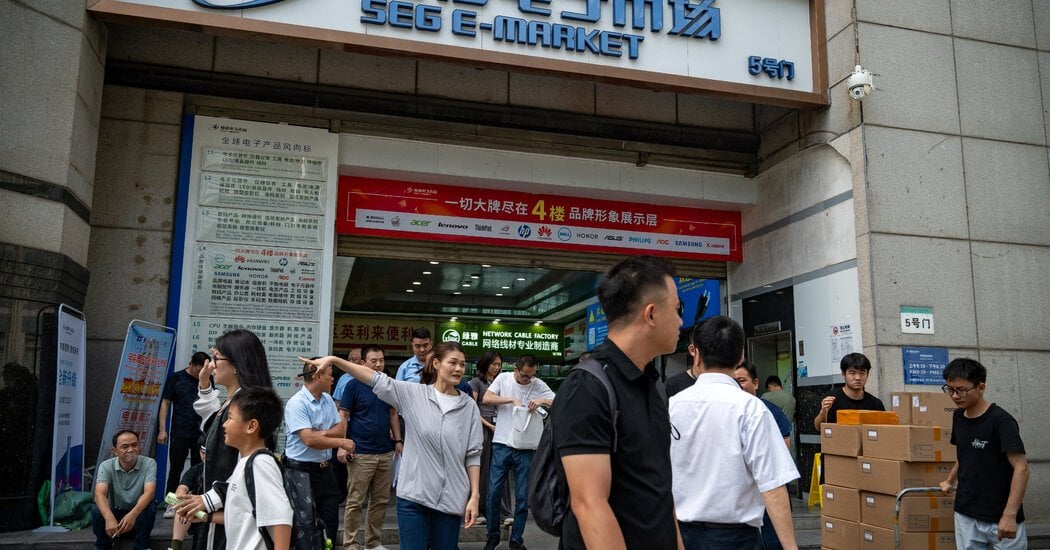
>In the southern Chinese city of Shenzhen, a mazelike market stretches for a half-mile, packed with stalls selling every type of electronic imaginable. It’s an open secret that vendors here are offering one of the world’s most sought-after technologies: the microchips that create artificial intelligence, which the United States is battling to keep out of Chinese hands.
>One vendor said he could order the chips for delivery in two weeks. Another said companies came to the market ordering 200 or 300 chips from him at a time. A third business owner said he recently shipped a big batch of servers with more than 2,000 of the most advanced chips made by Nvidia, the U.S. tech company, from Hong Kong to mainland China. As evidence, he showed photos and a message with his supplier arranging the April delivery for $103 million.
>The United States, with some success, has tried to control the export of these chips. Still, The New York Times has found an active trade in restricted A.I. technology — part of a global effort to help China circumvent U.S. restrictions amid the countries’ growing military rivalry.
>Beginning in October 2022, the United States set up one of the most extensive technological blockades ever attempted: banning the export to China of A.I. chips and the machinery to make them. The Biden administration also added hundreds of Chinese companies to a list of organizations considered a national security threat, and it could soon expand the rules.
>These bans have made it harder and more costly for China to develop A.I. But given the vast profits at stake, businesses around the world have found ways to skirt the restrictions, according to interviews with more than 85 current and former U.S. officials, executives and industry analysts, as well as reviews of corporate records and visits to companies in Beijing, Kunshan and Shenzhen.
!ping CHINA&AI&CONTAINERS
Everyone knows this. The bans are absolutely powerless and there’s no practical way to make them work
All it does is create more gray markets