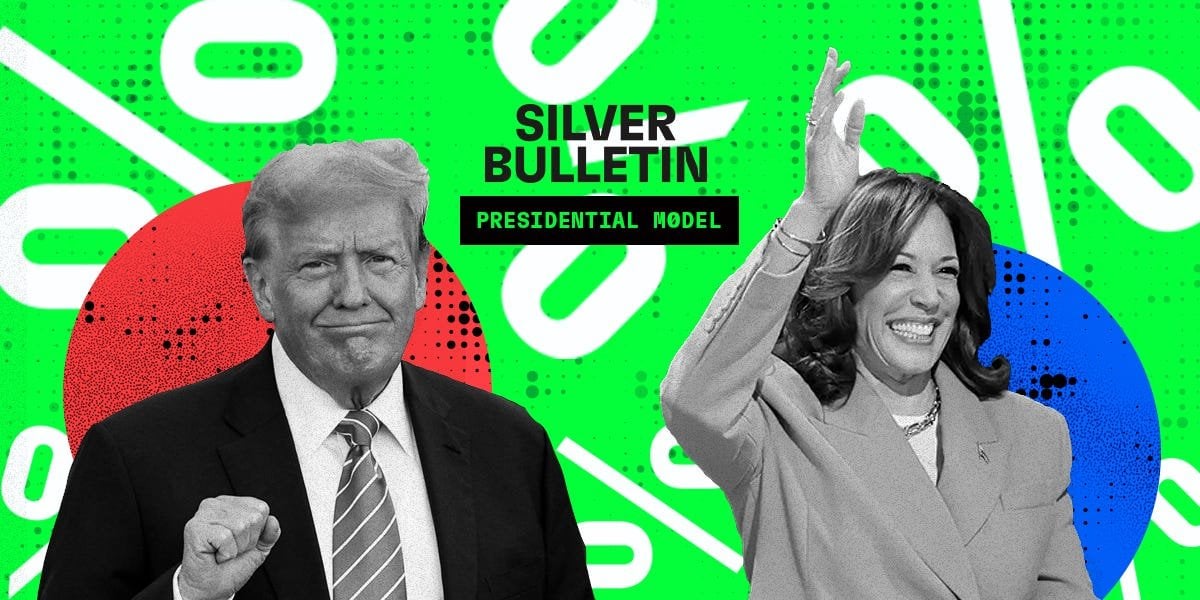
Polling averages showed Biden down by about 3 points prior to dropping out. Silver is showing Kamala down 0.4%, and that’s after just a week of campaigning.
Dems have given themselves a clear chance with this move. Now they need to capitalize
JebBD on
Are we going back to dooming?
1sxekid on
Someone screenshot the prediction at the bottom please.
Jumpsnow88 on
Wow good thing elections are decided by Nate Silver calculated poll averages 3 months out from an election.
FTL_Diesel on
TLDR is they are currently tied in the predicted popular vote, which means Trump has a 60% chance of winning due to the Electoral College.
Text from behind the paywall:
All things considered, this is a respectable position for Harris. She’s almost drawn the race to a tie in the states she’d need to win 270 electoral votes. And there’s evidence that she’s winning back some demographic groups — particularly Black voters and young voters — that had been abandoning Biden. That particularly helps her relative to Biden in Georgia and North Carolina, which have a substantial Black vote and a lot of college students and young professionals — though the model is more skeptical of her ability to compete in Western states like Nevada and Arizona.
However, let’s not overstate the case. The problem with the Blue Wall strategy is that Harris needs to win all three of Michigan, Wisconsin and Pennsylvania (while also avoiding surprising losses elsewhere like New Hampshire). Although these states’ outcomes are fairly strongly correlated in the model, that’s still harder than winning just one. And while Harris has a more viable path in Georgia and North Carolina than Biden, she and the campaign still have their work cut out there.
Overall, the model thinks the Electoral College would be a tossup if Harris wins the popular vote by 2 to 3 percentage points. Put differently, she basically needs to win the popular vote by 2.5 points to beat the point spread. This is a very slightly wider gap than with Biden, which was closer to an even 2 points.
There’s also one other factor that puts Democrats in a better position with Harris than with Biden: there’s more uncertainty in the race based on the uncertainty index that the model calculates. This will be discussed in more detail in the methodology post we’ll publish later, but some of the factors the model considers — for instance, fewer third-party voters — actually point toward less uncertainty than under Biden. Overall, however, there’s more variance in the forecast, which is good news for Democrats since you want more variance when you’re behind. Furthermore, there’s more uncertainty about how particular states will line up given the comparative paucity of state polling data.
So let’s talk about some of that uncertainty. Both Harris and Trump have seen an uptick in their favorability ratings in recent days, although for different reasons. In Harris’s case, it’s presumably because of renewed Democratic enthusiasm about her, her campaign generally having hit its marks so far, and perhaps some swing voter relief in not having to vote for a candidate who would be well into his 80s in his second term. In Trump’s case, it likely reflects the RNC, plus voter sympathy following his assassination attempt.
The bull case for Harris, then, is simply if you think that she can sustain her higher numbers but Trump can’t. And that’s hardly crazy. America has a long history with Trump, and he’s been unpopular for nearly all of that. Sympathy over the assassination attempt may decline as the rough-and-tumble of the campaign resumes, and after a fundraising surge, Democrats will have infinity dollars to spend to define Trump and JD Vance negatively.
Of course, Trump is still the favorite. Let me start here with a technical point. As I wrote above, it would be great for Harris if she can sustain her higher favorability numbers while Trump’s decline. But the model is already assuming some decline for Trump in the form of the convention bounce penalty. The decline in his favorables is already implicitly priced into the forecast, in other words, at least partly. I say “partly” because Trump may have gotten some additional bounce in the polls as a result of the failed assassination, which the model does not attempt to account for. On the other hand, arguably it’s generous to Harris to still be applying a convention bounce adjustment to Trump’s numbers at all, given how much Democrats replacing their candidate has reset the race and wiped all previous headlines off the page.
And although the Trump campaign has been back on its heels so far — and was reportedly more surprised than it should have been about Democrats replacing Biden — that won’t continue indefinitely. Just in the past 24 hours, it’s launched a slew of new advertisements that are targeted at Harris rather than Biden, for instance.
Still, the most important factor is the Electoral College. I know people don’t like to talk about that, because there’s nothing that Democrats can do about it. But the election is likely to be close, and it’s a big disadvantage when the ties go to Republicans.
TheJoeRoomGroup on
Appreciate the update from Nate but I do wonder if we even have enough polling for a reasonable model at this point. Trump v Harris polls are still pretty scarce. Hasn’t there been no polls in Nevada? Might’ve waited an extra week before turning it on. But then again I’m also pretty stupid, so 🤷♀️
BachelorThesises on
I still think any VP that Harris is going to pick, is going to give her even more of a boost, meanwhile it looks like Vance will just drag Trump further down and alienate undecided voters. If Trump were smart, he’d instantly change his VP pick.

8 Comments
Polling averages showed Biden down by about 3 points prior to dropping out. Silver is showing Kamala down 0.4%, and that’s after just a week of campaigning.
Dems have given themselves a clear chance with this move. Now they need to capitalize
Are we going back to dooming?
Someone screenshot the prediction at the bottom please.
Wow good thing elections are decided by Nate Silver calculated poll averages 3 months out from an election.
TLDR is they are currently tied in the predicted popular vote, which means Trump has a 60% chance of winning due to the Electoral College.
Text from behind the paywall:
All things considered, this is a respectable position for Harris. She’s almost drawn the race to a tie in the states she’d need to win 270 electoral votes. And there’s evidence that she’s winning back some demographic groups — particularly Black voters and young voters — that had been abandoning Biden. That particularly helps her relative to Biden in Georgia and North Carolina, which have a substantial Black vote and a lot of college students and young professionals — though the model is more skeptical of her ability to compete in Western states like Nevada and Arizona.
However, let’s not overstate the case. The problem with the Blue Wall strategy is that Harris needs to win all three of Michigan, Wisconsin and Pennsylvania (while also avoiding surprising losses elsewhere like New Hampshire). Although these states’ outcomes are fairly strongly correlated in the model, that’s still harder than winning just one. And while Harris has a more viable path in Georgia and North Carolina than Biden, she and the campaign still have their work cut out there.
Overall, the model thinks the Electoral College would be a tossup if Harris wins the popular vote by 2 to 3 percentage points. Put differently, she basically needs to win the popular vote by 2.5 points to beat the point spread. This is a very slightly wider gap than with Biden, which was closer to an even 2 points.
There’s also one other factor that puts Democrats in a better position with Harris than with Biden: there’s more uncertainty in the race based on the uncertainty index that the model calculates. This will be discussed in more detail in the methodology post we’ll publish later, but some of the factors the model considers — for instance, fewer third-party voters — actually point toward less uncertainty than under Biden. Overall, however, there’s more variance in the forecast, which is good news for Democrats since you want more variance when you’re behind. Furthermore, there’s more uncertainty about how particular states will line up given the comparative paucity of state polling data.
So let’s talk about some of that uncertainty. Both Harris and Trump have seen an uptick in their favorability ratings in recent days, although for different reasons. In Harris’s case, it’s presumably because of renewed Democratic enthusiasm about her, her campaign generally having hit its marks so far, and perhaps some swing voter relief in not having to vote for a candidate who would be well into his 80s in his second term. In Trump’s case, it likely reflects the RNC, plus voter sympathy following his assassination attempt.
The bull case for Harris, then, is simply if you think that she can sustain her higher numbers but Trump can’t. And that’s hardly crazy. America has a long history with Trump, and he’s been unpopular for nearly all of that. Sympathy over the assassination attempt may decline as the rough-and-tumble of the campaign resumes, and after a fundraising surge, Democrats will have infinity dollars to spend to define Trump and JD Vance negatively.
Of course, Trump is still the favorite. Let me start here with a technical point. As I wrote above, it would be great for Harris if she can sustain her higher favorability numbers while Trump’s decline. But the model is already assuming some decline for Trump in the form of the convention bounce penalty. The decline in his favorables is already implicitly priced into the forecast, in other words, at least partly. I say “partly” because Trump may have gotten some additional bounce in the polls as a result of the failed assassination, which the model does not attempt to account for. On the other hand, arguably it’s generous to Harris to still be applying a convention bounce adjustment to Trump’s numbers at all, given how much Democrats replacing their candidate has reset the race and wiped all previous headlines off the page.
And although the Trump campaign has been back on its heels so far — and was reportedly more surprised than it should have been about Democrats replacing Biden — that won’t continue indefinitely. Just in the past 24 hours, it’s launched a slew of new advertisements that are targeted at Harris rather than Biden, for instance.
Still, the most important factor is the Electoral College. I know people don’t like to talk about that, because there’s nothing that Democrats can do about it. But the election is likely to be close, and it’s a big disadvantage when the ties go to Republicans.
Appreciate the update from Nate but I do wonder if we even have enough polling for a reasonable model at this point. Trump v Harris polls are still pretty scarce. Hasn’t there been no polls in Nevada? Might’ve waited an extra week before turning it on. But then again I’m also pretty stupid, so 🤷♀️
I still think any VP that Harris is going to pick, is going to give her even more of a boost, meanwhile it looks like Vance will just drag Trump further down and alienate undecided voters. If Trump were smart, he’d instantly change his VP pick.
Pretty close to betting markets.