# Energy minister calls trade tensions a ‘distraction’ from China’s rising economic and military power
> Ottawa has warned that it will impose “tit-for-tat” tariffs on American products such as steel and orange juice if Donald Trump goes ahead with his threat to impose a levy on Canadian imports.
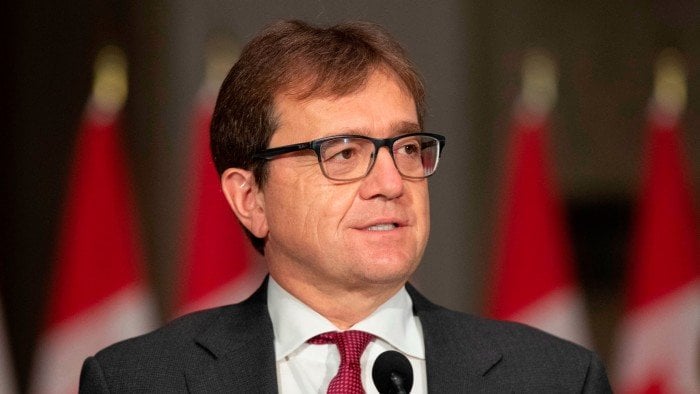
> Jonathan Wilkinson, minister of energy and natural resources, said Canada wanted to co-operate with the US on facing down China but his country would not stand by if the president-elect imposed potentially devastating tariffs on its exports.
> Wilkinson said retaliatory tariffs would focus on products that would create “the greatest amount of angst in the United States with the least amount of pain in Canada” — potentially steel from Michigan or orange juice from Florida.
> Trump, who will be sworn in as US president on Monday, has said he will impose a 25 per cent tariff on all Canadian imports into the US.
> But Wilkinson said Canada was open to new co-operation with Washington, including potentially buying submarines and other military equipment, and developing more critical mineral projects in Canada that would displace Chinese products from US supply chains, he said.
> “There are opportunities for us to procure a lot of the go-forward military equipment, like the submarines from the United States. And certainly, we are open to that as part of the broader conversation,” said Wilkinson in an interview in Washington.
> A fight over tariffs was a “distraction” from more pressing issues, he added.
> “The challenge that we face internationally right now, it’s not Canada-US, it’s China,” said Wilkinson. “It has strategic control of a number of different assets, and particularly true of critical minerals.”
> He called for the North American allies to “build an energy and minerals security partnership or alliance that actually enables us to both contribute to common outcomes”.
> Last month, Beijing banned the export of several rare earths to the US in an escalation of a technology war. China controls most of the supply chain for rare earths, which are critical inputs for advanced clean energy and defence technologies.
> Wilkinson’s visit to Washington — where he is meeting Republican politicians, industry representatives and other stakeholders — is part of an increasingly frantic lobbying effort by Ottawa to persuade the US president-elect to resist imposing tariffs on Canada, which economists have warned would tip the nation’s economy into recession.
> In November, Trump proposed the 25 per cent tariffs on all imports from Mexico and Canada, accusing the US’s closest neighbours of failing to tackle illegal migration and drug trafficking.
> The US and Canadian economies are deeply intertwined. Canada’s oil industry supplies more than half of US crude imports, and Washington has invested tens of million of dollars in Canadian critical mineral projects in a bid to reduce reliance on Chinese imports.
> Wilkinson said US tariffs on Canadian imports would hurt US consumers as well as Canadians, pushing up the price of gas and other vital goods. “Where are they going to get potash? Where are they going to get uranium?” he said. “Where are they going to get critical minerals? Are they really going to turn to China?”
> Last week, Trump suggested he could use “economic force” to annex Canada, saying it would be “much better for national security”.
> Wilkinson said Canadians were agitated by the comment, adding that Canada “would not become a 51st state”.
> “We are a sovereign nation,” he said. “Our national game is hockey, it’s not football or baseball. We go to Tim Hortons, we don’t go to Dunkin’ Donuts, and we have two languages, they are English and French . . . Canadians have no interest in being Americans.”

1 Comment
# Energy minister calls trade tensions a ‘distraction’ from China’s rising economic and military power
> Ottawa has warned that it will impose “tit-for-tat” tariffs on American products such as steel and orange juice if Donald Trump goes ahead with his threat to impose a levy on Canadian imports.
> Jonathan Wilkinson, minister of energy and natural resources, said Canada wanted to co-operate with the US on facing down China but his country would not stand by if the president-elect imposed potentially devastating tariffs on its exports.
> Wilkinson said retaliatory tariffs would focus on products that would create “the greatest amount of angst in the United States with the least amount of pain in Canada” — potentially steel from Michigan or orange juice from Florida.
> Trump, who will be sworn in as US president on Monday, has said he will impose a 25 per cent tariff on all Canadian imports into the US.
> But Wilkinson said Canada was open to new co-operation with Washington, including potentially buying submarines and other military equipment, and developing more critical mineral projects in Canada that would displace Chinese products from US supply chains, he said.
> “There are opportunities for us to procure a lot of the go-forward military equipment, like the submarines from the United States. And certainly, we are open to that as part of the broader conversation,” said Wilkinson in an interview in Washington.
> A fight over tariffs was a “distraction” from more pressing issues, he added.
> “The challenge that we face internationally right now, it’s not Canada-US, it’s China,” said Wilkinson. “It has strategic control of a number of different assets, and particularly true of critical minerals.”
> He called for the North American allies to “build an energy and minerals security partnership or alliance that actually enables us to both contribute to common outcomes”.
> Last month, Beijing banned the export of several rare earths to the US in an escalation of a technology war. China controls most of the supply chain for rare earths, which are critical inputs for advanced clean energy and defence technologies.
> Wilkinson’s visit to Washington — where he is meeting Republican politicians, industry representatives and other stakeholders — is part of an increasingly frantic lobbying effort by Ottawa to persuade the US president-elect to resist imposing tariffs on Canada, which economists have warned would tip the nation’s economy into recession.
> In November, Trump proposed the 25 per cent tariffs on all imports from Mexico and Canada, accusing the US’s closest neighbours of failing to tackle illegal migration and drug trafficking.
> The US and Canadian economies are deeply intertwined. Canada’s oil industry supplies more than half of US crude imports, and Washington has invested tens of million of dollars in Canadian critical mineral projects in a bid to reduce reliance on Chinese imports.
> Wilkinson said US tariffs on Canadian imports would hurt US consumers as well as Canadians, pushing up the price of gas and other vital goods. “Where are they going to get potash? Where are they going to get uranium?” he said. “Where are they going to get critical minerals? Are they really going to turn to China?”
> Last week, Trump suggested he could use “economic force” to annex Canada, saying it would be “much better for national security”.
> Wilkinson said Canadians were agitated by the comment, adding that Canada “would not become a 51st state”.
> “We are a sovereign nation,” he said. “Our national game is hockey, it’s not football or baseball. We go to Tim Hortons, we don’t go to Dunkin’ Donuts, and we have two languages, they are English and French . . . Canadians have no interest in being Americans.”
Further readings:
https://www.theglobeandmail.com/politics/article-critical-minerals-export-canada-us-trump-tariffs/
https://www.ctvnews.ca/politics/article/canada-says-it-has-border-under-control-just-ahead-of-trump-inauguration/
https://www.cbc.ca/news/politics/canada-premiers-trudeau-meeting-trump-tariffs-1.7431085
!ping Can