
How the AfD got its swagger back | Germany’s hard-right party is gaining support even as it radicalises
Posted by ONETRILLIONAMERICANS
How the AfD got its swagger back | Germany’s hard-right party is gaining support even as it radicalises
Posted by ONETRILLIONAMERICANS
5 Comments
https://preview.redd.it/kxvgjuxu36ee1.png?width=938&format=png&auto=webp&s=7748fce2417edc5b1ace2ffe97d835f479093b86
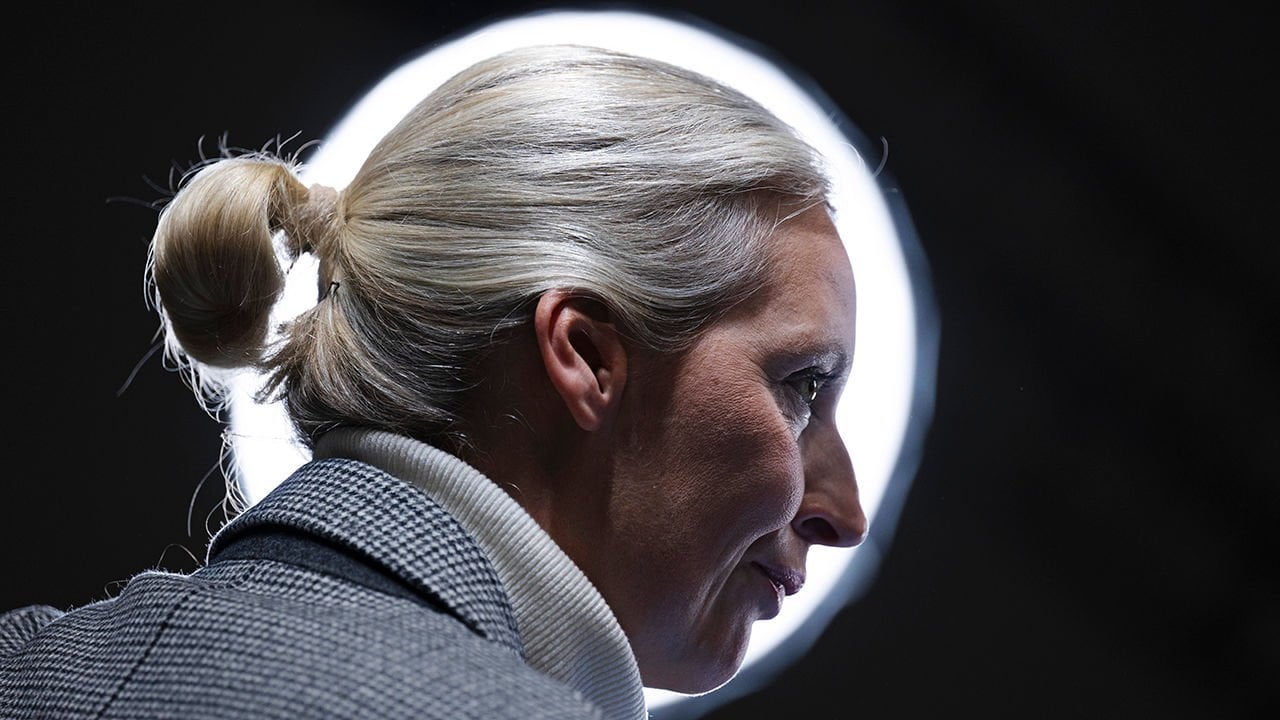
>There is a swagger to the AFD these days. Having fallen back in early 2024, the party has engineered a well-timed recovery. Its current polling, at around 20% and climbing, could double its representation in the Bundestag. Party spirits have been lifted by events in Austria, where an afd-like party is set for power after a centrist attempt to block it fell apart. Elon Musk, a plutocrat close to Donald Trump, recently conducted a rambling interview with Alice Weidel, the afd’s co-chair. Party insiders cringed, but say his endorsement will spark the interest of younger voters and German business, many parts of which remain deeply afd-sceptical. Once-bitter divisions inside the party have been muted in the service of election discipline—largely in favour of its more radical wing.
>This points to a puzzle. Comparable hard-right outfits in Europe, like the National Rally in France or Giorgia Meloni’s Brothers of Italy, have moderated to broaden their appeal. But the afd has grown even as it radicalises. At its pre-election conference in Saxony last weekend Ms Weidel, an ex-banker once seen as a comparative moderate, thrilled delegates with a red-meat speech culminating in a call for the “remigration” of illegal migrants, a controversial term she lustily emphasised. The party anointed her its first-ever candidate for the chancellery: a signal of its confidence, if not an ambition that will be fulfilled any time soon. “Alice für Deutschland!” hollered the crowd, a pun on “Alles für Deutschland”, a banned Nazi-era slogan. “There aren’t really any moderates left in the party,” says Anna-Sophie Heinze, a political scientist at the University of Trier.
>The afd’s electorate has grown more heterogeneous as its support has risen. In parts of the east it commands well over a third of the vote, yet it has far more voters in the (larger) west. The archetypal afd voter is a middle-aged blue-collar worker in a small town, but the party is making inroads among youngsters. Its voters are not notably poor members of the “left behind”. But they tend to see themselves as badly off. The afd’s big weakness is with female voters, and candidates: just one in nine in next month’s election is a woman.
>AFD voters tend to be loyal. Most do not see themselves as radical. Instead, many regard other parties, including the conservative Christian Democrats (cdu), as having gone soft. But they are disproportionately likely to hold extremist views, including tolerance towards political violence (see chart). The party is under surveillance by domestic spooks for “suspected right-wing extremism”. More than 100 mps have backed a proposal to ban it.
!ping GER
I think this article and in particular its graphic, aptly titled “Not poor, just angry,” fit nicely with some excellent recent pieces ([“The Populist Phantom”](https://archive.is/adXVG) and [“Maybe It Was Never About the Factory Jobs”](https://archive.is/NWakj)) that suggest the contemporary fascist resurgence is primarily cultural in origin, not due to economic issues as the right often claims it is. Also see PRRI’s 2017 report [*Beyond Economics: Fears of Cultural Displacement Pushed the White Working Class to Trump*](https://www.prri.org/research/white-working-class-attitudes-economy-trade-immigration-election-donald-trump/)
The afd still struggles to even break 25 percent , RN in France is easily breaking 35 percent in a situation where the other two parliamentary blocs hate each other unlike in Germany where Grokos are very common
[There is a certain delight in watching everything you cared for go up in flames.](https://www.youtube.com/watch?v=MSgb8lrXulU) I always subconsciounsly assumed that nothing will ever happen, that there won’t be a tragic, grand historical events anymore, just more democracies and international institutions. But I now realize I am not immune, there was a gorillion of people who got to experience being in the sacked city, their culture, their gods and values reduced to rubble and forgotten by time, why should I think myself any different?
They beat the other parties on economy.
They beat them on security.
Nobody care about foreign policy.
Nobody cares about social issues.