
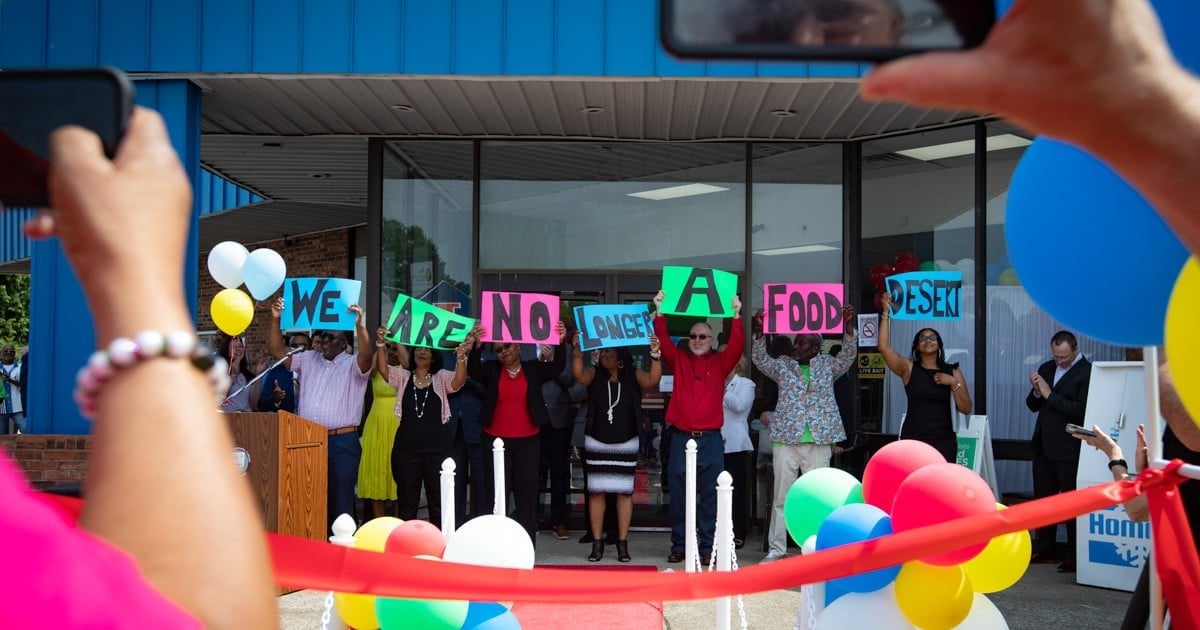
The Government Spends Millions to Open Grocery Stores in Food Deserts. The Real Test Is Their Survival.
Posted by Deinococcaceae
The Government Spends Millions to Open Grocery Stores in Food Deserts. The Real Test Is Their Survival.
Posted by Deinococcaceae
2 Comments
>“The main concern with them is prices,” said Dossie, explaining why some Cairo residents haven’t done much shopping at Rise. The 32-year-old mother of five was unemployed before she became one of the store’s first employees. She shops there to support Rise and because she doesn’t have a car, but she wishes it could offer discounts like chain grocers. “I know, me personally, I have a big family and I need to be able to get bulk for a cheaper amount.”
>Her concerns are backed up by an emerging body of academic research suggesting that the conventional wisdom about how to overcome food deserts — building stores in underserved areas — overlooks the fact that prices matter as much as proximity. For all the benefits the opening of a store can bring to a community, if it can’t compete on pricing, it will struggle to survive.
>However, it’s exceedingly difficult for independent stores to compete on pricing because they must pay more than national chains to stock their shelves. Although the price differences for shoppers may be only nominal for most individual items, they can add up on a full cart.
>Until 40 years ago, the federal government actively tried to help with this: Competition regulators rigorously monitored mergers and enforced the Robinson-Patman Act, a 1930s-era law intended to prevent suppliers from offering better pricing to big retailers than to independent stores. By the 1980s, however, some economists argued that allowing big retailers to expand and negotiate favorable deals would bring lower prices for all. The Robinson-Patman Act, and an underlying desire to protect small businesses, remained popular with the public, so Congress never moved to repeal it, but regulators increasingly stopped enforcing it. This era gave rise to a rash of consolidations and a huge building boom by the likes of Walmart and Kroger. And as the power of retail chains grew, more small businesses folded.
Place where no grocery store wants to set up turns out to be an unprofitable place to run a grocery store. Surprising.
Progressives ignoring how markets work case #9363829
They should have asked a chain to move in, at least they could have competed on price better so the subsidies required to prop it up would be lower