
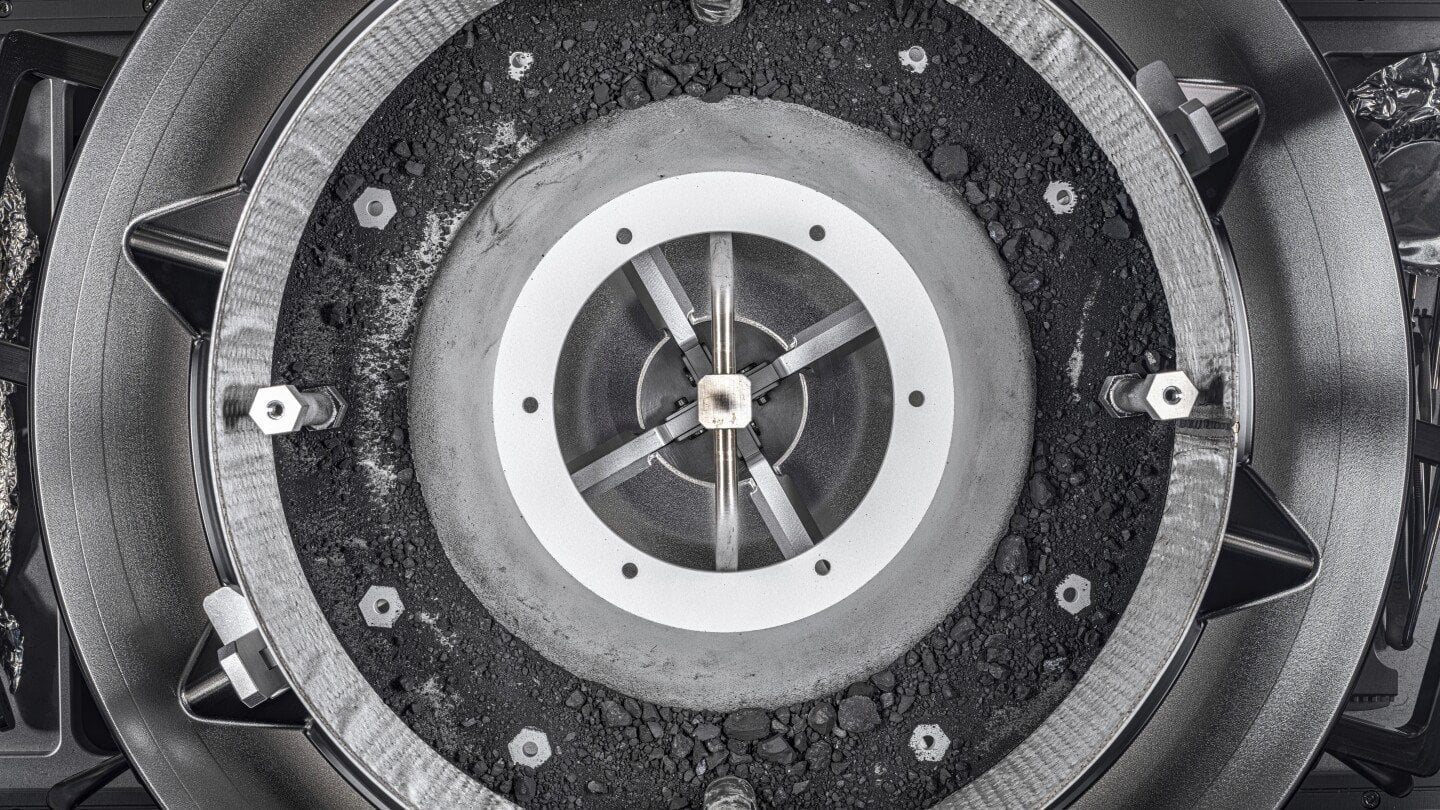
NASA’s Osiris-Rex spacecraft returned 122 grams (4 ounces) of dust and pebbles from the near-Earth asteroid Bennu, delivering the sample canister to the Utah desert in 2023 before swooping off after another space rock. It remains the biggest cosmic haul from beyond the moon. The two previous asteroid sample missions, by Japan, yielded considerably less materia
The findings provide the strongest evidence yet that asteroids may have planted the seeds of life on Earth and that these ingredients were mingling with water almost right from the start.
“That’s the kind of environment that could have been essential to the steps that lead from elements to life,” said the Smithsonian Institution’s Tim McCoy, one of the lead study authors.
This discovery was only possible by analyzing samples that were collected directly from the asteroid then carefully preserved back on Earth,” the Institute of Science Tokyo’s Yasuhito Sekine, who was not involved in the studies, said in an accompanying editorial.
Posted by —4758—
2 Comments
!ping SPACEFLIGHT&ASTRONOMY
> Small amounts of Bennu’s precious black grains — leftovers from the solar system’s formation 4.5 billion years ago — were doled out to the two separate research teams whose studies appeared in the journals Nature and Nature Astronomy. But it was more than enough to tease out the sodium-rich minerals and confirm the presence of amino acids, nitrogen in the form of ammonia **and even parts of the genetic code.**
Can someone who knows more about this explain the part about “genetic code”? I understand that they found brine and amino acids, but they don’t really elaborate on what they mean by genetic code elsewhere in the article.
Do they just mean like some basic amino acid chains? Or is it something more complex?