
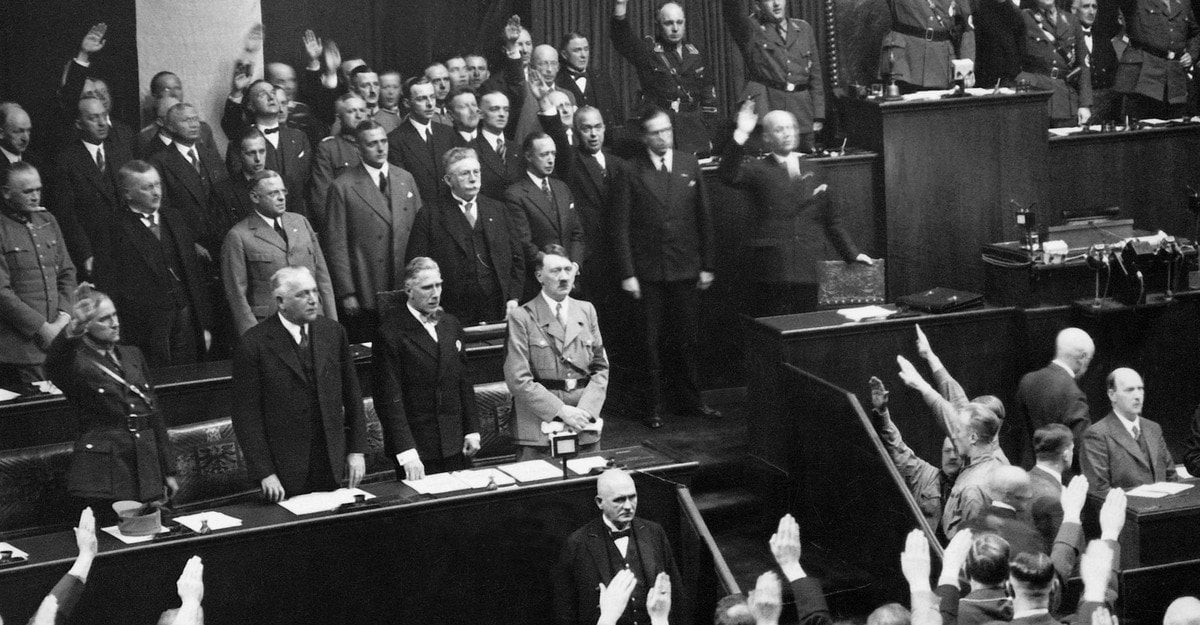
Hitler’s Oligarchs: First they reviled him. Then they supported and enabled him. Then they regretted it
Posted by WildestDreams_
Hitler’s Oligarchs: First they reviled him. Then they supported and enabled him. Then they regretted it
Posted by WildestDreams_
3 Comments
Non-paywalled link:
https://archive.is/2025.02.06-123032/https://www.theatlantic.com/ideas/archive/2025/02/hitler-oligarchs-hugenberg-nazi/681584/
> To this end, Hugenberg practiced what he called Katastrophenpolitk, “the politics of catastrophe,” by which he sought to polarize public opinion and the political parties with incendiary news stories, some of them Fabrikationen—entirely fabricated articles intended to cause confusion and outrage. According to one such story, the government was enslaving German teenagers and selling them to its allies in order to service its war debt. Hugenberg calculated that by hollowing out the political center, political consensus would become impossible and the democratic system would collapse.
It’s funny that when communists say that capitalists supported Hitler, they are partially right. But they are trying to draw an equal sign between the hypothetical Krupp and the liberal opposition. Using the example of the USA, we see that if big business can support a crypto-fascist, this does not mean that liberals will do the same.