
What can the world’s most walkable cities teach other places? | Researchers show how more urban areas could become 15-minute cities
Posted by ONETRILLIONAMERICANS
What can the world’s most walkable cities teach other places? | Researchers show how more urban areas could become 15-minute cities
Posted by ONETRILLIONAMERICANS
3 Comments
Of course, but you can knock on a deaf man’s door forever
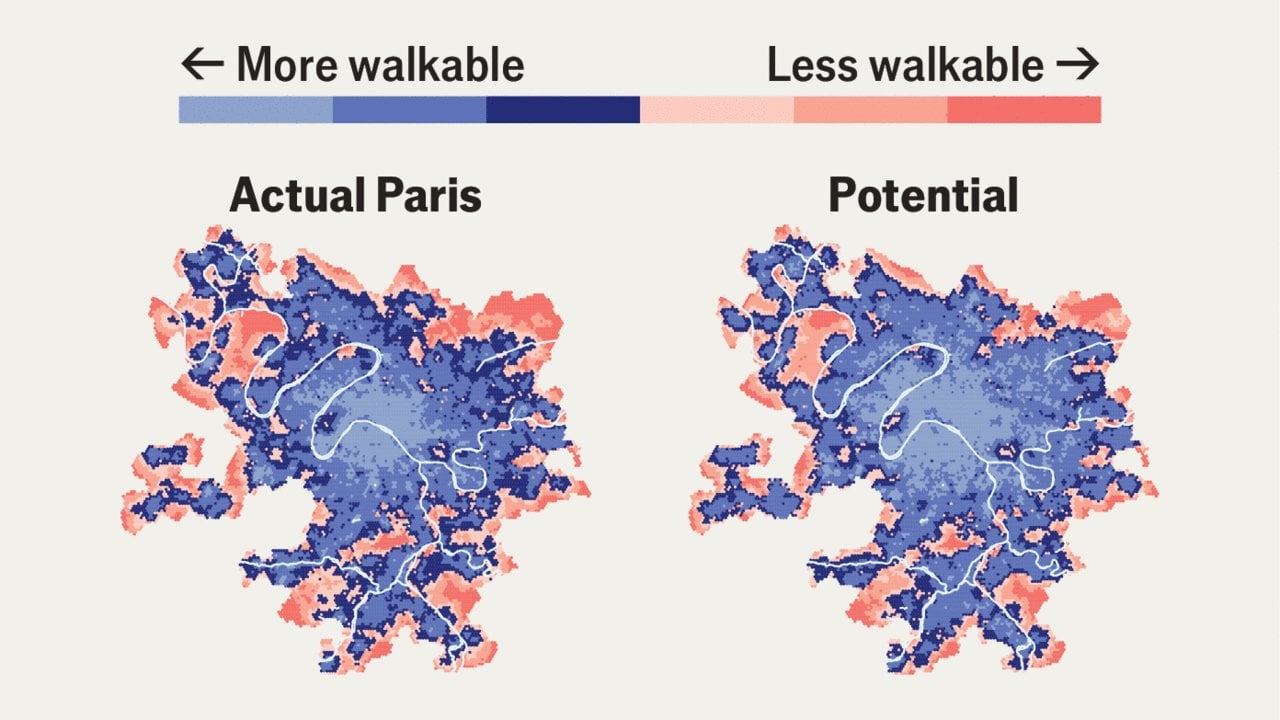
> IMAGINE THE perfect urban neighbourhood. Residential streets are peppered with shops and cafés. Schools, museums and theatres can all be reached on foot. Green spaces offer a quiet escape. Some cities, such as Copenhagen, Paris and Tokyo, already function this way. These “walkable” cities—sometimes called “15-minute cities”—offer everything that locals need within a small radius. A study published recently in Nature Cities, a journal, shows which places do this best.
> Matteo Bruno and his colleagues at the Sony Computer Science Laboratories in Rome calculated the walkability of more than 10,000 cities around the world. They first mapped how long it would take residents in various urban neighbourhoods to reach “key amenities”, such as schools, hospitals, restaurants and shops, on foot. They then calculated an average for the whole city.
> Not surprisingly, European cities were the most pedestrian-friendly. In a ranking of big cities (those with more than half a million people), 45 of the top 50 spots were in Europe. Milan came first. The average Milanese needs to walk for only around seven minutes to reach amenities, and 98% of the city’s population live in 15-minute neighbourhoods. In Asia Kyoto, in Japan, and Taipei, the capital of Taiwan, were among the most walkable cities.
> North American cities were notably absent from the top 50. Many of them are designed around cars, with residential neighbourhoods sprawling out far from central amenities. Vancouverites had the shortest strolls in the region, but their city ranked only 53rd in the world. Manhattan was ranked as highly walkable, but other districts of New York City dragged the average down.
I love Paris so much.
It pretty much does the walkability and bicycle friendly city design better than most cities even in Europe already, but at a MUCH bigger scale.