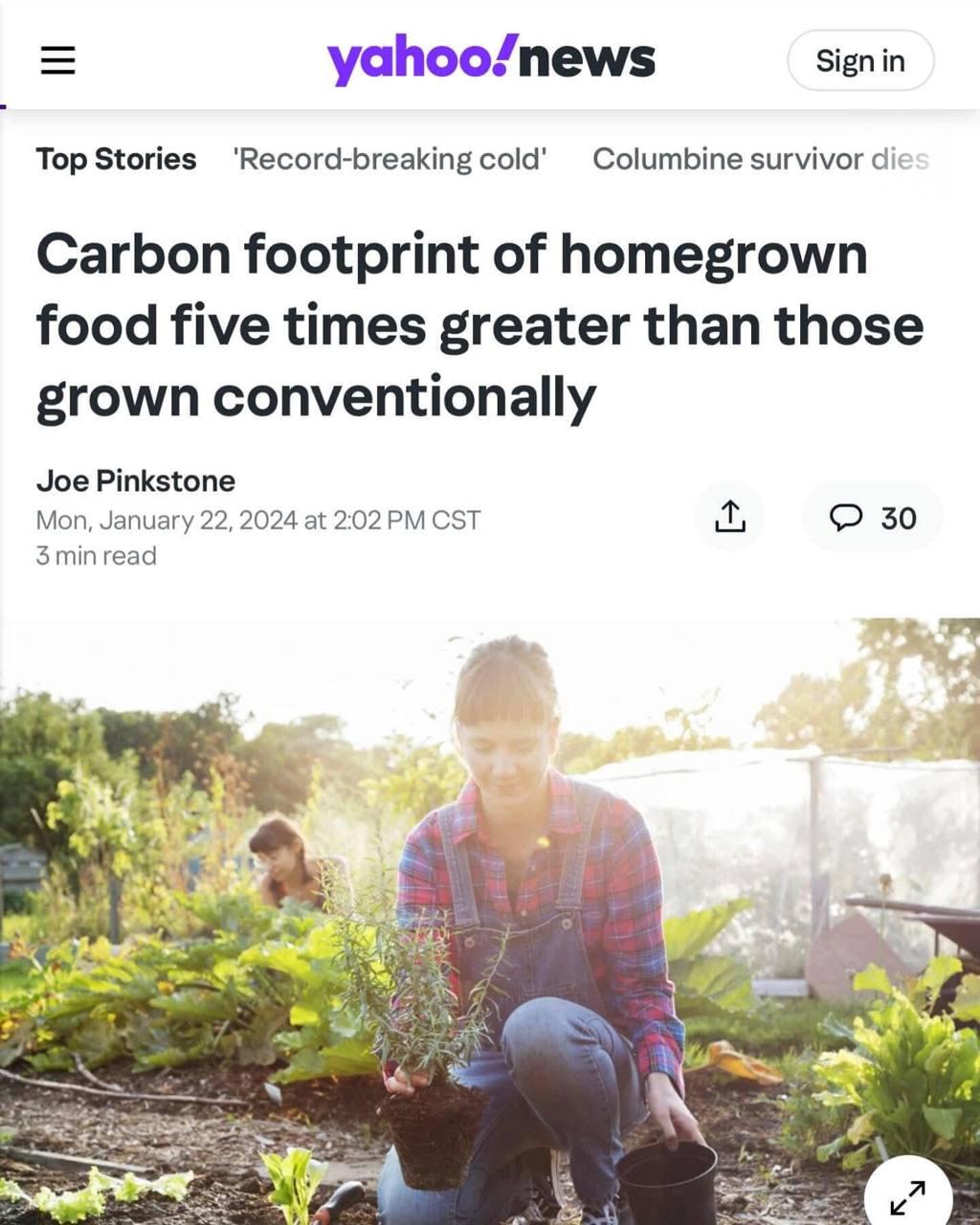
Shocking Study or Shady Agenda? Debunking the Absurd Claim That Homegrown Food Wrecks the Planet
Posted by Koomalot

Shocking Study or Shady Agenda? Debunking the Absurd Claim That Homegrown Food Wrecks the Planet
Posted by Koomalot
1 Comment
This preposterous article claiming the carbon footprint of homegrown food is five times greater than conventionally grown produce is a laughable assault on common sense, ignoring the fact that humanity has thrived on local, sustainable gardening for millennia without triggering environmental collapse.
The notion that tending a backyard garden—free of industrial transport, pesticides, and mass production—somehow harms the planet more than sprawling agribusiness operations reeks of an agenda, possibly driven by corporate interests in big agriculture or a push to discredit self-sufficiency and local food movements in favor of centralized, profit-driven food systems.
One can’t help but wonder if this is yet another attempt to manipulate public perception, steering people away from empowering, eco-friendly practices toward reliance on a system that benefits the few at the expense of the many.