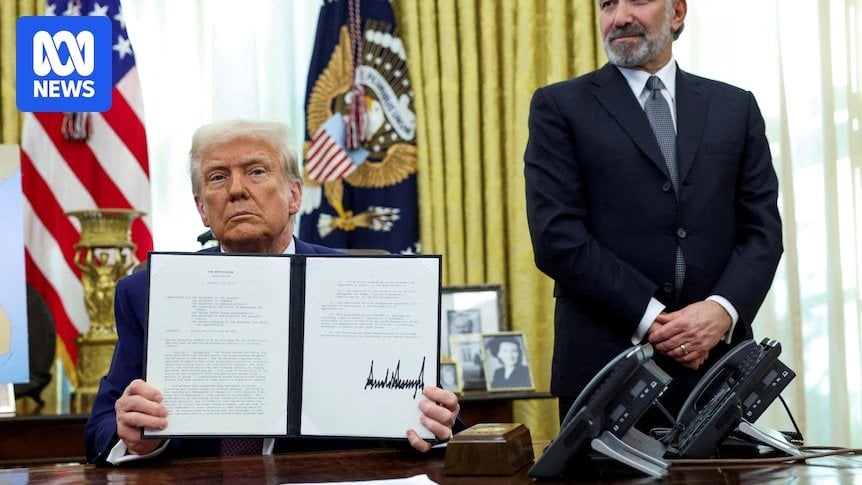
> Australia will not be granted an exemption from US tariffs on aluminium and steel imports, the White House says.
> US President Donald Trump had previously said he would consider excluding Australia from the 25 per cent tariffs, which take effect on Wednesday, local time.
> But White House spokeswoman Karoline Leavitt told the ABC on Tuesday: “He considered it, and considered against it. There will be no exemptions.”
> Asked why, Ms Leavitt said: “America First steel.”
> “If they want to be exempted, they should consider moving steel manufacturing here,” she said.
> Hopes for a reprieve from the tariffs were buoyed at first when Mr Trump promised “great consideration” after a warm phone call with Anthony Albanese. But they were later dashed when Trump’s trade guru Peter Navarro said Australia was “killing” American aluminium.
> A subsequent flurry of Washington meetings involving ambassador Kevin Rudd and treasurer Jim Chalmers yielded little evidence of progress, and Foreign Minister Penny Wong admitted a fortnight ago Australia had a “hill to climb”.
> She added it would likely take longer than the one year it took the Turnbull government to secure an exemption to the same tariffs when they were imposed by the first Trump administration, signalling that any remaining hopes were for a breakthrough only after the tariffs have been applied.
> Australia had argued that, unlike most countries, it usually imports more from the US than it exports there, a trade surplus for the US contrasting with the trade deficits it has with most other countries, and which infuriate Mr Trump.
> Then-prime minister Malcolm Turnbull mounted the same argument during the first Trump administration. But his recent criticisms of Mr Trump resulted in an angry rebuke from the US president, who used social media to label the former PM a “weak and ineffective leader”.
> Mr Albanese said on Monday the government would “continue to engage constructively … It is in Australia’s interest, but it’s also in the economic interests of the United States for Australia to be exempted.”
> The following day, Opposition Leader Peter Dutton said there was “a bipartisan position in relation to tariffs” but accused the government of being “scared” of Mr Trump and failing to “pick up the phone”.
> The tariffs are part of a broader suite of protectionist measures implemented by the Trump administration.
> Earlier on Tuesday, Mr Trump said aluminium and steel imports from Canada would be subject to 50 per cent tariffs — doubling the tariffs imposed on other trade partners as part of an escalating trade war between the North American neighbours.
> **Bigger problems than no exemption**
> Richard Holden, a professor of economics at UNSW, said it was “good that we’ve tried” to secure an exemption, but that the far bigger risk to Australia was the broader shock to the global economy from Mr Trump’s tariff program, seen in this week’s market tumbles.
> “I think the market’s reaction is that this Trump administration does seem different from last time and it doesn’t seem like it’s all just bluster,” he said.
> Treasury and the Reserve Bank have both modelled scenarios for how US tariffs and likely waves of retaliation could reverberate in Australia, finding a modest negative shock to economic output.
> Professor Holden said the effect of steel and aluminium tariffs themselves was even smaller.
> “If you work in an aluminium smelter in Australia it’s bad, and I’m not insensitive to that, but as a share of GDP, our aluminium and steel exports to the US are not huge. So in the aggregate it’s bad news, but I don’t think we should be too worried.”
> Australia exported roughly half a billion US dollars ($A793 million) worth of steel and aluminium to the US last financial year, a small fraction of the total.
> And from the Australian side, US sales represent only one-tenth of aluminium exports, with most heading to Japan and South Korea.
> Australia’s major steel exporter BlueScope would also be partly sheltered by the fact it has a large American steelmaking workforce, while the Whyalla steelworks is currently government-owned, albeit temporarily.
> “It would be better to have an exemption than not, for sure, but I just worry about poking the bear,” Professor Holden said.
> “What I worry about is the real nightmare scenario if Trump or Navarro wake up to the fact that we sell a lot of iron ore to China … And then Trump gets on the phone and says don’t sell any more.”
> **Retaliation would be ‘insane’**
> Professor Holden agreed with the assessment of Treasury, held broadly by economists, that Australia should not follow the lead of Canada and China in retaliating to any tariffs with tariffs of its own on American imports.
> Last month, Treasury Secretary Steven Kennedy warned Australia would “bear nearly all the cost”, because the main effect of tariffs in any country is to increase the price local consumers pay for goods.
> “It will seem counterintuitive to many, but responding to tariffs or trade restrictions with similar measures will only make matters worse,” he said.
> Professor Holden said retaliation would be “insane”.
> > “I think there’s a very big case that no matter what tariffs anyone puts on Australia, we probably shouldn’t respond.
> “Exports are very important to us as a small, open economy because we buy so many things from overseas that we can’t possibly make here, and we benefit so much from what we export.
> “If you retaliate, you’re trying to inflict some pain back on them, so we’d have to pick things that we buy a lot of from the United States. What are we going to do, make computers and phones and big trucks way more expensive for Australians and maybe collect some government revenue?”
!ping AUS&FOREIGN-POLICY
Advanced-Sneedsey on
Kek China imports shit from Australia cheaper than we do now.
Basically geopolitical cuckoldry.
SGTX12 on
Damn, so much for them airplanes. Sorry Aussies, gonna have to export goods via boomerang.
ILikeTuwtles1991 on
Part of me is holding out hope that Trump’s bullshit will turn more people into free trade advocates/globalist shills

4 Comments
> Australia will not be granted an exemption from US tariffs on aluminium and steel imports, the White House says.
> US President Donald Trump had previously said he would consider excluding Australia from the 25 per cent tariffs, which take effect on Wednesday, local time.
> But White House spokeswoman Karoline Leavitt told the ABC on Tuesday: “He considered it, and considered against it. There will be no exemptions.”
> Asked why, Ms Leavitt said: “America First steel.”
> “If they want to be exempted, they should consider moving steel manufacturing here,” she said.
> Hopes for a reprieve from the tariffs were buoyed at first when Mr Trump promised “great consideration” after a warm phone call with Anthony Albanese. But they were later dashed when Trump’s trade guru Peter Navarro said Australia was “killing” American aluminium.
> A subsequent flurry of Washington meetings involving ambassador Kevin Rudd and treasurer Jim Chalmers yielded little evidence of progress, and Foreign Minister Penny Wong admitted a fortnight ago Australia had a “hill to climb”.
> She added it would likely take longer than the one year it took the Turnbull government to secure an exemption to the same tariffs when they were imposed by the first Trump administration, signalling that any remaining hopes were for a breakthrough only after the tariffs have been applied.
> Australia had argued that, unlike most countries, it usually imports more from the US than it exports there, a trade surplus for the US contrasting with the trade deficits it has with most other countries, and which infuriate Mr Trump.
> Then-prime minister Malcolm Turnbull mounted the same argument during the first Trump administration. But his recent criticisms of Mr Trump resulted in an angry rebuke from the US president, who used social media to label the former PM a “weak and ineffective leader”.
> Mr Albanese said on Monday the government would “continue to engage constructively … It is in Australia’s interest, but it’s also in the economic interests of the United States for Australia to be exempted.”
> The following day, Opposition Leader Peter Dutton said there was “a bipartisan position in relation to tariffs” but accused the government of being “scared” of Mr Trump and failing to “pick up the phone”.
> The tariffs are part of a broader suite of protectionist measures implemented by the Trump administration.
> Earlier on Tuesday, Mr Trump said aluminium and steel imports from Canada would be subject to 50 per cent tariffs — doubling the tariffs imposed on other trade partners as part of an escalating trade war between the North American neighbours.
> **Bigger problems than no exemption**
> Richard Holden, a professor of economics at UNSW, said it was “good that we’ve tried” to secure an exemption, but that the far bigger risk to Australia was the broader shock to the global economy from Mr Trump’s tariff program, seen in this week’s market tumbles.
> “I think the market’s reaction is that this Trump administration does seem different from last time and it doesn’t seem like it’s all just bluster,” he said.
> Treasury and the Reserve Bank have both modelled scenarios for how US tariffs and likely waves of retaliation could reverberate in Australia, finding a modest negative shock to economic output.
> Professor Holden said the effect of steel and aluminium tariffs themselves was even smaller.
> “If you work in an aluminium smelter in Australia it’s bad, and I’m not insensitive to that, but as a share of GDP, our aluminium and steel exports to the US are not huge. So in the aggregate it’s bad news, but I don’t think we should be too worried.”
> Australia exported roughly half a billion US dollars ($A793 million) worth of steel and aluminium to the US last financial year, a small fraction of the total.
> And from the Australian side, US sales represent only one-tenth of aluminium exports, with most heading to Japan and South Korea.
> Australia’s major steel exporter BlueScope would also be partly sheltered by the fact it has a large American steelmaking workforce, while the Whyalla steelworks is currently government-owned, albeit temporarily.
> “It would be better to have an exemption than not, for sure, but I just worry about poking the bear,” Professor Holden said.
> “What I worry about is the real nightmare scenario if Trump or Navarro wake up to the fact that we sell a lot of iron ore to China … And then Trump gets on the phone and says don’t sell any more.”
> **Retaliation would be ‘insane’**
> Professor Holden agreed with the assessment of Treasury, held broadly by economists, that Australia should not follow the lead of Canada and China in retaliating to any tariffs with tariffs of its own on American imports.
> Last month, Treasury Secretary Steven Kennedy warned Australia would “bear nearly all the cost”, because the main effect of tariffs in any country is to increase the price local consumers pay for goods.
> “It will seem counterintuitive to many, but responding to tariffs or trade restrictions with similar measures will only make matters worse,” he said.
> Professor Holden said retaliation would be “insane”.
> > “I think there’s a very big case that no matter what tariffs anyone puts on Australia, we probably shouldn’t respond.
> “Exports are very important to us as a small, open economy because we buy so many things from overseas that we can’t possibly make here, and we benefit so much from what we export.
> “If you retaliate, you’re trying to inflict some pain back on them, so we’d have to pick things that we buy a lot of from the United States. What are we going to do, make computers and phones and big trucks way more expensive for Australians and maybe collect some government revenue?”
!ping AUS&FOREIGN-POLICY
Kek China imports shit from Australia cheaper than we do now.
Basically geopolitical cuckoldry.
Damn, so much for them airplanes. Sorry Aussies, gonna have to export goods via boomerang.
Part of me is holding out hope that Trump’s bullshit will turn more people into free trade advocates/globalist shills