
YIMBYism as industrial policy | “Allowing construction to happen, not just somewhere or anywhere or on the outskirts of something, but specifically in the places where the demand is highest is a powerful tool for creating economic opportunities for people who don’t have college degrees”
Posted by ONETRILLIONAMERICANS
1 Comment
>Shenzhen is China’s leading high-tech hub. The once obscure fishing village became a pillar of the global economy thanks to its proximity to Hong Kong and to being designated a Special Economic Zone in the earliest days of Deng’s reforms, plus some other smart choices and good luck. Part and parcel of that economic transformation is that the city has physically transformed from looking like a poor fishing village to looking like a major 21st-century city.
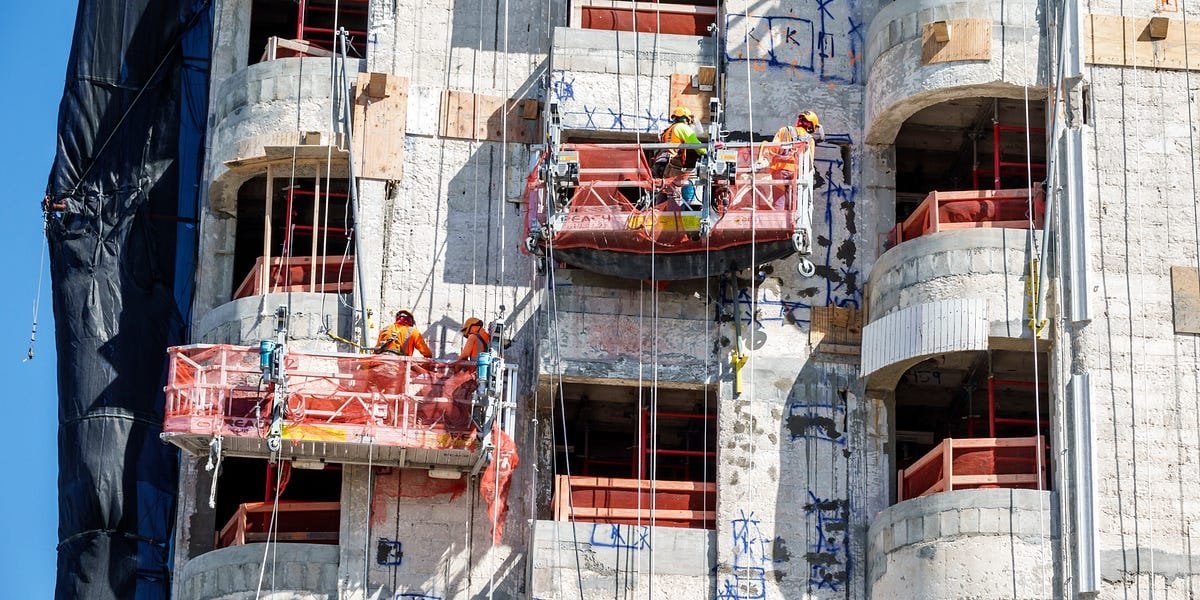
https://preview.redd.it/6dhcqzp23mse1.jpeg?width=1100&format=pjpg&auto=webp&s=dbae8d778f7f0973081b26473e69fad854eefa72
>The US can’t point to any specific economic transformation as dramatic as Shenzhen’s for the simple reason that absolutely nowhere in the United States of America was as poor in 1982 as Shenzhen was. But we absolutely do have places that have become home to world-leading technology companies. And it’s not just that those places haven’t transformed to the extent Shenzhen has (that’s a base effect); it’s that Seattle and San Francisco and nearby Silicon Valley don’t look nearly as advanced and high-tech as Shenzhen does.
>**That’s because in these cities, and basically all American cities, it is fundamentally illegal to enact large-scale transformation of the built environment within the existing footprint of development.**
>Some parts of the country make it relatively easy to transform farmland into single-family homes and strip malls, and in those places you see growing metro areas. Other parts of the country restrict both kinds of growth. But nowhere allows for the physical transformation of an existing community. Change is treated as per se bad — like air pollution — and something that regulators should try to prevent. And yet everyone who looks at China’s cutting edge coastal cities comes away impressed and borderline incredulous that China’s GDP per capita is still so much lower than America’s.
>I wrote on Tuesday about tariffs as a misguided effort to create male-coded blue collar work through regulations that make most people poorer.
>But today, let’s think about Shenzhen.
>Yes, it’s home to China’s high-tech companies. But somebody built all those buildings, and somebody manufactured all the stuff that the buildings are made out of. Allowing construction to happen, not just somewhere or anywhere or on the outskirts of something, but specifically in the places where the demand is highest is a powerful tool for creating economic opportunities for people who don’t have college degrees and don’t want to do customer-facing labor. Beyond that, the buildings themselves are an incredible source of demand for manufactured goods, many of which are physically large in a way that tends to advantage local producers.
>Critically, though, unlike taxing imported socks or Mexican-made brake pads, allowing for more market-rate construction in in-demand areas would make America richer rather than poorer.
!ping YIMBY