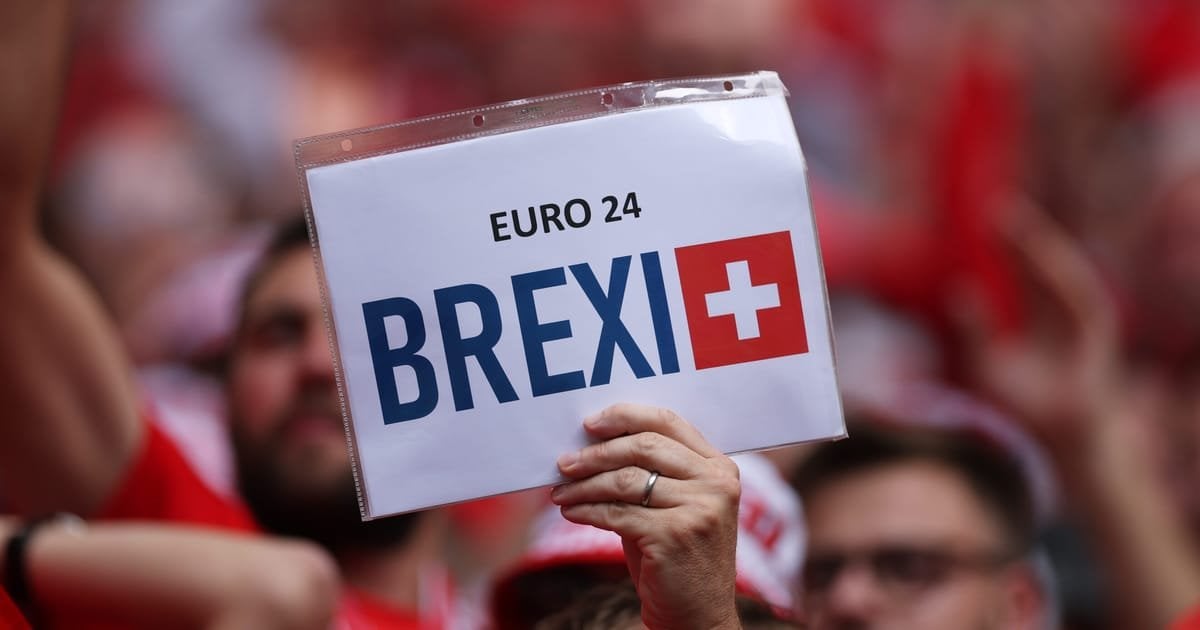
> It’s the one thing nobody wanted to happen. Now it might happen anyway. Brussels hates its relationship with Switzerland: A complex tartiflette of over 120 different bilateral agreements that seems to constantly be up for renegotiation. When Brexit talks began in 2017, both the UK and EU were determined not to replicate the mishmash of bespoke treaties that puts the Alpine nation half in and half out of the single market. But fast forward to 2024 and there are signs Britain might start looking rather Swiss — just without the mountains, cuckoo clocks or fondue (and with worse public transport). “The EU really dislikes the Swiss model quite intensely and has a very low opinion of it. So they don’t really want the British to have anything resembling the Swiss model,” said Charles Grant, director of the Centre for European Reform, a London-based think tank.
> And yet there is a case that “in the very long run, the UK relationship will be a bespoke, unique institutional structure rather like the Swiss,” he added, with Bern’s set-up serving “indirectly” as a model. Unlike Norway, Iceland or Lichtenstein, which have “off-the-shelf” arrangements with the EU as members of the European Economic Area, Switzerland has come to participate in the internal market in its own way: Sector-by-sector — with some holes remaining in areas like services and mutual recognition of product standards. During Brexit talks, such an à la carte “Swiss option” was strictly off-limits. Chief EU negotiator Michel Barnier regularly lambasted attempts at “cherry-picking” and produced a famous “step chart” which appeared to funnel the U.K. towards a more orderly set of off-the-shelf options. In the end, Boris Johnson went for the hardest Brexit deal on offer: A simple free trade agreement.
> But Britain’s new Labour government sees things a bit differently. Prime Minister Keir Starmer wants to sign a sanitary and phytosanitary (SPS) agreement with the EU — bringing the UK into line with the single market on food and agriculture and eliminating some of the worst border bureaucracy. Despite its constant vigilance against cherry picking, Brussels seems open to the SPS idea — which would benefit EU traders as much as British ones — though the Commission has warned the setup would entail signing up to EU rules and accepting a role for the European Court of Justice. Labour has also indicated that it wants to take a similar approach in other sectors, with chemicals at the top of the list. Mutual recognition of professional qualifications is also a stated goal, while energy is another possibility widely discussed as an option in policy circles.
> If Brussels can be persuaded to make it all work, the result might start to look a bit like sector-by-sector membership of the single market — albeit with a significantly more limited scope than the Swiss settlement. “In broad terms it could start to resemble the Swiss model because it’s sort of sector-by-sector,” said Grant — though he notes that Switzerland’s agreements cover far more sectors, including manufactured goods. The one thick red line dividing the British and Swiss approaches is their respective attitudes towards the free movement of people. “I’m not sure that the UK is prepared for what a relationship like the Swiss one means for the country, because Switzerland did have to sign up to the four freedoms, it did have to implement a free movement of people,” said Stefanie Walter, a professor for international relations and political economy at the University of Zurich. “And that was one of the major points in the Brexit campaign that people didn’t want.”
> This rejection of free movement is considered a political necessity by virtually everybody who matters in Westminster and greatly limits the market access Brussels is willing to countenance for the UK. But, more broadly, the British hang-up recalls Switzerland’s own misgivings on immigration. Negotiations between Bern and Brussels broke down in 2021 when Switzerland walked out of talks on a landmark partnership agreement. The key issues prompting the impasse? Whether posted EU workers should be allowed to undercut Swiss wages; EU migrants’ access to the Swiss welfare system; and state aid. The fallout was so dramatic the Financial Times warned it would lead to a “slow-motion Swexit.” Today, now that the two sides have resumed talks, diplomats tell Politico that freedom of movement remains one of the thorniest issues. While “notable progress” has been made on institutional issues and state aid, a Commission spokesperson said it was “imperative” to continue working “on other areas such as the free movement of persons.”
> Meanwhile, Bern and Brussels find themselves stuck in a negotiation loop. “Every time EU law changes, the Swiss law has to be updated to accommodate these things,” said Walter. “It’s not an automatic process, and that makes it very cumbersome.” That has led in recent years to an “erosion of bilateral relations” — as EU law evolves, agreements “become moot because increasingly new products will not be certified.” As in Switzerland, perpetual negotiations are likely to be Britain’s fate. Brexit is still a polarizing issue in Westminster, where a majoritarian political system leads to dramatic swings in government policy as Downing Street changes hands — as recently in the Labour election landslide that ended 14 years of Tory rule.
> There is every chance that the next Conservative government would, if elected, have its own, different thoughts about what the EU relationship should look like, and once again demand a return to the negotiating table. The next Labour government after that, the same. The merry-go-round of renegotiations is likely to continue indefinitely, in true Swiss fashion. To get by, London will need to watch and learn from Bern. That’s the message some Brussels-watchers have been trying to communicate to the British government. “It’s often quite impressive how sizeable third country missions are within the European Union and the amount of resources they put in,” David Phinnemore, a professor at the Post-Brexit Governance Unit at Queen’s University Belfast, told a UK parliamentary committee hearing earlier this year.
> Professor Simon Usherwood of the Open University, giving evidence at the same session, added: “There needs to be representation as much as possible at every stage so by the time you come to the post-legislative aspects you’ve hopefully avoided the need for more drastic action. Once we start to get to texts it becomes harder to amend existing texts rather than embed your ideas in them as they go.” At the end of the day, the UK may end up with an arrangement neither side ever wanted for the same reasons as Switzerland: A cumbersome “bilateral way” that meanders along without ever actually getting anywhere. “In EU relations with neighbors, it just kind of comes and goes in waves,” said David Henig, director of the UK trade policy project at think-tank ECIPE. “None of it ever comes easily.”

1 Comment
> It’s the one thing nobody wanted to happen. Now it might happen anyway. Brussels hates its relationship with Switzerland: A complex tartiflette of over 120 different bilateral agreements that seems to constantly be up for renegotiation. When Brexit talks began in 2017, both the UK and EU were determined not to replicate the mishmash of bespoke treaties that puts the Alpine nation half in and half out of the single market. But fast forward to 2024 and there are signs Britain might start looking rather Swiss — just without the mountains, cuckoo clocks or fondue (and with worse public transport). “The EU really dislikes the Swiss model quite intensely and has a very low opinion of it. So they don’t really want the British to have anything resembling the Swiss model,” said Charles Grant, director of the Centre for European Reform, a London-based think tank.
> And yet there is a case that “in the very long run, the UK relationship will be a bespoke, unique institutional structure rather like the Swiss,” he added, with Bern’s set-up serving “indirectly” as a model. Unlike Norway, Iceland or Lichtenstein, which have “off-the-shelf” arrangements with the EU as members of the European Economic Area, Switzerland has come to participate in the internal market in its own way: Sector-by-sector — with some holes remaining in areas like services and mutual recognition of product standards. During Brexit talks, such an à la carte “Swiss option” was strictly off-limits. Chief EU negotiator Michel Barnier regularly lambasted attempts at “cherry-picking” and produced a famous “step chart” which appeared to funnel the U.K. towards a more orderly set of off-the-shelf options. In the end, Boris Johnson went for the hardest Brexit deal on offer: A simple free trade agreement.
> But Britain’s new Labour government sees things a bit differently. Prime Minister Keir Starmer wants to sign a sanitary and phytosanitary (SPS) agreement with the EU — bringing the UK into line with the single market on food and agriculture and eliminating some of the worst border bureaucracy. Despite its constant vigilance against cherry picking, Brussels seems open to the SPS idea — which would benefit EU traders as much as British ones — though the Commission has warned the setup would entail signing up to EU rules and accepting a role for the European Court of Justice. Labour has also indicated that it wants to take a similar approach in other sectors, with chemicals at the top of the list. Mutual recognition of professional qualifications is also a stated goal, while energy is another possibility widely discussed as an option in policy circles.
> If Brussels can be persuaded to make it all work, the result might start to look a bit like sector-by-sector membership of the single market — albeit with a significantly more limited scope than the Swiss settlement. “In broad terms it could start to resemble the Swiss model because it’s sort of sector-by-sector,” said Grant — though he notes that Switzerland’s agreements cover far more sectors, including manufactured goods. The one thick red line dividing the British and Swiss approaches is their respective attitudes towards the free movement of people. “I’m not sure that the UK is prepared for what a relationship like the Swiss one means for the country, because Switzerland did have to sign up to the four freedoms, it did have to implement a free movement of people,” said Stefanie Walter, a professor for international relations and political economy at the University of Zurich. “And that was one of the major points in the Brexit campaign that people didn’t want.”
> This rejection of free movement is considered a political necessity by virtually everybody who matters in Westminster and greatly limits the market access Brussels is willing to countenance for the UK. But, more broadly, the British hang-up recalls Switzerland’s own misgivings on immigration. Negotiations between Bern and Brussels broke down in 2021 when Switzerland walked out of talks on a landmark partnership agreement. The key issues prompting the impasse? Whether posted EU workers should be allowed to undercut Swiss wages; EU migrants’ access to the Swiss welfare system; and state aid. The fallout was so dramatic the Financial Times warned it would lead to a “slow-motion Swexit.” Today, now that the two sides have resumed talks, diplomats tell Politico that freedom of movement remains one of the thorniest issues. While “notable progress” has been made on institutional issues and state aid, a Commission spokesperson said it was “imperative” to continue working “on other areas such as the free movement of persons.”
> Meanwhile, Bern and Brussels find themselves stuck in a negotiation loop. “Every time EU law changes, the Swiss law has to be updated to accommodate these things,” said Walter. “It’s not an automatic process, and that makes it very cumbersome.” That has led in recent years to an “erosion of bilateral relations” — as EU law evolves, agreements “become moot because increasingly new products will not be certified.” As in Switzerland, perpetual negotiations are likely to be Britain’s fate. Brexit is still a polarizing issue in Westminster, where a majoritarian political system leads to dramatic swings in government policy as Downing Street changes hands — as recently in the Labour election landslide that ended 14 years of Tory rule.
> There is every chance that the next Conservative government would, if elected, have its own, different thoughts about what the EU relationship should look like, and once again demand a return to the negotiating table. The next Labour government after that, the same. The merry-go-round of renegotiations is likely to continue indefinitely, in true Swiss fashion. To get by, London will need to watch and learn from Bern. That’s the message some Brussels-watchers have been trying to communicate to the British government. “It’s often quite impressive how sizeable third country missions are within the European Union and the amount of resources they put in,” David Phinnemore, a professor at the Post-Brexit Governance Unit at Queen’s University Belfast, told a UK parliamentary committee hearing earlier this year.
> Professor Simon Usherwood of the Open University, giving evidence at the same session, added: “There needs to be representation as much as possible at every stage so by the time you come to the post-legislative aspects you’ve hopefully avoided the need for more drastic action. Once we start to get to texts it becomes harder to amend existing texts rather than embed your ideas in them as they go.” At the end of the day, the UK may end up with an arrangement neither side ever wanted for the same reasons as Switzerland: A cumbersome “bilateral way” that meanders along without ever actually getting anywhere. “In EU relations with neighbors, it just kind of comes and goes in waves,” said David Henig, director of the UK trade policy project at think-tank ECIPE. “None of it ever comes easily.”
!ping UK&EUROPE