
China tells kids to study manufacturing to fill factory jobs | College grads are unemployed even as millions of blue-collar positions remain unfilled
Posted by ONETRILLIONAMERICANS
China tells kids to study manufacturing to fill factory jobs | College grads are unemployed even as millions of blue-collar positions remain unfilled
Posted by ONETRILLIONAMERICANS
3 Comments
> Every summer, millions of young Chinese graduate from the country’s increasingly strong network of four-year universities. But lately, many can’t find a good job once they leave school, so they end up becoming delivery drivers, livestreamers and even “professional children”—moving back in with mom and dad, who pay them to do chores. At the same time, tens of millions of positions in fields such as manufacturing, information technology and health care will go unfilled this year for lack of qualified candidates. “Low-level manufacturing jobs can be automated, but there’s a severe shortage of skilled blue-collar workers who can write code or operate machine tools,” says Dan Wang, China director of the Eurasia Group.
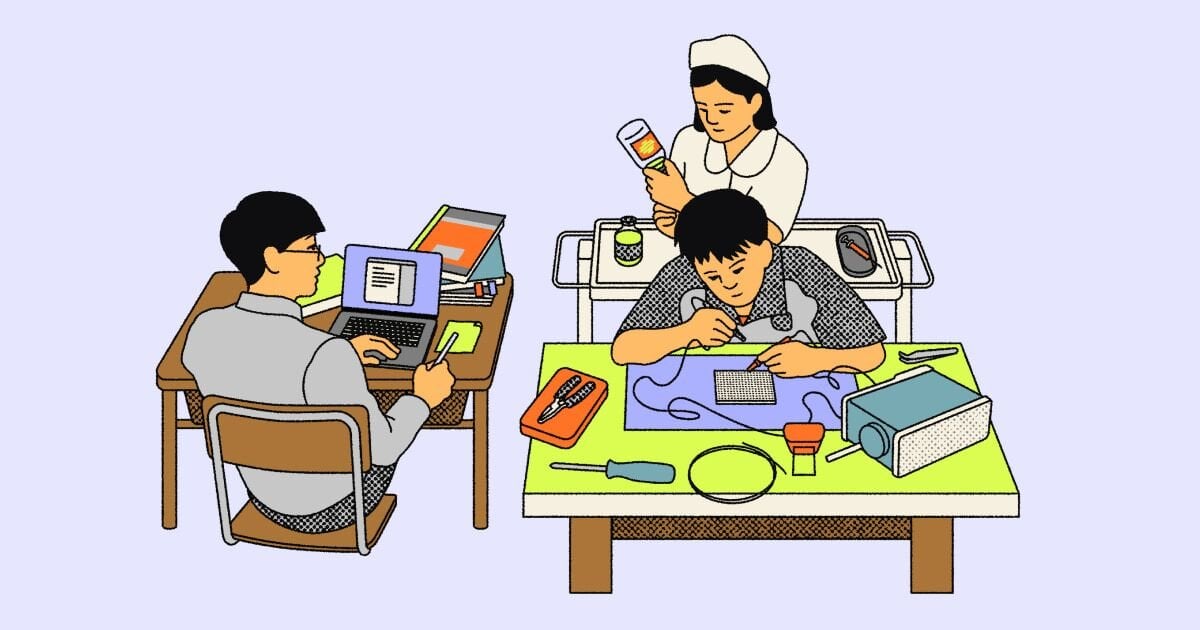
> The disconnect has officials from President Xi Jinping on down urging young people to forgo a college degree and instead attend a vocational school. These offer three-year diplomas and help develop skills for machinery technicians and operators, robotics engineers, nurses and myriad other jobs.
> Xi needs a pipeline of skilled laborers to keep the factories humming, of course, but with 1 in 6 youths unemployed, he also faces rising social discontent. Only 45% of the university class of 2024 had received job offers by April, when most campus recruitment ends, according to employment search website Zhaopin Ltd. For graduates of vocational colleges—which often have partnerships with companies that offer internships and placements—the figure rises to 57%. “There’s a structural mismatch between the job market and education,” says Kelvin Lam, an analyst at Pantheon Macroeconomics. “New graduates don’t want to go back to the factories.”
> In ninth grade, young Chinese take an exam that steers them into either an academic or a vocational track. The former focuses on all-important university entrance examinations, while the latter is geared toward practical training, often followed by vocational colleges. Three years ago, aiming to improve the reputation of skills-based education, China said students in both tracks should enjoy equal opportunities in further education and employment. In practice, though, many companies still require a bachelor’s degree for more prestigious positions.
> About 20 million students attend China’s 1,300 universities, and 17 million study at its 1,500-plus vocational colleges. The government aims to increase the number of vocational schools, with a goal of making them “world leading” by 2035. There’s little cost difference between the two educational tracks—both are about 6,000 yuan ($827) per year for public schools and typically at least double that for private ones.
> It’s a tough sell persuading parents to send their kids to vocational schools as they’ve long had the stigma of being an inferior choice for underachieving students. For thousands of years in China, the goal of studying was to pass the imperial examination and get a civil service job. University-bound teens today spend most of high school studying for a similar test called the gaokao, a notoriously grueling, days-long college entrance exam. The highest scorers go to the top colleges, while lower-scoring students end up at less prestigious universities or even vocational schools.
> There’s also a problem of earning potential: The average monthly income three years after getting an undergraduate degree was 10,168 yuan in 2023, a third higher than vocational school grads, according to education consulting firm Mycos. “Most parents think a good school is one that gets students up at 6 a.m. and makes them study until 11 p.m.,” says Li Ruyuan, principal of Handan Lingchuang Vocational Secondary School in northern Hebei province. “If I tell them students can play at the school or pursue their hobbies, parents get scared.”
!ping CHINA
“Most parents think a good school is one that gets students up at 6 a.m. and makes them study until 11 p.m.,”, nah, just nah.
I’m not Chinese, or know some, but is there backlash against a manufacturing-centered economic policy or automation vs parents supporting longer schooling?