
Nostalgia for manufacturing will make the US poorer | Donald Trump’s vision to onshore factory jobs reverses decades of progress
Posted by ONETRILLIONAMERICANS
Nostalgia for manufacturing will make the US poorer | Donald Trump’s vision to onshore factory jobs reverses decades of progress
Posted by ONETRILLIONAMERICANS
2 Comments
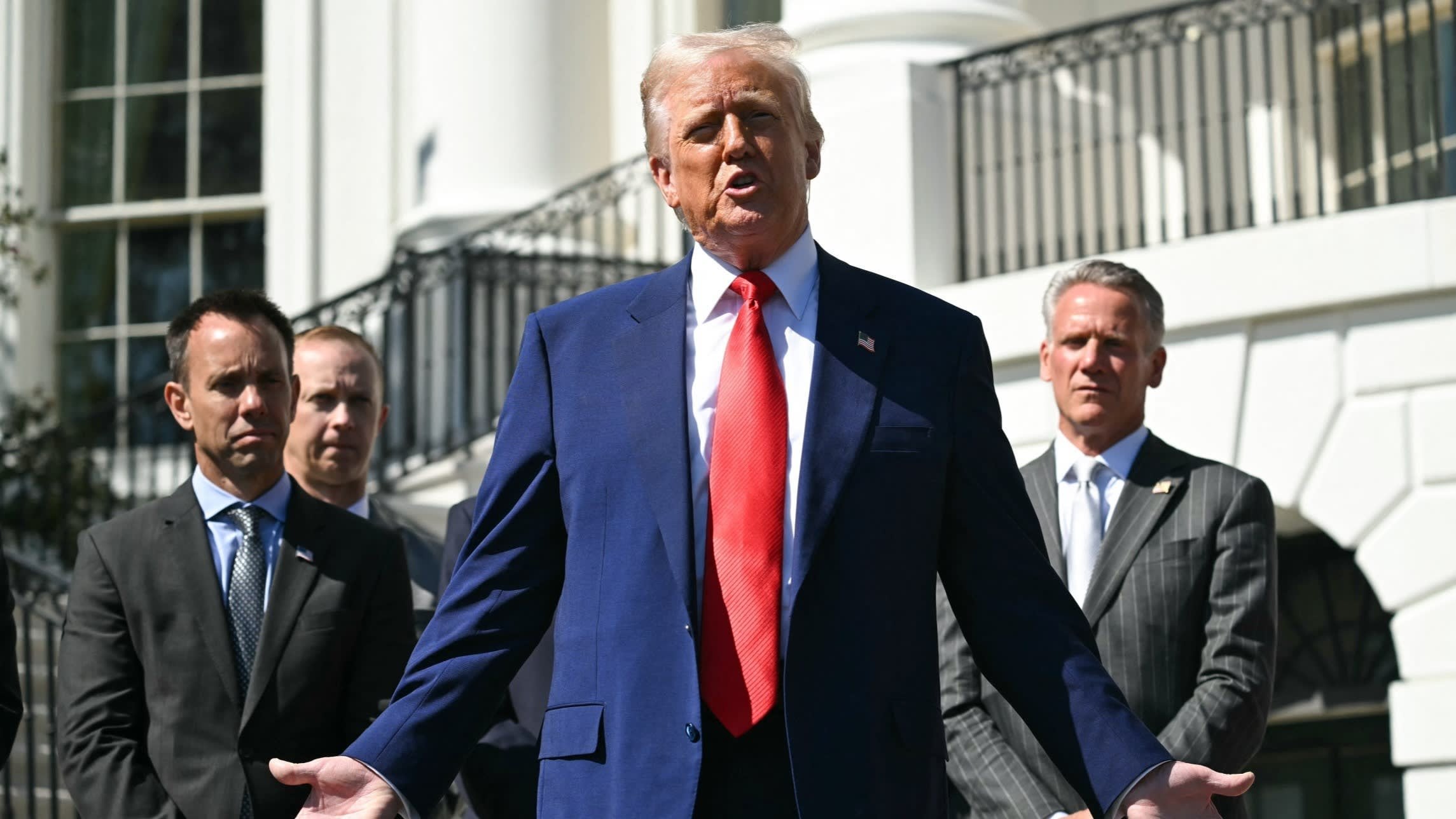
> In his April 2 “liberation day” speech, the commander-in-chief invited retired autoworker Brian Pannebecker to say a few words: “I have watched plant after plant after plant in Detroit . . . close. [The president’s tariff] policies are going to bring product back into those underutilised plants . . . I can’t wait to see what’s happening three or four years down the road”.
> How might one debate against this viewpoint? That’s what I’ll attempt to outline here.
> First, empathy. Over the past four decades, manufacturing jobs in America have declined. Competitive imports from abroad have contributed to factory closures, and many former industrial regions have failed to regenerate. (I recommend Peter Santenello’s YouTube channel, which documents life in these US counties.)
> In that time, US income inequality has risen. And the most capital-rich have increased their share of overall wealth.
> Research by Jim Reid, Deutsche Bank’s head of global macro research, finds that the US wealth-to-income ratio tends to track international trade as a share of global GDP over time.
> “[This potentially reflects] the benefits [of globalisation] accruing to shareholders through more efficient global supply chains, a wider marketplace, and the access and influence of lower-cost labour in emerging markets,” he wrote in a client note. “This has arguably squeezed developed market labour, particularly low-skilled workers.”
> Indeed, US capital markets tanked as the reality of America’s global protectionist agenda kicked in. But the president used the stock market falls to reinforce his platform: “I’m proud to be the president for the workers, not the outsourcers; the president who stands up for Main Street, not Wall Street; who protects the middle class, not the political class.”
> The allure of onshoring manufacturing is, then, clear. But to support the president’s plans, one must also believe that America can, and should, bring back labour-intensive factory jobs, and that tariffs are the best way to do so.
> Commerce secretary Howard Lutnick spelt out the ambition in a recent interview: “The army of millions and millions of human beings screwing in little, little screws to make iPhones, that kind of thing is going to come to America.” (Notably, Trump exempted smartphones and other consumer electronics from his “reciprocal” tariffs on Friday, but sector-specific duties are in the works.)
> Either way, if the goal is to recreate the scale and specialisation of the developing world’s factories, the US will need workers and capital.
> But few Americans want to go into industrial work. A 2024 Cato Survey found that only one in four believe they would be better off in a factory over their current employment. (Much of Trump’s “middle class” work in non-goods-producing sectors today.) The administration is also hostile to immigration.
> As for capital, impelling factory owners to set up in America by raising import duties has its limits. Given the costs of moving production to the US, investors will need labour, reliable access to domestic input chains and clarity over how long tariffs will remain in place. All are in short supply.
> For measure, take Apple. Dan Ives, a Wedbush analyst, estimated that the iPhone maker would need at least three years and $30bn just to shift a tenth of its supply chain from Asia to the US.
> The administration reckons these are a “transition cost” on the path to bringing back blue-collar jobs. And, as Pannebecker’s remarks suggest, some are willing to give it time.
> Even if some factory jobs did return to America, my question to Trump and his supporters is what cost they are willing to pay for it.
It’s true that some factory jobs have been lost to outsourcing (although automation has played a significant role too). But focusing on that loss — and seeking to curb US trade openness — obscures the greater, economy-wide benefits that have arisen because of it.
US manufacturing output has actually risen over the past four decades, even as factory jobs have declined. American industry is more productive today. It makes higher-value products at higher wages with fewer workers (and more robots).
> In fact, measured by value added per worker, US manufacturing ranks first among the major economies (estimated to be almost seven times that of China). Over one-fifth of US manufactured exports are products with high research and development intensity, such as advanced tech and aerospace products.
> The US ranks second only behind China in its share of overall global manufacturing output. By most measures, America is already “a manufacturing superpower”.
> It ceded the top spot in part by outsourcing lower wage jobs and shifting into higher value added economic activities: services, research and development, and advanced manufacturing. This has allowed incomes, jobs and the economy to grow.
> For measure, research by the Tax Foundation highlights how Trump’s Section 232 tariffs on steel and aluminium imports in his first term raised production costs for manufacturers (reducing employment in those industries), raised consumer prices and hurt exports. The Peterson Institute for International Economics estimated that the cost of “saving” a single job in steel-producing industries was around $650,000. Imagine this across Trump’s panoply of tariffs.
!ping CONTAINERS
Riddle me this then, conservatives
Why do good ol’ American market cars sell so poorly overseas?